The Five Types of Distributor Claims in FMCG
Every Indian FMCG distributor, whether in Mumbai, Delhi, or Bangalore, deals with claims against the brands they distribute. These claims represent money owed to the distributor by the brand or manufacturer, and managing them efficiently is critical for working capital and business health. Across India's FMCG distribution landscape of over 7 million channel partners, an estimated Rs 15,000-20,000 crore is locked in pending claims at any given time. Here are the five major types:
| Claim Type | Description | Typical Value (Monthly) | Expected SLA | Common Dispute Points |
|---|---|---|---|---|
| Damage claims | Products damaged in transit from C&F/manufacturer | Rs 15,000-1 lakh | 15-30 days | Timing of damage (pre vs post delivery) |
| Expiry claims | Products expired before sale due to slow movement | Rs 50,000-5 lakh | 30-45 days | Adequate shelf life at receipt, FEFO compliance |
| Scheme shortfall | Difference between scheme promised and scheme received | Rs 20,000-3 lakh | 30-60 days | Scheme interpretation, qualifying criteria |
| Rate difference | Price corrections when brands revise MRP or trade prices mid-cycle | Rs 10,000-80,000 | 15-30 days | Effective date of price change, stock in pipeline |
| Display/promotional | Reimbursement for display, visibility, or sampling activities | Rs 5,000-50,000 | 45-90 days | Proof of execution, display compliance |
Cumulatively, a mid-sized distributor handling 5-8 brands can have Rs 10-50 lakh stuck in pending claims at any given time. For larger super-stockists operating in cities like Pune, Ahmedabad, or Hyderabad, this figure can cross Rs 2-3 crore. The opportunity cost of this locked capital, at a working capital financing rate of 12-18%, is substantial.
Why Manual Claims Processing Is a Nightmare
The typical manual claims process in Indian FMCG distribution involves six painful steps:
- Discovery: Distributor identifies damage/expiry during physical stock count (often delayed by weeks because stock counts happen monthly)
- Documentation: Handwritten claim form with product details, batch numbers, quantities, and photos (shared via WhatsApp with no standardized format)
- Submission: Physical form submitted to the brand's ASM (Area Sales Manager) during their next visit, which could be 1-2 weeks away
- ASM forwarding: ASM carries the claim to regional office during their next meeting (another 1-2 week delay)
- Approval: Regional/head office processes the claim (2-4 week delay, often with queries sent back through the same slow chain)
- Settlement: Credit note or payment issued (another 1-2 weeks for processing and dispatch)
Total turnaround: 45-90 days for a straightforward claim. For contested claims, 6-12 months is not uncommon. Meanwhile, the distributor's working capital remains locked, earning zero returns while the distributor pays 12-18% interest on working capital loans.
The Real Cost of Manual Claims
Beyond the obvious financial impact of delayed settlements, manual claims processing creates three hidden costs that erode distributor profitability and damage the brand-distributor relationship:
- Working capital blockage: Rs 10-50 lakh per distributor locked in pending claims, earning zero returns while the distributor pays 12-18% interest on working capital loans. For a distributor with Rs 30 lakh in pending claims, the annual interest cost of this locked capital is Rs 3.6-5.4 lakh, pure waste.
- Relationship damage: Every claim is a potential conflict point between the distributor and the brand. Distributors who feel claims are unfairly delayed may deprioritize that brand's products, reduce market coverage, or ultimately drop the brand. A 2025 industry survey found that "poor claims settlement" was the #2 reason (after margin cuts) for distributors terminating brand partnerships.
- Audit risk: Without proper documentation, claims get rejected during audits. Distributors lose legitimate claims worth lakhs annually because they cannot produce supporting evidence months later. WhatsApp photos get lost, handwritten forms become illegible, and ASMs who processed the original claim have moved to new territories.
- Staff productivity loss: A dedicated claims coordinator spends 15-20 hours per week tracking, following up, and resubmitting claims. This is a full-time role in many mid-sized distributorships, costing Rs 2-3 lakh annually in salary for what is essentially paperwork management.
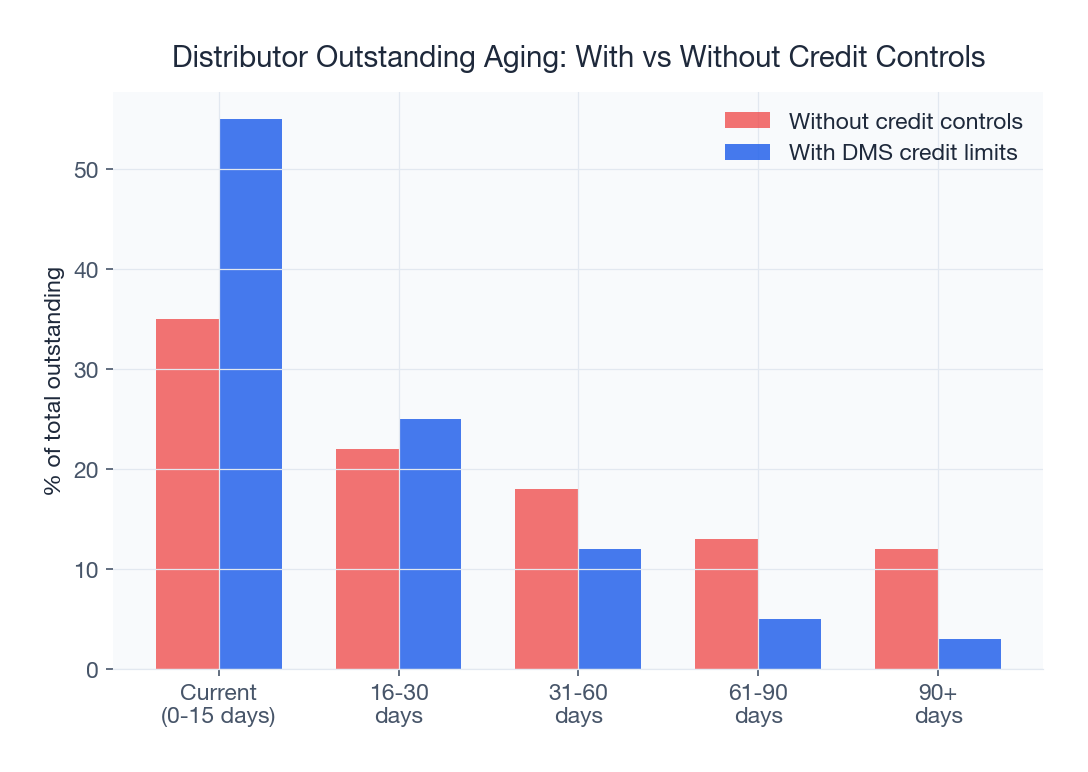
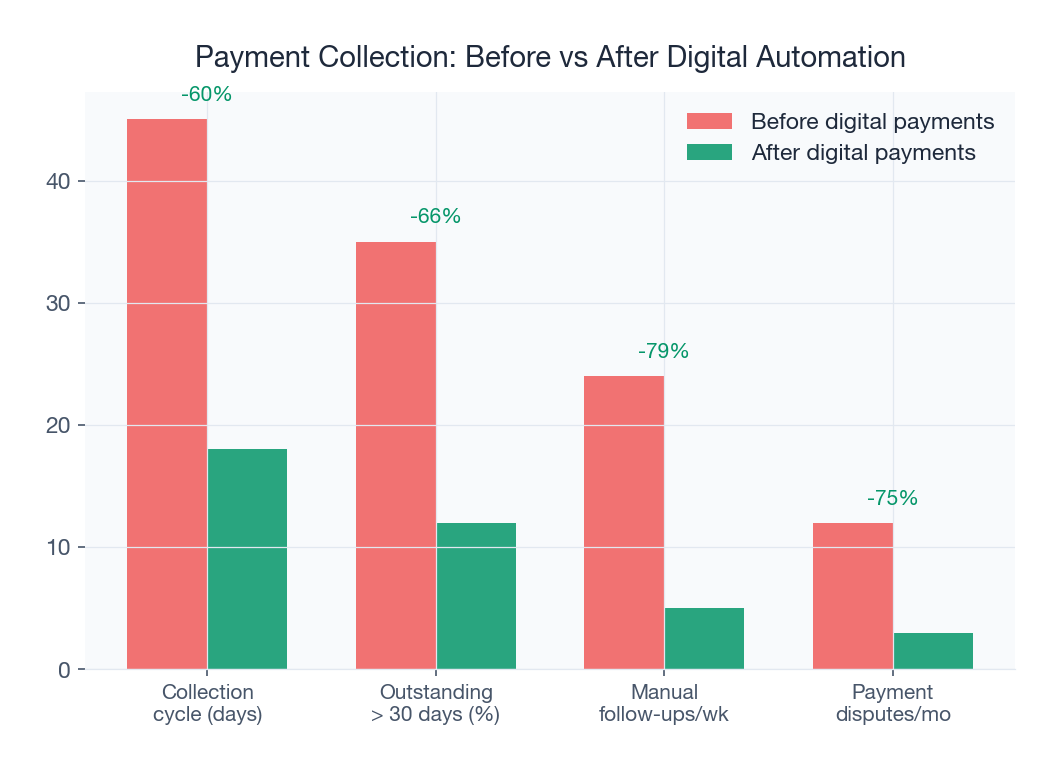
To understand more about how distributor finances work, read our guide on payment collection for dairy distributors.
The Digital Claims Workflow: Raise-Verify-Approve-Settle
A modern distribution management system transforms claims processing into a streamlined 4-step digital workflow that reduces settlement time from months to days.
Step 1: Digital Claim Raising
The distributor raises a claim through the mobile app or web portal. The system auto-populates product details, batch numbers, and invoice references from existing transaction data. Photos of damaged products are captured with GPS and timestamp metadata that cannot be manipulated. Bar code scanning links the claim directly to the specific batch and invoice. No handwritten forms, no WhatsApp messages, no ambiguity.
For expiry claims specifically, the system automatically validates whether the product was received with adequate remaining shelf life (for example, was the curd received with at least 80% shelf life remaining, as per the brand's policy?). If the product was received with short shelf life, the claim is automatically flagged as a "short shelf-life receipt" claim rather than a distributor negligence issue. Our expiry management guide covers how FEFO enforcement prevents most expiry claims at source.
Step 2: Automated Verification
The system cross-references the claim against actual transactions. For a damage claim, it verifies the batch was received from the claimed source and checks the goods receipt documentation (were damages noted at the time of receipt?). For scheme shortfall claims, it compares the scheme engine's configuration against actual benefits passed. For rate difference claims, it validates the price change notification date against the invoice date.
This automated verification eliminates the most common reason for claim rejections: insufficient or inconsistent documentation. When the system pre-validates a claim against transactional data, the approval authority can trust the claim's accuracy and approve faster.
Step 3: Multi-Level Approval
The verified claim routes to the appropriate approver based on claim type and amount. Small damage claims (under Rs 5,000) may be auto-approved based on pre-configured rules. Larger claims route to the ASM, then regional manager, then finance. Each approver sees the full claim history, supporting documents, and verification results on their dashboard or mobile app.
The approval matrix is fully configurable per brand. Brand A might allow ASMs to approve claims up to Rs 10,000, while Brand B sets the ASM limit at Rs 25,000. The system enforces these rules consistently, eliminating the ambiguity that plagues manual approval processes. Escalation timers ensure that if an approver does not act within 48 hours, the claim automatically escalates to the next level, preventing claims from sitting in someone's inbox indefinitely.
Step 4: Automated Settlement
Upon approval, the system generates a credit note with proper GST adjustments through the billing module. The credit is applied against the distributor's outstanding balance or scheduled for payment. The entire audit trail, from claim raising to settlement, is preserved digitally and available for any future audit or dispute resolution.
How DMS Prevents Claims at Source
The best claims management strategy is to prevent claims from arising in the first place. A good DMS does this through multiple prevention mechanisms:
- Quality inspection at receipt: Digital goods receipt with mandatory damage documentation and photo evidence prevents disputes about when damage occurred. If the distributor does not document damage at receipt, the system timestamps this, strengthening the manufacturer's position for transit damage claims.
- FEFO-based dispatch: First-expiry-first-out logic minimizes expiry claims by ensuring the earliest-expiring batches are always dispatched first
- Automated scheme application: The scheme engine applies correct schemes at the point of sale, eliminating shortfall claims. Read our detailed scheme management guide for more on this.
- Cold chain monitoring: Temperature tracking during storage and transit documents the cold chain for dairy products, preventing disputes about cold chain compliance
- Photo-verified delivery: Digital proof of delivery with photos and OTP prevents fake damage claims from retailers
- Rate change alerts: When brands announce price changes, the system alerts distributors to clear old-priced stock before the effective date, reducing rate difference claims
Claims Analytics: Identifying Patterns and Root Causes
Digital claims management generates data that reveals patterns invisible in manual processes. The sales analytics module can answer questions like:
- Which products generate the most expiry claims? (Signals demand forecasting issues or overstocking at certain locations)
- Which C&F agents have the highest damage claim rates? (Signals packaging or handling problems at specific dispatch points)
- Which distributors file the most scheme shortfall claims? (Signals training gaps or genuine scheme configuration issues)
- Is claims incidence higher in certain cities or regions? (Distributors in Chennai and Kolkata may have higher damage rates due to humidity affecting packaging)
- What is the seasonal pattern of claims? (Summer months typically see 40-60% higher expiry claims for dairy distributors)
This data enables brands to move from reactive claims settlement to proactive claims prevention. A brand that discovers 40% of its damage claims originate from one C&F agent can address the packaging or handling issue at source, reducing future claims for all distributors.
Case Study: Maharashtra Super-Stockist
A super-stockist in Pune handling 9 FMCG brands had Rs 2.8 crore in pending claims when they implemented SpireStock's claims module. The pending claims had accumulated over 18 months, with some claims dating back to the previous financial year. The super-stockist had one full-time employee dedicated to claims follow-up, spending 40+ hours per week on phone calls, emails, and physical follow-ups with brand offices.
| Metric | Before | After (12 months) | Improvement |
|---|---|---|---|
| Pending claims value | Rs 2.8 crore | Rs 42 lakh | 85% reduction |
| Average settlement time | 75 days | 9 days | 88% faster |
| Claim rejection rate | 35% (documentation issues) | 8% (legitimate rejections only) | 77% fewer rejections |
| Distributor NPS (brands' view) | -12 | +38 | 50 point improvement |
| Working capital freed | - | Rs 2.38 crore | Reinvested in growth |
| Staff hours on claims (monthly) | 120 hours | 18 hours | 85% reduction |
| New claims incidence (monthly) | Rs 12-15 lakh | Rs 6-8 lakh | 45% fewer claims generated |
The 45% reduction in new claims generation is particularly noteworthy. Digital goods receipt documentation, FEFO-based dispatch, and automated scheme application prevented claims from arising in the first place. The working capital freed (Rs 2.38 crore) was redirected into inventory for two new brand appointments, expanding the super-stockist's business. See our ROI calculation guide for more payback analysis.
GST Compliance for Credit Notes
Under Indian GST law, credit notes issued for claims must follow specific rules. The credit note must reference the original invoice, include the reason for credit, adjust tax amounts correctly (CGST, SGST, IGST), and be reported in the monthly GSTR-1 filing. Manual credit notes frequently have errors in tax adjustment, leading to ITC mismatches and GST audit notices.
Key GST requirements for claim-related credit notes include:
- Credit note must be issued within the time limit prescribed under Section 34 of the CGST Act (September of the following financial year or the date of filing annual return, whichever is earlier)
- Tax amounts must be adjusted proportionally based on the original invoice's tax rates
- For inter-state claims, IGST adjustments must match the original supply's tax treatment
- E-invoicing requirements apply to credit notes for businesses above the Rs 5 crore threshold
A DMS automates credit note generation with proper GST compliance, ensuring every claim settlement is tax-compliant. For more on GST billing requirements, read our GST billing guide for dairy distribution and our guide on e-way bill compliance.
Implementation Phases for Digital Claims Management
- Phase 1 (Week 1-2): Set up claim categories, approval workflows, and user roles. Configure brand-specific approval matrices and auto-approval thresholds.
- Phase 2 (Week 3-4): Migrate pending claims into the system with full documentation. Train distributor staff on digital claim raising via the mobile app.
- Phase 3 (Week 5-6): Go live with new claims on the digital platform. Continue settling legacy claims through the new system for audit trail consistency.
- Phase 4 (Month 3-6): Optimize workflows based on actual usage patterns. Add brand-specific rules, fine-tune auto-verification logic, and implement claims analytics dashboards.
Performance Metrics to Track
| Metric | Target | How to Measure |
|---|---|---|
| Average settlement time | Under 15 days | Claim raised date to settlement date |
| Claim rejection rate | Under 10% | Rejected claims / total claims |
| Pending claims value | Under 2% of monthly turnover | Total pending value / monthly revenue |
| First-time resolution | Above 80% | Claims settled without back-and-forth |
| Claims per Rs 1 crore sales | Declining trend | Number of claims / sales in crore |
| Claims prevention rate | Improving quarter-on-quarter | New claims vs baseline period |
Claim Type Deep Dive: Rate Difference Claims
Rate difference claims deserve special attention because they are among the most disputed and poorly understood claim types in Indian FMCG distribution. When a brand announces a price increase, distributors holding old-priced stock face an immediate margin hit. Conversely, when prices decrease, the brand must compensate distributors for stock purchased at the higher price.
The complexity arises from timing. A price change announced on the 15th of the month might apply to all dispatches from the 16th. But stock dispatched on the 14th may not reach the distributor until the 17th due to transit time. Should the distributor get old pricing or new pricing? Different brands handle this differently, and without a system that tracks dispatch dates, receipt dates, and price change effective dates, disputes are inevitable.
A DMS with order management capabilities resolves this by maintaining a time-stamped price history per product per company. When a rate difference claim is raised, the system validates the claim against the actual price in effect on the dispatch date, the receipt date, and the brand's stated effective date, eliminating ambiguity and accelerating resolution.
Distributor Display and Promotional Claims
Display and promotional claims, while smaller in individual value (Rs 5,000-50,000 per month), are the most friction-prone claim type because they depend on subjective proof of execution. A brand that pays Rs 10,000 per month for premium shelf space in a retail outlet expects photographic evidence of the display, correct product placement, and compliance with planogram guidelines.
Traditionally, ASMs verify display compliance during store visits and manually approve reimbursement. This process is slow, subjective, and prone to disputes. With field force tracking and geo-tagged photo capture through the mobile app, distributors can submit timestamped, location-verified photos of displays directly. The brand's regional team reviews these digitally, approves or requests corrections, and the reimbursement flows through the standard claims settlement process. For distributors handling display commitments across multiple brands in cities like Bangalore and Hyderabad, this automation recovers Rs 1-3 lakh annually in display claims that would otherwise go unsubmitted or get rejected for lack of documentation.
Multi-Brand Claims: The Super-Stockist Challenge
For super-stockists handling 8-15 brands, claims management complexity multiplies because each brand has its own claim categories, approval hierarchies, documentation requirements, and settlement timelines. A super-stockist in Surat might process damage claims for Brand A through an online portal, submit scheme shortfall claims for Brand B via email to the regional office, and hand-deliver expiry claim forms for Brand C to the ASM.
A multi-tenant DMS standardizes the claim raising process for the super-stockist while respecting each brand's unique approval workflow. The super-stockist raises all claims through one interface, and the system routes each claim to the appropriate brand's approval chain. Read our superstockist management guide for more on managing multi-brand operations.
Explore our solutions for dairy distribution, FMCG distribution, bakery and confectionery, and consumer goods industries. Learn about scheme management and payment collection solutions that complement digital claims management.
Crores stuck in unresolved claims? SpireStock's digital claims workflow reduces settlement time from months to days and frees locked working capital for business growth. Start your free trial or explore pricing plans to see the impact on your bottom line.
Sources & References
- FSSAI, Food Safety and Standards Authority of India
- IBEF, India Brand Equity Foundation, FMCG Sector
- GST Council, GST Council Official Portal
Frequently Asked Questions
The five most common claim types are: damage claims (products damaged during transit from manufacturer), expiry claims (products expired before sale), scheme shortfall claims (difference between promised and received trade schemes), transport claims (freight reimbursement), and promotional claims (reimbursement for display and visibility activities). Expiry and scheme shortfall claims typically have the highest value.
In manual processes, a straightforward claim takes 45-90 days from raising to settlement. This includes discovery delay, physical documentation, ASM forwarding, regional office processing, and payment processing. Contested claims can take 6-12 months. Digital claims management reduces this to 7-15 days on average.
A mid-sized distributor handling 5-8 brands typically has Rs 10-50 lakh in pending claims at any given time. For large super-stockists handling 10+ brands, pending claims can cross Rs 2-3 crore. This locked capital earns zero returns while the distributor often pays 12-18% interest on working capital loans.
Yes. The distributor-side claims module works independently. Claims are raised, verified, and tracked digitally on the distributor's DMS. When brands are on different systems, claims are exported as standardized reports or PDFs for submission. If the brand also uses SpireStock, the integration is seamless with real-time approval workflows.
Under GST rules, credit notes must reference the original invoice, include the reason for credit, and adjust CGST/SGST/IGST correctly. The credit note must be reported in GSTR-1 for the month of issuance. A DMS automates all of this, ensuring every claim settlement generates a GST-compliant credit note that reconciles with the original invoice.
ROI comes from three sources: working capital freed from pending claims (Rs 10-50 lakh typically), reduced staff time on claims processing (60-80% reduction), and lower claim rejection rate (from 35% to under 10% through better documentation). Most distributors see 5-8x ROI in the first year from working capital liberation alone.
Related SpireStock Features
GST-compliant invoicing with HSN codes, gate passes, and financial ledger.
Flexible incentive schemes, flat, bulk-pack, and quantitative, applied automatically.
Powerful dashboards with sales trends, MIS reports, and distribution analytics.
Related Industries
End-to-end dairy distribution software for milk, curd, paneer, and ghee brands. Manage orders, crates, cold chain, and GST billing in one platform.
Streamline FMCG distribution with order management, beat planning, retailer tracking, and GST billing. Built for Indian FMCG supply chains.
Distribution software for bakeries and confectionery brands. Manage short-shelf-life products, daily dispatch, returns, and retailer credit efficiently.
Distribution management for consumer goods brands. Manage distributors, retailers, schemes, and sales analytics across India. Start free trial.
Related Solutions
Manage your entire distributor network digitally. Onboarding, credit limits, outstanding tracking, and performance analytics. Start free trial.
Track distributor and retailer payments. Cash, UPI, cheque collection with reconciliation, ageing reports, and credit limit management.
Related Entities
Ready to Streamline Your Distribution?
Start your free 14-day trial and see how SpireStock can transform your dairy, FMCG or consumer-goods distribution operation, from order capture to crate recovery.

SpireStock Team
Distribution Technology Experts
SpireStock Team writes for SpireStock on distribution management, supply-chain optimisation and field operations for Indian dairy and FMCG brands.