FieldAssist مقابل BeatRoute مقابل SpireStock: ثلاث فلسفات وسوق واحد
نضجت برامج توزيع FMCG في الهند بسرعة. ما كان يوماً سباقاً ثنائياً بين امتدادات ERP القديمة وجداول البيانات اليدوية أصبح الآن مشهداً تنافسياً من المنصات المصممة لأغراض محددة، لكل منها فلسفة متميزة. FieldAssist و BeatRoute و SpireStock هي ثلاث من أكثر منصات DMS و SFA التي تتم مناقشتها في السوق الهندية اليوم، ومع ذلك فقد صُممت لمشاكل وملفات عملاء مختلفة جوهرياً.
تأسست FieldAssist في عام 2014 في غوروغرام، وبنت سمعتها على تتبع المبيعات الثانوية وأتمتة قوة المبيعات للعلامات التجارية الكبرى لـ FMCG. أُطلقت BeatRoute في عام 2016 من جايبور، وقدمت نموذجها الخاص "التوزيع الموجه بالأهداف" الذي يؤكد على مشاركة القنوات والتنفيذ الاستراتيجي. تم بناء SpireStock خصيصاً لتوزيع الألبان والمنتجات القابلة للتلف و FMCG في السوق المتوسطة، مع إعطاء الأولوية للقدرة على تحمل التكاليف والبساطة التشغيلية والميزات الخاصة بالصناعة مثل تتبع الصناديق وامتثال سلسلة التبريد وإدارة المخزون القائمة على انتهاء الصلاحية.
لا تعلن هذه المقارنة عن فائز عالمي. بدلاً من ذلك، تقوم بتفصيل كل بُعد مهم، من عمق الميزات والأسعار إلى تجربة المستخدم على تطبيق الهاتف وقدرات API، حتى تتمكن من مطابقة المنصة المناسبة لنموذج التوزيع الخاص بك وحجم الفريق والميزانية والأولويات التشغيلية. لإلقاء نظرة أوسع على المشهد، راجع أفضل 10 برامج DMS في الهند لعام 2026.
لقطة سريعة: جدول مقارنة ثلاثي
قبل الغوص العميق، إليك لقطة جنباً إلى جنب للمنصات الثلاث عبر الأبعاد التي يهتم بها الموزعون الهنود أكثر من غيرها.
| البعد | FieldAssist | BeatRoute | SpireStock |
|---|---|---|---|
| التأسيس | 2014، غوروغرام | 2016، جايبور | مصمم خصيصاً لـ DMS الألبان والمنتجات القابلة للتلف |
| الفلسفة الأساسية | تتبع المبيعات الثانوية و SFA للعلامات التجارية الكبرى | التوزيع الموجه بالأهداف مع مشاركة القنوات | DMS يركز على العمليات للمنتجات القابلة للتلف و FMCG في السوق المتوسطة |
| الشريحة المستهدفة | العلامات التجارية المتوسطة الكبيرة إلى المؤسسية لـ FMCG | العلامات التجارية الكبرى لـ FMCG مع قنوات متعددة المستويات | موزعو FMCG في السوق المتوسطة والألبان والسلع القابلة للتلف |
| حجم الشركة النموذجي | 50 إلى أكثر من 5,000 مندوب ميداني | 100 إلى أكثر من 3,000 موزع | 10 إلى 500 موزع |
| نموذج التسعير | لكل مستخدم، قائم على الوحدات (عادةً 25 ألف إلى أكثر من 200 ألف روبية شهرياً) | لكل مستخدم، قائم على الوحدات (عادةً 30 ألف إلى أكثر من 150 ألف روبية شهرياً) | شهري ثابت (5 آلاف إلى 15 ألف روبية شهرياً، مستخدمون غير محدودين) |
| وقت التنفيذ | 4 إلى 12 أسبوعاً | 4 إلى 10 أسابيع | 1 إلى 2 أسبوع |
| تتبع الصناديق/الأصول القابلة للإرجاع | غير أصلي (يتطلب تطويراً مخصصاً) | غير متوفر أصلياً | أصلي، مدمج |
| مخزون المنتجات القابلة للتلف (FEFO) | تتبع دفعات أساسي | تتبع دفعات أساسي | ميزة أساسية (FEFO، تنبيهات انتهاء الصلاحية، سلسلة التبريد) |
| تتبع المبيعات الثانوية | قوة أساسية (رؤية فورية) | نعم (مرتبط بالأهداف) | نعم |
| التنفيذ الموجه بالأهداف | لوحات معلومات KPI والأهداف | قدرة منصة أساسية (تتالي الأهداف) | لوحات معلومات KPI والتقارير |
| أدوات مشاركة تجار التجزئة | تطبيق تجار التجزئة، رؤية الخطط | متقدم (الولاء، التسويق المرئي، تسجيل المشاركة) | سير عمل الطلبات والتسليم القياسية |
| دعم اللغات المحلية | الهندية، إقليمية مختارة | الهندية، إقليمية مختارة | الهندية، الماراثية، الغوجاراتية، العربية |
| الوضع غير المتصل للهاتف | جزئي (يعتمد على المزامنة) | جزئي (مزامنة عند إعادة الاتصال) | قدرة كاملة على العمل دون اتصال |
| الفوترة الإلكترونية لـ GST | نعم | نعم | مدمج مع التقديم التلقائي وتصدير Tally |
| تجربة مجانية | عرض توضيحي فقط | عرض توضيحي فقط | نعم (14 يوماً، خدمة ذاتية) |
خلفيات الشركات
FieldAssist: قوة المبيعات الثانوية للمؤسسات FMCG
تأسست FieldAssist في عام 2014 بواسطة Paramdeep Singh في غوروغرام بمهمة واضحة: منح العلامات التجارية لـ FMCG رؤية فورية للمبيعات الثانوية ونشاط القوى الميدانية. جمعت الشركة جولات تمويل متعددة، بما في ذلك السلسلة B، ونمت لخدمة أكثر من 550 علامة تجارية استهلاكية في جميع أنحاء الهند وجنوب شرق آسيا وأفريقيا. تشمل قائمة عملائها أسماء مألوفة مثل Dabur و Emami و Jyothy Labs و Kellogg's و RSH Global.
تكمن قوة FieldAssist في عمقها كمنصة لتتبع المبيعات الثانوية و SFA. بنت الشركة تقنيتها حول البصيرة بأن معظم العلامات التجارية لـ FMCG في الهند لديها رؤية جيدة للمبيعات الأولية (العلامة التجارية إلى الموزع) ولكن بيانات فورية شبه معدومة عن المبيعات الثانوية (الموزع إلى تاجر التجزئة). جعلت هذه النقطة العمياء من المستحيل تحسين التوزيع أو تتبع فعالية الخطط أو فهم الأداء على مستوى المنفذ. حلت FieldAssist هذا من خلال توفير منصة تعتمد على الهاتف أولاً حيث يلتقط مندوبو المبيعات كل طلب وكل زيارة منفذ وكل استرداد خطة في الوقت الفعلي، مما يغذي محرك تحليلات مركزي يمنح مديري العلامات التجارية رؤية المبيعات الثانوية التي كانوا يفتقرون إليها سابقاً.
على مر السنين، توسعت FieldAssist إلى ما هو أبعد من SFA البحت إلى مجموعة إدارة توزيع أوسع. تتضمن المنصة الآن إدارة الموزعين (DMS) ومشاركة تجار التجزئة من خلال "تطبيق تجار التجزئة FieldAssist" وإدارة المطالبات والخطط ولوحات تحكم التحليلات. ومع ذلك، يظل حمضها النووي متجذراً في أتمتة القوى الميدانية وذكاء المبيعات الثانوية للعلامات التجارية التي تعمل من خلال شبكة موزعين.
المقايضات متوقعة لمنصة مبنية لمؤسسات FMCG. التسعير لكل مستخدم وقائم على الوحدات، والذي يتسع خطياً مع حجم الفريق. يتطلب التنفيذ إدارة مشروع مخصصة ويستغرق عادةً 4-12 أسبوعاً. تفترض المنصة نضجاً تنظيمياً معيناً: دعم IT مخصص وتسلسلات مبيعات منظمة وميزانية للاستثمار في برامج بمستوى المؤسسات. بالنسبة للعلامات التجارية التي تناسب هذا الملف، تقدم FieldAssist منصة مثبتة ومدعومة جيداً. بالنسبة للموزعين في السوق المتوسطة الذين لديهم 10-50 موظفاً ميدانياً وميزانيات أقل من 200,000 روبية سنوياً، فإن الملاءمة أقل طبيعية.
BeatRoute: التوزيع الموجه بالأهداف ومشاركة القنوات
تأسست BeatRoute في عام 2016 في جايبور بواسطة Vinod Kumar Meena، وهو خبير في توزيع السلع الاستهلاكية. جمعت الشركة تمويلاً مغامراً بما في ذلك جولة السلسلة A وتخدم أكثر من 200 علامة تجارية استهلاكية في جميع أنحاء الهند والأسواق الدولية المختارة.
الابتكار المميز لـ BeatRoute هو نموذجها "التوزيع الموجه بالأهداف" (GDD). حيث تبدأ معظم منصات DMS و SFA بالطلبات والتسليمات، تبدأ BeatRoute بالأهداف الاستراتيجية. تحدد العلامات التجارية أهدافاً مثل زيادة التوزيع العددي في منطقة أو تحسين حصة الرف أو إطلاق SKU جديد عبر قناة أو تعزيز درجات مشاركة تجار التجزئة. تقوم المنصة بتتالي هذه الأهداف عبر التسلسل الهرمي، من رئيس المبيعات الوطني إلى المديرين الإقليميين إلى مديري المناطق إلى مندوبي المبيعات الفرديين. يرى كل مستوى بالضبط ما يحتاج إلى تحقيقه وكيف تساهم أنشطته اليومية في الهدف الأكبر.
تقدم BeatRoute أيضاً ميزات قوية لمشاركة تجار التجزئة بما في ذلك برامج الولاء وتتبع الامتثال للتسويق المرئي ومراقبة شعور تجار التجزئة وإدارة الترقيات الخاصة بالقنوات. بالنسبة للعلامات التجارية الكبرى التي تدير توزيعاً متعدد القنوات يشمل التجارة الحديثة والتجارة العامة والمبيعات المؤسسية والتجارة الإلكترونية، توفر BeatRoute منصة موحدة تربط النية الاستراتيجية بالتنفيذ على المستوى الميداني.
تعكس المقايضات تلك الخاصة بمعظم المنصات الطموحة: يزداد التعقيد مع القدرة وتمتد الجداول الزمنية للتنفيذ لاستيعاب عمق التكوين ويعكس التسعير اتساع الميزات. للحصول على نظرة أعمق على BeatRoute تحديداً، اقرأ مقارنة SpireStock مقابل BeatRoute.
SpireStock: مصمم خصيصاً لتوزيع الألبان والمنتجات القابلة للتلف
تم بناء SpireStock لحل مشكلة تعامل معها معظم بائعي DMS باعتبارها أمراً ثانوياً: التحديات التشغيلية الفريدة لتوزيع السلع القابلة للتلف في الهند. يدير موزعو الألبان طلبات يومية متكررة بنوافذ إنتاج ضيقة وآلاف الصناديق القابلة للإرجاع التي تدور عبر مئات المنافذ ومخزون حساس لانتهاء الصلاحية يتبع بروتوكولات FEFO (الأول انتهاء الصلاحية يخرج أولاً) وتوثيق امتثال سلسلة التبريد وهوامش رقيقة جداً لا تترك مجالاً لبرامج باهظة الثمن.
إما أن منصات DMS التقليدية تجاهلت سير العمل الخاص بالمنتجات القابلة للتلف أو عاملتها كطلبات تخصيص تكلف لاكهات وتستغرق أشهراً. تم تصميم SpireStock من الألف إلى الياء للموزع أو العلامة التجارية الهندية في السوق المتوسطة التي تعمل من 10 إلى 500 نقطة توزيع. تركز المنصة على البساطة التشغيلية: واجهة نظيفة يمكن للموظفين الميدانيين ذوي المعرفة التقنية المحدودة تعلمها في ساعات. تدعم الهندية والماراثية والغوجاراتية والعربية، والتسعير شفاف وثابت، يبدأ من 5,000 روبية شهرياً بدون رسوم لكل مستخدم. للحصول على التفاصيل، استكشف حل إدارة الموزعين.
غوص عميق في مقارنة الميزات
إدارة الطلبات
إدارة الطلبات في FieldAssist مدمجة بإحكام مع وحدة SFA الخاصة بها. يلتقط مندوبو المبيعات الطلبات خلال زيارات البيت مع مزامنة فورية مع نظام الموزع. تدعم المنصة حجز الطلبات مع التطبيق التلقائي للخطط وتوصيات على مستوى SKU بناءً على تاريخ شراء المنفذ وسير عمل الموافقة على الطلبات للطلبات الكبيرة أو الاستثنائية. توفر FieldAssist أيضاً تطبيقاً موجهاً لتجار التجزئة حيث يمكن لأصحاب المنافذ تقديم الطلبات مباشرة، مما يقلل الاعتماد على زيارات مندوبي المبيعات للطلبات المتكررة. تعد قدرة الطلب الذاتي هذه فارقاً حقيقياً للعلامات التجارية التي تريد زيادة تكرار الطلبات دون زيادة حجم القوى الميدانية بشكل متناسب.
تؤطر BeatRoute إدارة الطلبات ضمن بنيتها الموجهة بالأهداف. الطلبات ليست مجرد معاملات بل مساهمات نحو أهداف التوزيع. تتتبع المنصة ما إذا كانت أنماط الطلبات تتماشى مع أهداف العلامة التجارية مثل أهداف التوزيع لكل SKU وأهداف تغطية المنافذ أو أهداف الحجم الخاصة بالقنوات.
تم بناء إدارة الطلبات في SpireStock للسرعة التشغيلية مع سير عمل خاص بالألبان. تدعم المنصة الطلبات اليومية المتكررة، وهي ميزة بالغة الأهمية لتوزيع الألبان حيث يطلب نفس تجار التجزئة طلبات مماثلة كل يوم. بدلاً من إعادة إدخال الطلبات يدوياً، يؤكد موظفو التسليم أو يعدلون الطلبات المعبأة مسبقاً على جهازهم المحمول. تتعامل SpireStock أيضاً مع التسليمات الجزئية والإرجاع مع تتبع الأسباب وطلبات الاستبدال في سير عمل واحد.
بالنسبة للعلامات التجارية التي تحتاج إلى إدارة الطلبات كأداة تنفيذ استراتيجية مرتبطة بأهداف التوزيع، فإن BeatRoute لها الأفضلية. بالنسبة للعلامات التجارية التي تحتاج إلى ذكاء فوري للمبيعات الثانوية مع طلب ذاتي لتجار التجزئة، تتقدم FieldAssist. بالنسبة لموزعي الألبان والمنتجات القابلة للتلف الذين يعالجون مئات الطلبات اليومية المتكررة بنوافذ ضيقة، توفر سير عمل SpireStock المصممة لغرض معين وقتاً كبيراً.
إدارة الخطط والترويج التجاري
توفر FieldAssist محرك خطط قوياً يدعم الخطط القائمة على الكمية والخصومات القائمة على القيمة وتسعير الشرائح والشراء X-الحصول على Y والخطط المركبة. قوتها هي تتبع فعالية الخطط في الوقت الفعلي: يمكن لمديري العلامات التجارية معرفة بالضبط الخطط التي تدفع الحجم وأي تجار التجزئة يستردون وأين يحدث تسرب الخطة. تدعم FieldAssist أيضاً ميزانية الخطط وتحليل ROI، وهو أمر قيم للعلامات التجارية التي تنفق كرورات سنوياً على الترقيات التجارية. قامت المنصة ببناء تكاملات تسحب بيانات أداء الخطط إلى لوحات معلومات التحليلات، مما يمنح فرق التسويق الرؤية التي يحتاجونها لتحسين الإنفاق التجاري.
تربط BeatRoute محرك الخطط الخاص بها في الإطار الموجه بالأهداف، مما يتيح خططاً مرتبطة بالأهداف تكافئ تجار التجزئة ليس فقط على الحجم ولكن على تخزين الحد الأدنى من SKUs أو الحفاظ على الامتثال للعرض أو تحقيق أهداف تكرار إعادة الطلب. هذا النهج للترويج التجاري القائم على النتائج متطور حقاً.
يغطي محرك الخطط في SpireStock أنواع الخطط الأكثر استخداماً من قبل العلامات التجارية في السوق المتوسطة: الشراء X-الحصول على Y والخصومات بالنسبة المئوية والتسعير القائم على الشرائح والخصومات النقدية والترقيات الموسمية. الفارق الرئيسي هو التكوين القائم على واجهة المستخدم بالخدمة الذاتية الذي يسمح لمديري المبيعات بتكوين الخطط واختبارها وإطلاقها بدون دعم IT أو تذاكر البائع. لمزيد من المعلومات حول إدارة الخطط، راجع دليل إدارة خطط FMCG.
تتبع الصناديق والأصول القابلة للإرجاع
هذا هو أهم فارق فردي لـ SpireStock مقابل كل من FieldAssist و BeatRoute. في توزيع الألبان، تمثل الصناديق القابلة للإرجاع استثماراً رأسمالياً كبيراً. عادةً ما يكون لدى موزع الألبان متوسط الحجم 5,000 إلى 20,000 صندوق متداول، كل منها بقيمة 150-300 روبية، مما يترجم إلى 750,000 روبية إلى 6 مليون روبية من الأصول التي يجب تتبعها يومياً.
يتتبع نظام إدارة الصناديق الأصلي في SpireStock كل صندوق من الإرسال إلى الإرجاع. يسجل موظفو التسليم تسليم الصناديق عند نقطة التسليم على تطبيقهم المحمول. ينشئ النظام تقارير فورية تعرض أرصدة الصناديق حسب المنفذ والمسار وشخص التسليم. تشير التنبيهات الآلية إلى المنافذ التي تأخر إرجاع صناديقها. تحدد تقارير التسوية الشهرية أنماط النقصان.
لا يقدم FieldAssist ولا BeatRoute تتبعاً أصلياً للصناديق أو الأصول القابلة للإرجاع. تم تصميم كلتا المنصتين بشكل أساسي لتوزيع FMCG غير القابل للتلف حيث تكون الأصول القابلة للإرجاع أقل شيوعاً. بالنسبة للشركات التي توزع منتجات الألبان والمشروبات في زجاجات قابلة للإرجاع وأسطوانات الغاز أو أي منتج يتضمن حاويات قابلة لإعادة الاستخدام، فإن هذه الفجوة قيد حاسم. تضيف الحلول البديلة المخصصة مع أي من المنصتين تكلفة وتعقيداً وعبء صيانة. لمزيد من المعلومات حول هذا الموضوع، اقرأ دليلنا حول تتبع الأصول القابلة للإرجاع في FMCG.
تحسين المسار وتخطيط البيت
توفر FieldAssist تخطيطاً شاملاً للبيت مع تتبع الالتزام بالمسار وتسلسل زيارات المنافذ وإدارة خطة الرحلة. تتتبع المنصة المسارات المخططة مقابل الفعلية وتشير إلى الانحرافات وتوفر تحليلات إنتاجية على مستوى البيت. تخطيط بيت FieldAssist مدمج بإحكام مع وحدة SFA الخاصة بها، مما يضمن توافق نشاط القوى الميدانية مع خطط التغطية. تدعم المنصة أيضاً إدارة خطة الرحلة الدائمة (PJP)، وهي النهج القياسي للعلامات التجارية الكبرى لـ FMCG التي تدير مئات مندوبي المبيعات عبر مناطق متعددة.
توفر BeatRoute تخطيط المسار المدمج مع نظام إدارة البيت، مما يتيح للمديرين تصميم بيوت تتماشى مع أهداف التوزيع بدلاً من الكفاءة الجغرافية البحتة. تتتبع المنصة الالتزام بالبيت في الوقت الفعلي وتوفر تحليلات حول الأداء على مستوى المسار بالنسبة لتحقيق الأهداف.
يركز تحسين المسار في SpireStock على إدارة المسار اليومي العملي لعمليات التوزيع حيث تكون نوافذ التسليم ضيقة. تدعم المنصة تخطيط المسار متعدد المحطات وتحسين تسلسل التسليم بناءً على الجغرافيا والأولوية ونوافذ الوقت وتتبع المركبات القائم على GPS. بالنسبة لتوزيع الألبان حيث يمكن أن تكون نوافذ التسليم ضيقة مثل 4 ساعات للمنتجات الطازجة، ترتبط كفاءة المسار مباشرة بجودة المنتج. راجع أيضاً دليل برامج تخطيط البيت.
تحليلات المبيعات والتقارير
تحليلات FieldAssist يمكن القول إنها أقوى وحدة لديها. توفر المنصة تحليلات عميقة للمبيعات الثانوية بدقة على مستوى المنفذ: اتجاهات المبيعات حسب SKU والمنفذ والمنطقة ومندوب المبيعات. تقدم وحدة "FieldAssist Insights" تحليلات متقدمة بما في ذلك تقديرات حصة السوق ومقاييس جودة التوزيع (التوزيع العددي والمرجح) وتحديد فرص النمو والتحليلات التنبؤية لتخطيط الطلب. بالنسبة للعلامات التجارية الكبرى التي تتخذ قرارات توزيع مدفوعة بالبيانات، فإن عمق تحليلات FieldAssist يعد ميزة تنافسية حقيقية.
تم بناء تحليلات BeatRoute حول فلسفتها الموجهة بالأهداف. تعرض لوحات المعلومات تحقيق الأهداف على كل مستوى تسلسلي، مع تحليلات على مستوى القناة تعرض الأداء عبر التجارة الحديثة والتجارة العامة والقنوات المؤسسية.
توفر تحليلات المبيعات في SpireStock قدرات التقارير التي تحتاجها العلامات التجارية في السوق المتوسطة: لوحات معلومات المبيعات اليومية والأسبوعية والشهرية والأداء حسب المنتج والمسار وتتبع التحصيل وفعالية الخطط وتحليل الاتجاهات. تم تصميم التقارير لتكون نظيفة وقابلة للتنفيذ دون الحاجة إلى فريق علم البيانات. بالنسبة لمعظم العمليات في السوق المتوسطة، تغطي تحليلات SpireStock الأرض الحرجة دون عبء التكوين.
القوى الميدانية و SFA
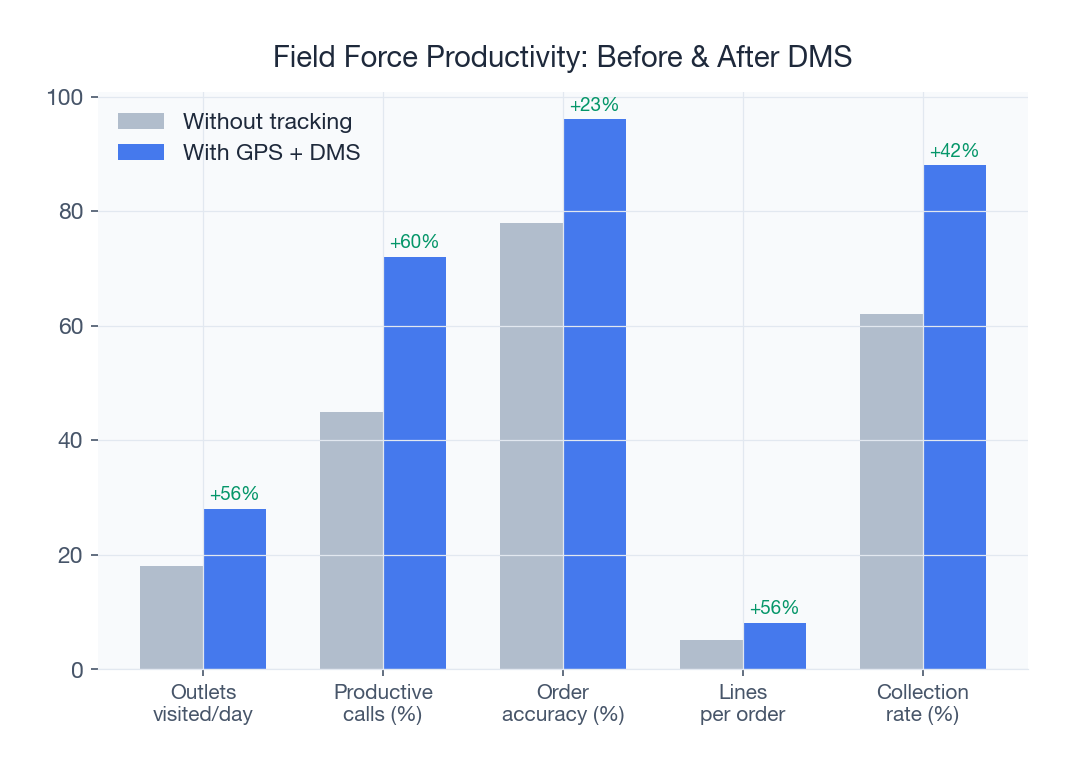
وُلدت FieldAssist كمنصة SFA، وهذا واضح. تتبع GPS مع رؤية الموقع في الوقت الفعلي والحضور بالجدران الجغرافية ومراقبة الالتزام بالبيت وتتبع زيارة المنفذ مع الطوابع الزمنية والتقاط النشاط داخل المتجر (الصور والاستطلاعات والتدقيقات) وبطاقات أداء مندوب المبيعات كلها مدمجة بعمق. توفر FieldAssist أيضاً تطبيقاً للمشرف يمنح المديرين رؤية فورية لأنشطة فريقهم، مما يتيح التدريب والتدخل الميداني. تدعم المنصة تسلسلات مبيعات معقدة مع وصول قائم على الدور، مما يجعلها مناسبة للمؤسسات التي لديها آلاف الممثلين الميدانيين عبر مناطق ومناطق متعددة.
توفر BeatRoute قدرات SFA مماثلة معززة بطبقتها الموجهة بالأهداف: يرى كل مندوب ميداني الأهداف اليومية ويفهم كيف تساهم الأنشطة في الأهداف ويتلقى ملاحظات تقدم فورية. تقدم BeatRoute أيضاً قدرات مشاركة تجار التجزئة ضمن وحدة SFA الخاصة بها، بما في ذلك إدارة الولاء وتتبع الشعور.
تغطي ميزات القوى الميدانية في SpireStock الأساسيات: تتبع GPS وتسجيل الدخول/الخروج للحضور والالتزام بتخطيط البيت والتقاط الطلبات وتأكيد التسليم مع إثبات التسليم وتقارير النشاط اليومي. تم تحسين تطبيق الهاتف لأجهزة Android المنخفضة الشائعة بين موظفي التسليم الهنود، مستهلكاً مساحة تخزين وبطارية وبيانات أقل. عندما يستخدم موظفو التسليم هاتفاً ذكياً بقيمة 8,000 روبية مع 2 جيجابايت RAM واتصال 3G متقطع، يصبح أداء التطبيق ميزة تنافسية.
الفوترة والإصدار والامتثال لـ GST
تدعم جميع المنصات الثلاث الفوترة المتوافقة مع GST، لكن العمق يختلف. توفر FieldAssist فوترة GST مع إنشاء الفواتير الإلكترونية وإدارة رمز HSN والتكامل مع أنظمة محاسبة الموزعين. ومع ذلك، كان التركيز الأساسي لـ FieldAssist تاريخياً على SFA بدلاً من الفوترة، لذا فإن وحدة الفوترة الخاصة بها، رغم كونها وظيفية، ليست بنفس عمق الميزات مثل حلول الفوترة المخصصة. تعتمد بعض تطبيقات FieldAssist على نظام الفوترة الحالي للموزع (غالباً Tally) مع FieldAssist يتعامل مع التقاط الطلبات ونظام الفوترة يتعامل مع إنشاء الفواتير.
توفر BeatRoute فوترة قياسية متوافقة مع GST مع الفوترة الإلكترونية ودعم فاتورة e-way.
توفر وحدة الفوترة في SpireStock الوظائف الأعمق في هذا المجال: حسابات TCS/TDS التلقائية وإدارة إشعارات الائتمان للإرجاع ومعالجة الفواتير متعددة المعدلات الحرجة للألبان (0% للحليب الطازج و5% للألبان المعبأة و12% للزبدة والجبن و18% للآيس كريم) وتصدير Tally المباشر. لمزيد من المعلومات حول فوترة GST، اقرأ دليل فوترة GST لتوزيع الألبان.
تجربة المستخدم لتطبيق الهاتف والوضع غير المتصل
تحدد جودة تطبيق الهاتف الاعتماد في العالم الحقيقي. تطبيق مصمم بشكل جميل يتعطل على هواتف الميزانية أو يفشل بدون اتصال غير مفيد للعمليات الميدانية الهندية.
تطبيق الهاتف الخاص بـ FieldAssist غني بالميزات ومصمم بشكل جيد لمندوبي المبيعات الذين ينفذون سير عمل معقدة: التقاط الطلبات وتطبيق الخطط وتدقيق المنافذ والتقاط الصور وتنفيذ الاستطلاعات وتقارير النشاط. يدعم التطبيق التقاط البيانات دون اتصال مع المزامنة عند إعادة الاتصال، على الرغم من أن بعض الميزات تتطلب الاتصال. استثمرت FieldAssist بشكل كبير في أداء التطبيق وتجربة المستخدم، والتطبيق يحظى بتقدير جيد عموماً من قبل المستخدمين. ومع ذلك، فإن كثافة الميزات تعني حجم تطبيق أكبر واستهلاك موارد أعلى، مما يمكن أن يكون قيداً على أجهزة الميزانية.
تطبيق BeatRoute غني بالميزات بشكل مماثل مع تتبع الأهداف وأدوات مشاركة تجار التجزئة والتقاط التسويق. يدعم التطبيق الوضع غير المتصل الجزئي مع مزامنة البيانات عند عودة الاتصال. تم تصميم تطبيق BeatRoute للممثلين الميدانيين الذين ينفذون سير عمل متعدد الخطوات في كل منفذ بيع بالتجزئة.
يتخذ تطبيق SpireStock نهجاً مختلفاً عمداً: خفيف وسريع، محسن للهواتف الذكية الاقتصادية ذات التخزين المحدود والاتصال غير الموثوق. يدعم التطبيق الوضع غير المتصل الكامل، مما يسمح لموظفي التسليم بمعالجة الطلبات وتسجيل معاملات الصناديق والتقاط إثبات التسليم وإكمال جميع سير العمل اليومي دون اتصال بالإنترنت. تتم مزامنة البيانات تلقائياً عند إعادة الاتصال. حجم التطبيق أصغر بكثير من كل من FieldAssist و BeatRoute، ويعمل بسلاسة على الأجهزة التي تحتوي على 2 جيجابايت RAM و Android 8+. في المناطق من الطبقة 2 والطبقة 3 حيث تكون انقطاعات الاتصال متكررة، تمنع هذه القدرة القوية على العمل دون اتصال انقطاعات سير العمل التي تكلف الوقت والمال.
بالنسبة لفرق مبيعات المؤسسات ذات الهواتف الذكية الجيدة والاتصال الموثوق، يعمل تطبيق FieldAssist الغني بالميزات بشكل جيد. للتنفيذ الاستراتيجي مع تتبع الأهداف، يقدم تطبيق BeatRoute. بالنسبة لفرق توصيل الألبان والمنتجات القابلة للتلف التي تستخدم أجهزة اقتصادية في مناطق ذات اتصال ضعيف، فإن تصميم SpireStock الخفيف الذي يعمل دون اتصال أولاً هو الفائز العملي.
قدرات API والتكامل
تحدد قدرة التكامل مدى ملاءمة DMS لنظامك البيئي التكنولوجي الحالي. تقدم جميع المنصات الثلاث REST APIs، لكن العمق والمرونة يختلفان.
توفر FieldAssist REST APIs لاستخراج البيانات والتكامل مع أنظمة ERP (SAP و Oracle و Microsoft Dynamics) وبرامج المحاسبة وأدوات ذكاء الأعمال. لدى FieldAssist تكاملات مبنية مسبقاً مع العديد من أنظمة المؤسسات وتقدم دعم تكامل مخصص للعملاء الكبار. توفر المنصة أيضاً قدرة بحيرة بيانات للعملاء الذين يريدون بناء تحليلات مخصصة فوق بيانات FieldAssist. بالنسبة للعلامات التجارية التي تشغل بالفعل أنظمة ERP المؤسسية، يقلل عمق تكامل FieldAssist من الاحتكاك.
تقدم BeatRoute REST APIs وتدعم التكامل مع أنظمة ERP ومنصات المحاسبة وأدوات الطرف الثالث. توفر المنصة دعم webhook للتكاملات المدفوعة بالأحداث وقد بنت موصلات لأدوات الأعمال الهندية الشائعة. وثائق API الخاصة بـ BeatRoute متاحة للعملاء، ويدعم فريق التكامل متطلبات الاتصال المخصصة.
توفر SpireStock REST APIs لجميع الوحدات الأساسية: الطلبات والمخزون والفوترة والتحصيلات وإدارة الصناديق. التكامل البارز للمنصة هو تصدير Tally المباشر، وهو أمر مهم بشكل كبير في السوق الهندية حيث يظل Tally العمود الفقري للمحاسبة للغالبية العظمى من الموزعين. تدعم SpireStock أيضاً التكاملات القائمة على webhook وتوفر وثائق API للاتصالات المخصصة. على الرغم من أن النظام البيئي لتكامل SpireStock ليس واسعاً مثل موصلات المؤسسة الخاصة بـ FieldAssist، إلا أنه يغطي التكاملات التي يستخدمها الموزعون في السوق المتوسطة بالفعل: Tally وبوابات GST وبوابات الدفع و WhatsApp لإشعارات التسليم.
مصفوفة الميزات التفصيلية (أكثر من 15 ميزة)
| الميزة | FieldAssist | BeatRoute | SpireStock |
|---|---|---|---|
| التقاط الطلبات (الهاتف) | نعم | نعم | نعم |
| الطلبات المتكررة/الدائمة | محدود | محدود | نعم (محسن للألبان) |
| التسليم الجزئي والإرجاع | نعم | نعم | نعم (سير عمل واحد) |
| تطبيق الطلب الذاتي لتجار التجزئة | نعم (FieldAssist Retailer App) | نعم | مخطط |
| التنفيذ الموجه بالأهداف | أهداف قائمة على KPI | قدرة أساسية (تتالي الأهداف) | لوحات معلومات KPI |
| محرك الخطط | نعم (مع تتبع ROI) | نعم (مرتبط بالأهداف) | نعم (تكوين خدمة ذاتية قائم على واجهة المستخدم) |
| تتبع الصناديق/القابلة للإرجاع | لا | لا | نعم (أصلي) |
| مراقبة سلسلة التبريد | لا | لا | نعم |
| المخزون القائم على انتهاء الصلاحية (FEFO) | تتبع دفعات أساسي | تتبع دفعات أساسي | نعم (ميزة أساسية) |
| تحسين المسار | نعم (قائم على PJP) | نعم (متوافق مع الأهداف) | نعم (محسن لنافذة التسليم) |
| تتبع GPS الميداني | نعم (فوري) | نعم (مع الجدران الجغرافية) | نعم |
| تخطيط البيت | نعم (PJP متقدم) | نعم (متوافق مع الأهداف) | نعم |
| مشاركة تجار التجزئة/الولاء | نعم (تطبيق تجار التجزئة) | نعم (متقدم) | أساسي |
| تتبع التسويق المرئي | نعم | نعم | لا |
| تتالي الأهداف (العلامة التجارية إلى الميدان) | لا | نعم | لا |
| تحليلات المبيعات الثانوية | قوة أساسية (عميقة) | نعم (مرتبط بالأهداف) | لوحات معلومات قياسية |
| تحليلات خاصة بالقناة | نعم (MT, GT, مؤسسي) | نعم (MT, GT, مؤسسي) | أساسي |
| الفوترة الإلكترونية لـ GST | نعم | نعم | نعم |
| إنشاء فاتورة e-way | نعم | نعم | نعم |
| تكامل Tally | نعم (قائم على API) | نعم (API) | نعم (تصدير مباشر) |
| معالجة معدلات GST متعددة | نعم | نعم | نعم (معدلات خاصة بالألبان) |
| إدارة إشعارات الائتمان | نعم | نعم | نعم |
| واجهة مستخدم متعددة اللغات | الهندية، إقليمية مختارة | الهندية، إقليمية مختارة | الهندية، الماراثية، الغوجاراتية، العربية |
| الوضع غير المتصل للهاتف | جزئي (يعتمد على المزامنة) | جزئي (مزامنة عند إعادة الاتصال) | غير متصل بالكامل |
| إثبات التسليم (صورة/OTP) | نعم | نعم | نعم |
| الحضور وتسجيل الدخول | نعم (جدران جغرافية) | نعم | نعم |
| تتبع تحصيل المدفوعات | نعم | نعم | نعم |
| بوابة تأهيل الموزعين | نعم (مُدارة) | نعم (مُدارة) | نعم (خدمة ذاتية) |
| التقارير المخصصة | متقدم (جاهز لـ BI) | منشئ تقارير موجه بالأهداف | قوالب قياسية |
| الوصول إلى API | REST API (بمستوى المؤسسات) | REST API | REST API |
| تكامل ERP | SAP, Oracle, Dynamics | موصلات ERP قياسية | يركز على Tally |
| العلامة البيضاء | متاح | متاح | متاح |
| التحليلات التنبؤية | نعم | محدود | لا |
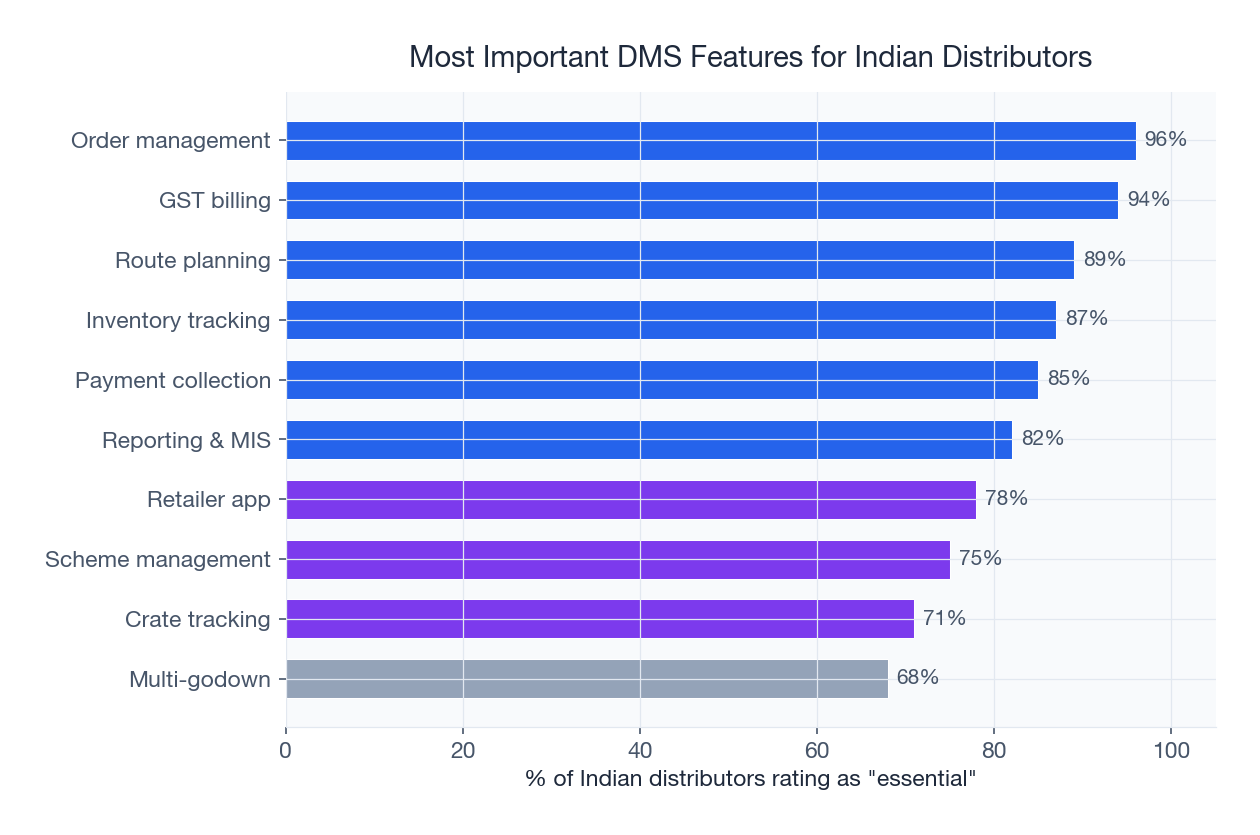
النمط واضح: يتصدر FieldAssist في عمق SFA وتحليلات المبيعات الثانوية للعلامات التجارية المؤسسية. يتصدر BeatRoute في التنفيذ الاستراتيجي الموجه بالأهداف ومشاركة القنوات. يتصدر SpireStock في العمليات الخاصة بالمنتجات القابلة للتلف (تتبع الصناديق وسلسلة التبريد و FEFO والطلبات المتكررة) والقدرة على تحمل التكاليف للموزعين في السوق المتوسطة. للحصول على قائمة تحقق أوسع للميزات، راجع قائمة تحقق ميزات DMS.
مقارنة الأسعار
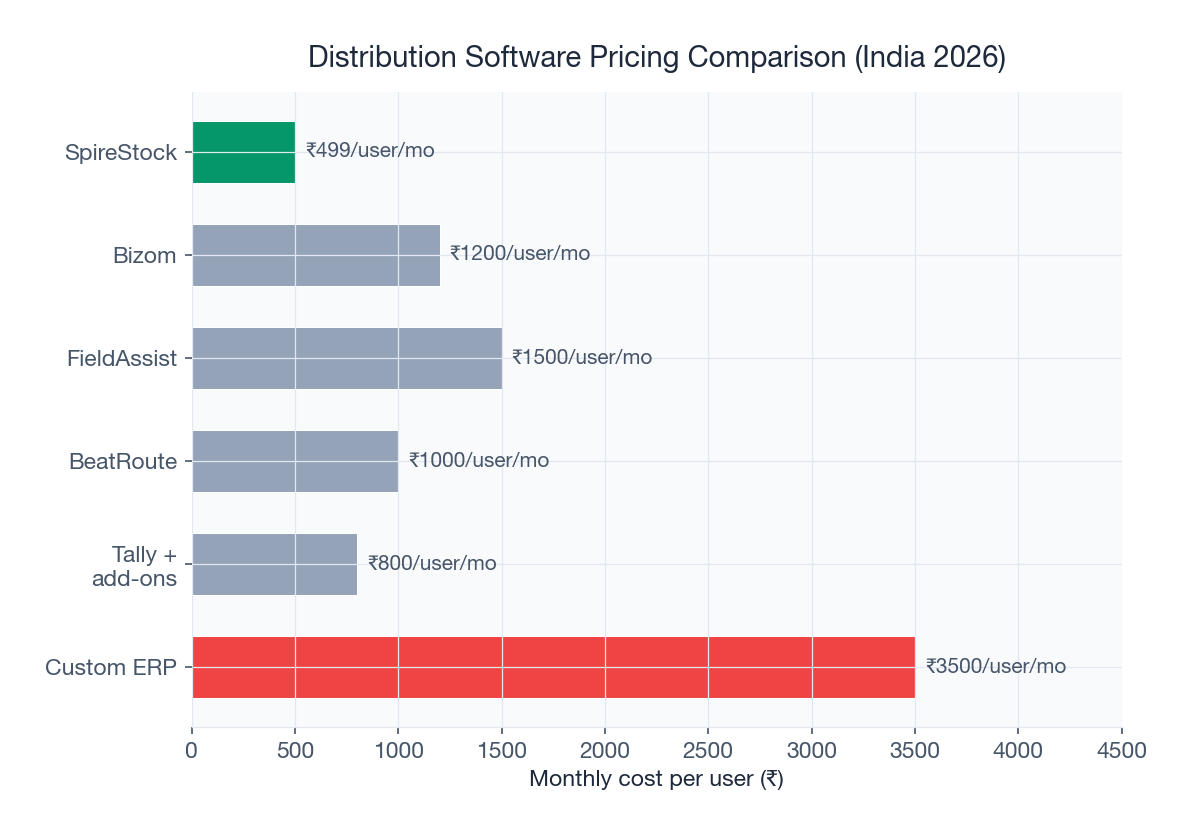
غالباً ما تكون الأسعار العامل الحاسم للشركات الهندية، وهنا تتباين المنصات الثلاث بشكل كبير. تنشر SpireStock الأسعار بشفافية. لا تنشر FieldAssist ولا BeatRoute الأسعار علناً، مما يتطلب استشارات مبيعات للحصول على عروض الأسعار.
| مكون التكلفة | FieldAssist | BeatRoute | SpireStock |
|---|---|---|---|
| الاشتراك الشهري | 25,000 إلى أكثر من 200,000 روبية شهرياً | 30,000 إلى أكثر من 150,000 روبية شهرياً | 5,000 إلى 15,000 روبية شهرياً (ثابت) |
| نموذج التسعير | لكل مستخدم + قائم على الوحدات | لكل مستخدم + قائم على الوحدات | شهري ثابت، مستخدمون غير محدودين |
| رسوم التنفيذ | 300,000 إلى 1.5 مليون روبية | 200,000 إلى 1 مليون روبية | 0 روبية (مشمولة) |
| التدريب | 100,000 إلى 500,000 روبية | 50,000 إلى 300,000 روبية | مشمول (عبر الإنترنت + في الموقع) |
| التخصيص | 200,000 إلى 1.2 مليون روبية | 100,000 إلى 800,000 روبية | 0 إلى 50,000 روبية |
| إجمالي التكلفة السنوية (صغير، 10 مستخدمين) | 1 إلى 2.5 مليون روبية | 800,000 إلى 2 مليون روبية | 60,000 إلى 180,000 روبية |
| إجمالي التكلفة السنوية (متوسط، 30 مستخدماً) | 2 إلى 4.5 مليون روبية | 1.8 إلى 4 مليون روبية | 60,000 إلى 180,000 روبية |
| إجمالي التكلفة السنوية (كبير، 100 مستخدم) | 6 مليون إلى 15 مليون روبية | 5 مليون إلى 12 مليون روبية | 120,000 إلى 180,000 روبية |
| تجربة مجانية | عرض توضيحي فقط | عرض توضيحي فقط | نعم (14 يوماً) |
| قفل العقد | عقد سنوي نموذجي | عقد سنوي نموذجي | شهري (لا قفل) |
فجوة الأسعار هائلة. ستدفع عملية متوسطة الحجم مع 30 موظفاً ميدانياً من 60,000 إلى 180,000 روبية سنوياً مع SpireStock مقابل 1.8 إلى 4.5 مليون روبية مع FieldAssist أو BeatRoute. هذا فرق تكلفة من 10 إلى 25 ضعفاً. بالنسبة للعمليات الأكبر، تتضمن منصات المؤسسات قدرات لا تقدمها SpireStock، خاصة ذكاء المبيعات الثانوية العميق (FieldAssist) والتنفيذ الموجه بالأهداف (BeatRoute)، لذا فإن المقارنة ليست تماماً مثل التفاح بالتفاح في الطرف الأعلى.
ومع ذلك، بالنسبة للشركات في السوق المتوسطة التي توزع منتجات الألبان أو المنتجات القابلة للتلف أو FMCG القياسية، يصعب تبرير فجوة التكلفة ما لم تحتج تحديداً إلى عمق SFA المؤسسي أو التوزيع الموجه بالأهداف. التسعير الثابت لـ SpireStock مفيد بشكل خاص للشركات النامية: مستخدمك الخمسين يكلف نفس مستخدمك الخامس. للحصول على تحليل أسعار كامل لسوق DMS الهندي، قم بزيارة صفحة الأسعار أو اقرأ دليل أسعار DMS للهند.
اختلافات السوق المستهدفة
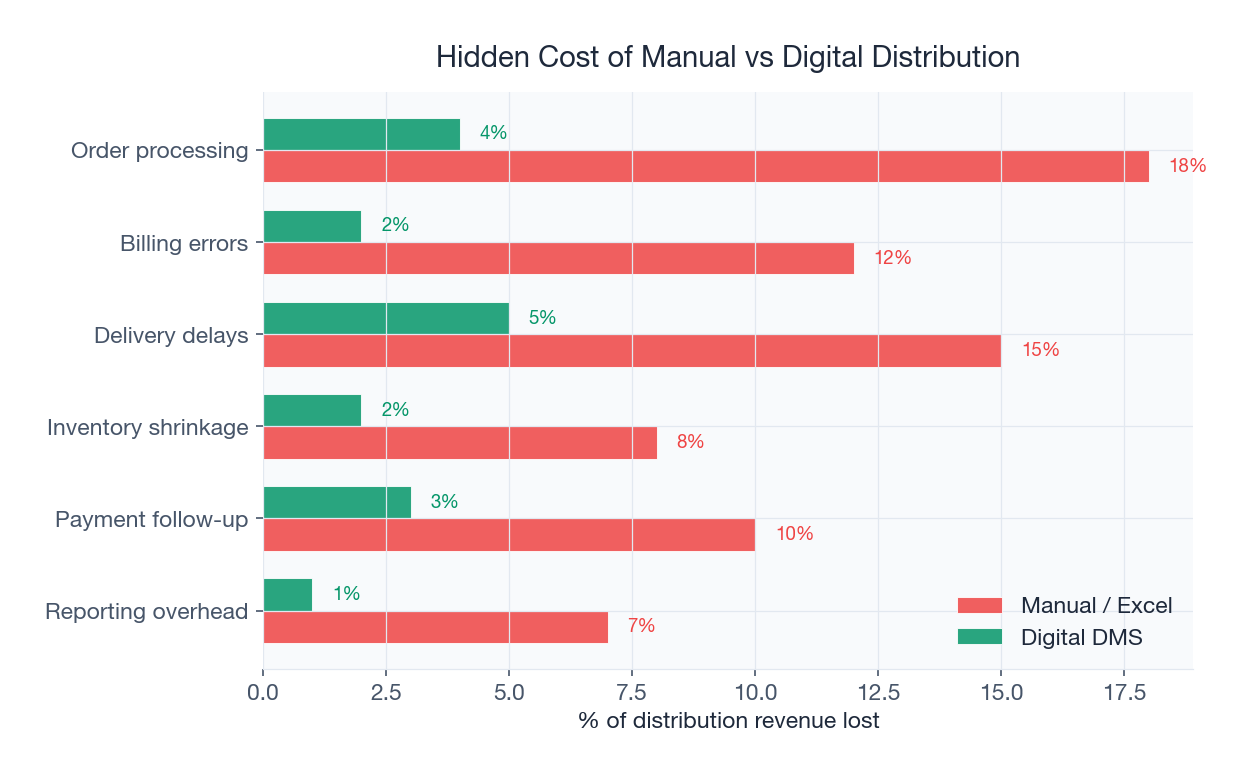
فهم لمن صُممت كل منصة أكثر كشفاً من أي مقارنة ميزات.
FieldAssist مصمم للعلامات التجارية المتوسطة الكبيرة إلى المؤسسية لـ FMCG التي تعمل من خلال شبكة موزعين وتحتاج إلى رؤية فورية للمبيعات الثانوية عبر قناة التوزيع الخاصة بها. عميل FieldAssist النموذجي هو علامة تجارية بإيرادات تزيد عن 100 كرور روبية و50 إلى 5,000 ممثل ميداني وعمليات متعددة المناطق وفريق عمليات مبيعات أو IT مخصص يمكنه إدارة المنصة. نقطة قوة FieldAssist هي العلامات التجارية التي تجاوزت العمليات اليدوية وتحتاج إلى تحليلات بمستوى المؤسسات لتحسين توزيعها.
BeatRoute يستهدف العلامات التجارية الكبرى لـ FMCG ذات استراتيجيات متعددة القنوات المعقدة. يدير عميل BeatRoute النموذجي التجارة الحديثة والتجارة العامة والقنوات المؤسسية والتجارة الإلكترونية في وقت واحد، مع استراتيجيات توزيع مختلفة لكل منها. نقطة قوة BeatRoute هي العلامات التجارية التي لا يكون تحديها الأساسي هو الكفاءة التشغيلية بل التنفيذ الاستراتيجي: ضمان توافق النشاط الميداني عبر مئات المناطق مع أهداف العلامة التجارية واستراتيجيات القنوات.
SpireStock يخدم موزعي والعلامات التجارية في السوق المتوسطة لـ FMCG، مع قوة خاصة في توزيع الألبان والمنتجات القابلة للتلف والحساسة للحرارة. مستخدم SpireStock النموذجي هو موزع مستقل أو علامة تجارية إقليمية للألبان أو شركة FMCG في السوق المتوسطة مع 10 إلى 500 نقطة توزيع. نقطة قوة SpireStock هي الشركات التي تحتاج إلى DMS كامل الميزات دون سعر المؤسسات، خاصة تلك التي لديها متطلبات خاصة بالمنتجات القابلة للتلف التي تتجاهلها المنصات السائدة.
مقارنة دعم العملاء
جودة الدعم مهمة أكثر من الميزات عندما يحدث خلل ما في الساعة 6 صباحاً ورحلة التسليم الصباحية على المحك.
FieldAssist يوفر إدارة حساب مخصصة للعملاء المؤسسيين، مع مديري نجاح عملاء معينين وقنوات دعم ذات أولوية ومراجعات أعمال منتظمة. الدعم سريع الاستجابة عموماً للحسابات الكبيرة. قد يواجه العملاء الأصغر أوقات استجابة أطول حيث يكون نموذج الدعم متدرجاً حسب حجم الحساب. توفر FieldAssist أيضاً قاعدة معرفة واسعة وموارد تدريب.
BeatRoute يقدم إدارة الحساب ودعم التنفيذ، مع فرق مخصصة للعملاء الكبار. توفر الشركة موارد تدريب ووثائق ودعم تكوين مستمر. يبلغ المستخدمون أن استجابة الدعم تختلف، حيث تحظى الحسابات الكبيرة باهتمام ذي أولوية.
SpireStock يوفر دعماً مباشراً عبر الهاتف و WhatsApp والبريد الإلكتروني مع أوقات استجابة عادةً أقل من ساعتين خلال ساعات العمل. نظراً لأن SpireStock يستهدف عملاء السوق المتوسطة، فإن الدعم غير متدرج حسب حجم الحساب. كل عميل يحصل على نفس مستوى الاهتمام. يشمل التأهيل التدريب العملي للموظفين الميدانيين، ويتضمن الدعم المستمر مساعدة التكوين ومساعدة إعداد الخطط واستكشاف الأخطاء وإصلاحها. بالنسبة لموزعي الألبان الذين يعملون وفق جداول صباحية ضيقة، فإن القدرة على الوصول إلى الدعم بسرعة عندما تمنع مشكلة فوترة الإرسال هي ميزة تشغيلية حقيقية.
ملخص الإيجابيات والسلبيات
FieldAssist: الإيجابيات
- تحليلات المبيعات الثانوية والرؤية الرائدة في الصناعة
- قدرات SFA عميقة مع دعم التسلسل الهرمي المعقد
- تطبيق موجه لتجار التجزئة للطلب الذاتي
- التحليلات التنبؤية وتصدير البيانات الجاهزة لـ BI
- تكاملات ERP المؤسسية القوية (SAP, Oracle, Dynamics)
- مثبت على نطاق واسع مع أكثر من 550 علامة تجارية
- أدوات التسويق المرئي وتدقيق المتجر
FieldAssist: السلبيات
- لا يوجد تتبع أصلي للصناديق أو الأصول القابلة للإرجاع
- لا توجد ميزات خاصة بالمنتجات القابلة للتلف (سلسلة التبريد، FEFO، الطلبات المتكررة)
- التسعير لكل مستخدم يجعله مكلفاً للفرق النامية
- يستغرق التنفيذ 4-12 أسبوعاً مع رسوم منفصلة
- مبالغ فيه للموزعين الصغار وفي السوق المتوسطة بعمليات بسيطة
- الوضع غير المتصل الجزئي يمكن أن يكون مقيداً في المناطق ذات الاتصال المنخفض
- تطبيق الهاتف الغني بالميزات يتطلب أجهزة أفضل
BeatRoute: الإيجابيات
- نموذج التوزيع الموجه بالأهداف الفريد مع تتالي الأهداف
- أدوات متقدمة لمشاركة تجار التجزئة والولاء
- تتبع الامتثال للتسويق المرئي
- إدارة التوزيع متعدد القنوات (MT, GT, مؤسسي)
- تصميم خطة مرتبطة بالأهداف للترويج التجاري القائم على النتائج
- تحليلات قوية خاصة بالقناة
BeatRoute: السلبيات
- لا يوجد تتبع أصلي للصناديق أو الأصول القابلة للإرجاع
- لا يوجد سير عمل خاص بالمنتجات القابلة للتلف (سلسلة التبريد، FEFO، الطلبات المتكررة)
- الإطار الموجه بالأهداف يضيف عبء تكوين للعمليات البسيطة
- التسعير لكل مستخدم مع عقود سنوية
- يستغرق التنفيذ 4-10 أسابيع مع رسوم منفصلة
- وضع غير متصل جزئي مع تبعيات المزامنة
- الأسعار غير منشورة؛ تتطلب استشارة مبيعات
SpireStock: الإيجابيات
- تتبع أصلي للصناديق والأصول القابلة للإرجاع (فريد في السوق)
- مصمم خصيصاً لتوزيع الألبان والمنتجات القابلة للتلف (FEFO، سلسلة التبريد، الطلبات المتكررة)
- تسعير ثابت شفاف يبدأ من 5,000 روبية شهرياً مع مستخدمين غير محدودين
- تنفيذ في 1-2 أسبوع بدون رسوم منفصلة
- وضع هاتف غير متصل بالكامل على الأجهزة الاقتصادية
- فوترة GST عميقة مع معالجة متعددة المعدلات وتصدير Tally المباشر
- دعم متعدد اللغات (الهندية، الماراثية، الغوجاراتية، العربية)
- تجربة مجانية لمدة 14 يوماً بدون التزام
SpireStock: السلبيات
- لا يوجد إطار توزيع موجه بالأهداف أو تتالي الأهداف
- أدوات محدودة لمشاركة تجار التجزئة وبرامج الولاء
- لا يوجد تتبع للتسويق المرئي
- التحليلات تشغيلية وليست استراتيجية أو تنبؤية
- غير مصمم للتوزيع متعدد القنوات على نطاق المؤسسات
- لا يوجد تطبيق طلب ذاتي لتجار التجزئة (مخطط)
- عدد أقل من موصلات ERP المؤسسية المبنية مسبقاً
سيناريوهات أفضل ملاءمة: الموزعون الصغار والمتوسطون والكبار
الموزعون الصغار (5-20 موظفاً ميدانياً، ميزانية أقل من 200,000 روبية/سنة)
بالنسبة للموزعين الصغار، الاختيار واضح. لا FieldAssist ولا BeatRoute عملي على هذا النطاق. تسعيرهما لكل مستخدم ورسوم التنفيذ ومتطلبات العقد السنوي تدفع إجمالي تكلفة الملكية إلى ما يتجاوز 800,000 إلى 1 مليون روبية سنوياً، وهو ما يحظر العمليات الصغيرة التي تحقق إيرادات شهرية تتراوح بين 500,000 و5 مليون روبية.
SpireStock هو الخيار الوحيد القابل للتطبيق بين هذه المنصات الثلاث للموزعين الصغار. بسعر 5,000 إلى 15,000 روبية شهرياً ثابت، بدون رسوم تنفيذ ولا رسوم لكل مستخدم ولا قفل عقد، يقدم SpireStock DMS كاملاً ضمن واقع ميزانية الموزع الصغير. تعني التجربة المجانية لمدة 14 يوماً والتنفيذ في 1-2 أسبوع أنه يمكنك أن تكون عملياً بسرعة دون مخاطر مالية. إذا كنت توزع منتجات الألبان أو القابلة للتلف، فإن SpireStock هو المنصة الوحيدة التي تتعامل مع سير عملك المحدد أصلياً. بالنسبة لأعمال التوزيع الصغيرة التي تبدأ، اقرأ أيضاً دليل برامج التوزيع للشركات الصغيرة.
الموزعون في السوق المتوسطة (20-100 موظف ميداني، ميزانية 200,000 إلى 1.5 مليون روبية/سنة)
على نطاق السوق المتوسطة، تصبح الصورة أكثر دقة. يصبح FieldAssist و BeatRoute مجديين في الطرف الأعلى من هذا النطاق، لكن السؤال هو ما إذا كانت قدراتهم المؤسسية تبرر علاوة التكلفة بنسبة 10-25 ضعفاً مقارنة بـ SpireStock.
إذا كنت توزع سلعاً قابلة للتلف (الألبان والمخبوزات والمشروبات والأطعمة الطازجة)، فإن SpireStock يظل الخيار الواضح. لا قدر من تحليلات المبيعات الثانوية أو التنفيذ الموجه بالأهداف يعوض عن نقص تتبع الصناديق الأصلي ومراقبة سلسلة التبريد وإدارة مخزون FEFO التي تتطلبها عملياتك اليومية.
إذا كنت توزع FMCG غير قابل للتلف وتحديك الأساسي هو إنتاجية القوى الميدانية ورؤية المبيعات الثانوية، فإن FieldAssist يستحق التقييم على هذا النطاق. يمكن أن يدفع عمق SFA والتحليلات الخاصة به تحسينات ذات معنى في جودة التوزيع للعلامات التجارية ذات الميزانية والفريق للاستفادة منها.
إذا كان تحديك الأساسي هو محاذاة النشاط الميداني مع استراتيجية العلامة التجارية عبر قنوات متعددة، فإن نموذج BeatRoute الموجه بالأهداف يستحق الاهتمام. ومع ذلك، كن واقعياً بشأن ما إذا كانت مؤسستك لديها النضج والموارد لتكوين الإطار الموجه بالأهداف بالكامل والحفاظ عليه.
بالنسبة لمعظم موزعي السوق المتوسطة في هذا النطاق، يقدم SpireStock أفضل قيمة مقابل المال: قدرات DMS كاملة ونشر سريع وتكلفة إجمالية تترك ميزانية للعديد من الاستثمارات الأخرى التي يحتاجها عمل التوزيع النامي. استكشف مقارنة SpireStock مقابل FieldAssist ومقارنة SpireStock مقابل BeatRoute لمزيد من التفاصيل.
الموزعون الكبار والعلامات التجارية المؤسسية (أكثر من 100 موظف ميداني، ميزانية أكثر من 1.5 مليون روبية/سنة)
على نطاق المؤسسات، يعمل FieldAssist و BeatRoute في منطقتهما المثالية. ستجد العلامات التجارية الكبرى لـ FMCG ذات مئات أو آلاف الممثلين الميدانيين والعمليات متعددة المناطق واستراتيجيات القنوات المعقدة وفرق عمليات المبيعات المخصصة قيمة حقيقية في العمق الذي توفره هذه المنصات.
اختر FieldAssist إذا كانت أولويتك ذكاء المبيعات الثانوية وقدرات SFA العميقة والتحليلات التنبؤية وتكامل ERP المؤسسي. يجعل سجل FieldAssist المثبت مع أكثر من 550 علامة تجارية وعمقها في تحليلات المبيعات خياراً مؤسسياً آمناً.
اختر BeatRoute إذا كانت أولويتك التنفيذ الاستراتيجي من خلال التوزيع الموجه بالأهداف ومشاركة القنوات وإدارة علاقات تجار التجزئة. نموذج GDD الخاص بـ BeatRoute متميز حقاً ويقدم تحسينات قابلة للقياس في جودة التوزيع للعلامات التجارية ذات النطاق للاستفادة منه.
حتى على نطاق المؤسسات، يظل SpireStock وثيق الصلة بحالة استخدام محددة: العلامات التجارية الكبرى للألبان أو المنتجات القابلة للتلف التي تحتاج إلى إدارة الصناديق وامتثال سلسلة التبريد وإدارة مخزون FEFO عبر شبكة التوزيع الخاصة بها. تقوم بعض العلامات التجارية المؤسسية للمنتجات القابلة للتلف بتشغيل SpireStock لإدارة التوزيع التشغيلي إلى جانب منصة SFA مؤسسية لإدارة القوى الميدانية، للحصول على أفضل ما في العالمين.
اعتبارات الترحيل
تبديل منصات DMS أمر مزعج، لكن في بعض الأحيان ضروري. فيما يلي الاعتبارات الرئيسية لمسارات الترحيل الشائعة.
الترحيل من FieldAssist أو BeatRoute إلى SpireStock
الأسباب الشائعة: تقليل التكاليف والحاجة إلى ميزات خاصة بالمنتجات القابلة للتلف (تتبع الصناديق، FEFO، سلسلة التبريد) والرغبة في البساطة التشغيلية والإحباط من التسعير لكل مستخدم الذي يعاقب النمو.
تتبع عملية الترحيل عادةً: تصدير البيانات والتعيين (الأسبوع 1)، تكوين SpireStock (الأسبوع 1-2)، التشغيل المتوازي مع كلا النظامين (الأسبوع 2-3)، التحويل وتدريب الموظفين الميدانيين (الأسبوع 3-4). الجدول الزمني الإجمالي هو 3-4 أسابيع. تم تضمين المساعدة في الترحيل في تأهيل SpireStock بدون تكلفة إضافية. تشمل التحديات الرئيسية إعادة تدريب الموظفين الميدانيين على تطبيق الهاتف الجديد (يخفف من ذلك تجربة المستخدم الأبسط لـ SpireStock) وإعادة تكوين الخطط وهياكل التسعير وضمان ترحيل جميع البيانات التاريخية بشكل صحيح لاستمرارية التقارير.
الترحيل من SpireStock إلى FieldAssist أو BeatRoute
الأسباب الشائعة: نمت الشركة إلى نطاق المؤسسات وتحتاج إلى قدرات SFA أعمق أو تنفيذ استراتيجية متعددة القنوات أو تحليلات متقدمة لا يمكن لمنصات السوق المتوسطة توفيرها.
يتطلب هذا الترحيل تخطيطاً أكثر، عادةً 6-12 أسبوعاً، لأن تكوين منصات المؤسسات يتطلب تعريف المتطلبات التفصيلية وإعداد التسلسل الهرمي وتصميم إطار الهدف/KPI (لـ BeatRoute) والتكامل مع أنظمة المؤسسات الحالية. تتراوح رسوم التنفيذ من 200,000 إلى 1.5 مليون روبية اعتماداً على المنصة والنطاق.
الترحيل بين FieldAssist و BeatRoute
تقوم الشركات التي تتحول بين هاتين المنصتين المؤسسيتين بذلك عادةً بسبب تحول فلسفي: من SFA-أولاً إلى موجه بالأهداف (FieldAssist إلى BeatRoute) أو من التنفيذ الاستراتيجي إلى عمق تحليلات المبيعات (BeatRoute إلى FieldAssist). هذه الترحيلات هي الأكثر تعقيداً، وتستغرق عادةً 8-16 أسبوعاً، لأن كلتا المنصتين لديهما تكوين عميق يحتاج إلى إعادة بناء من الصفر في النظام المستهدف.
بغض النظر عن اتجاه الترحيل، اتصل بفريقنا للحصول على تقييم ترحيل مجاني.
الحكم والتوصية
FieldAssist و BeatRoute و SpireStock كلها منصات قادرة، لكنها تخدم سادة مختلفين. يتطلب الاختيار بينها تقييماً صادقاً للاحتياجات الفعلية لعملية التوزيع الخاصة بك، وليس الاحتياجات الطموحة.
اختر FieldAssist إذا:
- كنت علامة تجارية متوسطة كبيرة أو مؤسسية لـ FMCG مع أكثر من 50 ممثلاً ميدانياً
- الرؤية الفورية للمبيعات الثانوية والتحليلات هي أولويتك القصوى
- تحتاج إلى SFA عميق مع دعم تسلسل المبيعات المعقد
- تكامل ERP المؤسسي (SAP, Oracle, Dynamics) متطلب
- لديك الميزانية (أكثر من 1.5 مليون روبية/سنة) والفريق للاستفادة من ميزات المؤسسات
- التحليلات التنبؤية وقرارات التوزيع المدفوعة بالبيانات هي أولويات استراتيجية
اختر BeatRoute إذا:
- كنت علامة تجارية كبيرة لـ FMCG مع استراتيجيات توزيع متعدد القنوات المعقدة
- التنفيذ الاستراتيجي الموجه بالأهداف مع KPIs المتتالية هو حاجتك الأساسية
- مشاركة تجار التجزئة وبرامج الولاء والامتثال للتسويق هي أولويات
- تدعم ميزانيتك أكثر من 1.5 مليون روبية سنوياً لـ DMS و SFA
- لديك موارد تسويق تجاري مخصصة للاستفادة من الخطط المرتبطة بالأهداف
- إدارة القنوات متعددة المستويات مع استراتيجيات خاصة بالقناة ضرورية
اختر SpireStock إذا:
- كنت توزع منتجات الألبان أو القابلة للتلف أو الحساسة للحرارة
- تحتاج إلى تتبع الأصول القابلة للإرجاع (الصناديق)
- يعمل عملك على نطاق صغير إلى متوسط (10-500 موزع)
- ميزانية DMS السنوية الخاصة بك أقل من 200,000 روبية
- تريد نشراً سريعاً (أقل من أسبوعين) بدون رسوم تنفيذ
- الامتثال لـ GST مع معالجة متعددة المعدلات وتصدير Tally هي أولويات
- يحتاج موظفوك الميدانيون إلى دعم اللغات المحلية وتطبيق هاتف خفيف يعمل دون اتصال أولاً
- تفضل التسعير الثابت الشفاف بدون رسوم لكل مستخدم أو قفل عقد
بالنسبة لموزع FMCG أو الألبان الهندي في السوق المتوسطة، يقدم SpireStock أفضل مزيج من القدرة والقدرة على تحمل التكاليف والميزات الخاصة بالصناعة. تم بناؤه خصيصاً للوقائع التشغيلية التي يواجهها موزعو السوق المتوسطة يومياً: المخزون القابل للتلف والأصول القابلة للإرجاع والموظفين الميدانيين ذوي المعرفة التقنية المتفاوتة وتعقيد GST وقيود الميزانية التي تجعل منصات المؤسسات غير عملية.
FieldAssist هو المنصة الأقوى للعلامات التجارية المؤسسية التي تحتاج إلى ذكاء المبيعات الثانوية و SFA العميق. BeatRoute هو المنصة الأقوى للعلامات التجارية التي تحتاج إلى تنفيذ قنوات استراتيجي موجه بالأهداف. كلاهما يقدم قيمة حقيقية على مستوى المؤسسات لا يمكن لمنصات السوق المتوسطة تكرارها.
أفضل DMS هو الذي سيستخدمه فريقك بالفعل كل يوم. بالنسبة للعديد من الموزعين الهنود، يعني ذلك اختيار المنصة القوية بما يكفي لحل المشاكل التشغيلية الحقيقية والبسيطة بما يكفي حتى يتبناها كل شخص توصيل ومندوب مبيعات ومشرف عن طيب خاطر.
قم بجدولة عرض توضيحي مجاني لرؤية SpireStock في العمل، أو استكشف التسعير الشفاف لفهم استثمارك بالضبط. يمكنك أيضاً قراءة أدلة المقارنة الأخرى لدينا: SpireStock مقابل Bizom وSpireStock مقابل BeatRoute وSpireStock مقابل Botree.
المصادر والمراجع
- IBEF, India Brand Equity Foundation, FMCG Sector Report
- NielsenIQ, India FMCG Market Insights and Analytics
- NDDB, National Dairy Development Board, Technology Initiatives
- GST Council, Goods and Services Tax Council, E-Invoicing
- RedSeer, Indian FMCG Distribution Technology Landscape
الأسئلة المتكررة
يستهدف FieldAssist و BeatRoute شرائح مؤسسية متشابهة ولكن بفلسفات مختلفة. FieldAssist هو منصة SFA-أولاً تتفوق في تتبع المبيعات الثانوية والرؤية الفورية للقوى الميدانية والتحليلات التنبؤية للعلامات التجارية الكبرى لـ FMCG. BeatRoute هو منصة توزيع موجهة بالأهداف تقوم بتتالي الأهداف الاستراتيجية من قيادة العلامة التجارية إلى الممثلين الميدانيين، مع أدوات قوية لمشاركة تجار التجزئة والولاء. FieldAssist أفضل للعلامات التجارية التي تعطي الأولوية لتحليلات المبيعات. BeatRoute أفضل للعلامات التجارية التي تعطي الأولوية للتنفيذ الاستراتيجي للقنوات.
نعم، SpireStock هو البديل الأكثر عملية للموزعين الصغار والمتوسطين. يجعل تسعير FieldAssist لكل مستخدم ورسوم التنفيذ التي تتراوح بين 300 ألف و1.5 مليون روبية وتعقيد المؤسسات من غير العملي للشركات التي لديها أقل من 50 موظفاً ميدانياً أو ميزانيات DMS سنوية أقل من مليون روبية. يوفر SpireStock إمكانيات DMS كاملة بسعر 5,000 إلى 15,000 روبية شهرياً ثابت بدون رسوم لكل مستخدم ولا رسوم تنفيذ مع تجربة مجانية لمدة 14 يوماً. بالنسبة لموزعي الألبان والمنتجات القابلة للتلف، يوفر SpireStock أيضاً تتبع الصناديق الأصلي وإدارة مخزون FEFO التي يفتقر إليها FieldAssist.
SpireStock هو الخيار الواضح لتوزيع الألبان. إنها المنصة الوحيدة بين الثلاث التي توفر ميزات أصلية لعمليات الألبان: الطلبات اليومية المتكررة وإدارة انتهاء الصلاحية المعتمدة على FEFO وتتبع امتثال سلسلة التبريد وإدارة الصناديق القابلة للإرجاع ومعالجة GST متعددة المعدلات لمنتجات الألبان (0% للحليب الطازج، 5% للألبان المعبأة، 12% للزبدة، 18% للآيس كريم). لا يقدم FieldAssist ولا BeatRoute هذه الإمكانيات أصلياً.
لا تنشر FieldAssist الأسعار علناً. بناءً على بيانات السوق وتقارير المستخدمين، تكلف FieldAssist عادةً من 25,000 إلى 200,000 روبية أو أكثر شهرياً اعتماداً على عدد المستخدمين والوحدات المختارة. تتراوح رسوم التنفيذ من 300 ألف إلى 1.5 مليون روبية. العقود السنوية نموذجية. يقدم SpireStock تسعيراً شفافاً يبدأ من 5,000 روبية شهرياً ثابت مع مستخدمين غير محدودين ولا رسوم تنفيذ.
لا يقدم FieldAssist ولا BeatRoute تتبعاً أصلياً للأصول القابلة للإرجاع أو الصناديق. تم تصميم كلتا المنصتين لتوزيع FMCG غير القابل للتلف. تحتاج الشركات التي توزع الألبان أو المشروبات في زجاجات قابلة للإرجاع أو أسطوانات الغاز إلى تطوير مخصص أو تكاملات من طرف ثالث مع هذه المنصات، مما يضيف تكلفة وتعقيداً. يوفر SpireStock إدارة صناديق مدمجة مع تتبع لكل منفذ وتنبيهات الإرجاع التلقائية وتقارير تسوية شهرية كميزة أساسية.
يعتمد ذلك على أجهزة فريقك والاتصال. تطبيق FieldAssist غني بالميزات وأنسب لمندوبي المبيعات الذين يمتلكون هواتف ذكية جيدة واتصال موثوق. يتفوق تطبيق BeatRoute في تتبع الأهداف وسير عمل مشاركة تجار التجزئة. تطبيق SpireStock خفيف عمداً ويعمل دون اتصال أولاً، ومحسّن لأجهزة Android الاقتصادية بذاكرة 2 جيجابايت RAM والاتصال المتقطع الشائع في مدن الطبقة 2 والطبقة 3. بالنسبة لفرق توصيل الألبان التي تستخدم هواتف اقتصادية في مناطق ذات تغطية شبكة ضعيفة، يوفر تطبيق SpireStock التجربة اليومية الأكثر موثوقية.
يمكن تنفيذ SpireStock بالكامل في 1-2 أسبوع دون رسوم تنفيذ منفصلة. يستغرق FieldAssist عادةً 4-12 أسبوعاً مع رسوم تنفيذ تتراوح من 300 ألف إلى 1.5 مليون روبية. يستغرق BeatRoute 4-10 أسابيع مع رسوم تتراوح من 200 ألف إلى مليون روبية. يدفع هذا الفرق تعقيد المنصة: تكوين تسلسلات SFA المؤسسية (FieldAssist) أو أطر العمل الموجهة بالأهداف (BeatRoute) يتطلب إعداداً أكثر من سير عمل SpireStock المبسط والمبني مسبقاً.
نعم، يستغرق الانتقال إلى SpireStock عادةً 3-4 أسابيع بما في ذلك تصدير البيانات والتكوين والتشغيل المتوازي والتحويل مع تدريب الميدان. تم تضمين المساعدة في الترحيل دون تكلفة إضافية. تتحول الشركات عادةً لتقليل التكلفة أو للحصول على ميزات خاصة بالمنتجات القابلة للتلف مثل تتبع الصناديق ومراقبة سلسلة التبريد، أو لتفضيل البساطة التشغيلية. اتصل بفريق SpireStock للحصول على تقييم ترحيل مجاني خاص بإعدادك الحالي.
ميزات SpireStock ذات الصلة
دورة حياة طلب شاملة من الوضع إلى التسليم مع سير عمل موافقة متعددة المستويات.
تتبع كامل للصناديق القابلة للإرجاع عبر مستويات المصنع والناقل والتجزئة.
إدارة تسليم قائمة على المنطقة والبلدة والمسار مع التحسين.
مخططات حوافز مرنة، مسطحة وحزمة بالجملة وكميات، تُطبّق تلقائياً.
فوترة متوافقة مع GST مع رموز HSN وتصاريح بوابة ودفتر مالي.
لوحات قوية مع اتجاهات المبيعات وتقارير MIS وتحليلات التوزيع.
تطبيق جوال للموزعين وتجار التجزئة وفرق التوصيل.
صناعات ذات صلة
كيانات ذات صلة
هل أنت مستعد لتبسيط عملية التوزيع؟
ابدأ تجربتك المجانية لمدة 14 يوماً واكتشف كيف يمكن لـ SpireStock تحويل عملية توزيع الألبان أو السلع الاستهلاكية الخاصة بك، من استلام الطلبات إلى استرداد الصناديق.

SpireStock Team
خبراء تكنولوجيا التوزيع
يكتب SpireStock Team لصالح SpireStock حول إدارة التوزيع وتحسين سلسلة التوريد والعمليات الميدانية لعلامات الألبان وFMCG الهندية.