भारतात डिस्ट्रिब्युशन मॅनेजमेंट सॉफ्टवेअरचा खरा खर्च
जेव्हा भारतीय डिस्ट्रिब्युटर्स आणि FMCG ब्रँड्स डिस्ट्रिब्युशन मॅनेजमेंट सॉफ्टवेअरचे मूल्यांकन करतात, तेव्हा पहिला प्रश्न नेहमी किंमतीबद्दल असतो. आणि उत्तर जवळजवळ नेहमीच दिशाभूल करणारे असते. विक्रेते प्रति-यूजर सबस्क्रिप्शन फी कोट करतात, परंतु प्रत्यक्ष खर्चात अंमलबजावणी, प्रशिक्षण, कस्टमायझेशन, इंटिग्रेशन आणि चालू सपोर्ट शुल्क समाविष्ट आहेत जे स्टिकर किंमत दुप्पट किंवा तिप्पट करू शकतात.
हा मार्गदर्शक भारतात उपलब्ध डिस्ट्रिब्युशन सॉफ्टवेअरच्या चार टियर्समध्ये पारदर्शक किंमत डेटा प्रदान करतो, विक्रेते अपफ्रंट क्वचितच नमूद करतात असे छुपे खर्च ओळखतो आणि व्यावहारिक ROI कॅल्क्युलेशन फ्रेमवर्कमधून तुम्हाला घेऊन जातो. आम्ही प्रतिस्पर्ध्यांसोबत — प्रामाणिक किंमतीसह — SpireStock ला तुलनेमध्ये समाविष्ट करतो. व्यापक प्लॅटफॉर्म तुलनेसाठी, आमच्या 2024 बायर्स गाइडचा संदर्भ घ्या.
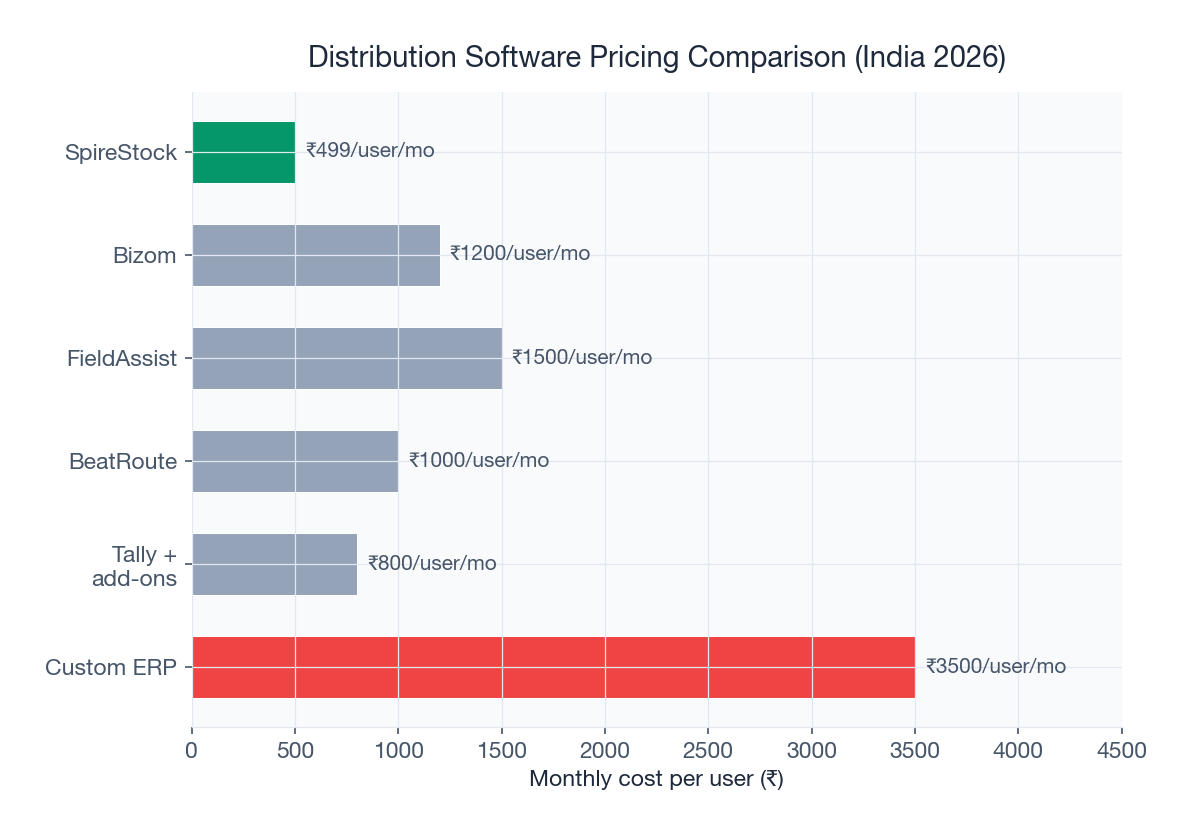
भारतीय बाजारात चार किंमत टियर्स
भारतात डिस्ट्रिब्युशन मॅनेजमेंट सॉफ्टवेअर चार वेगळ्या किंमत टियर्समध्ये येते, प्रत्येक बाजाराच्या वेगळ्या सेगमेंटला सेवा देते. तुमचा व्यवसाय कुठे बसतो हे समजून घेणे अचूकपणे बजेटिंगचे पहिले पाऊल आहे.
टियर 1: मोफत आणि जवळ-मोफत (Rs 0-500/user/महिना)
या टियरमध्ये Google Sheets, WhatsApp-आधारित ऑर्डरिंग, Tally Free Edition आणि मूलभूत इन्व्हेंटरी अॅप्स समाविष्ट आहेत. हे खरे DMS प्लॅटफॉर्म्स नाहीत, परंतु बरेच भारतीय डिस्ट्रिब्युटर्स येथेच सुरुवात करतात. ते थोडे किंवा काहीही खर्च नाहीत पण गंभीर मर्यादा लादतात: कोणतेही मोबाइल फील्ड अॅप्स नाहीत, GPS ट्रॅकिंग नाही, ऑटोमेशन नाही आणि 20-30 रिटेलर्सच्या पलीकडे स्केलेबिलिटी नाही.
एका शहरात 30 पेक्षा कमी रिटेल आउटलेट्स हाताळणाऱ्या मायक्रो-डिस्ट्रिब्युटर्ससाठी, मोफत टूल्स काम करू शकतात. तुम्ही 50 रिटेलर्स ओलांडताच किंवा दुसरा डिलिव्हरी रूट जोडताच, मॅन्युअल ओव्हरहेड टिकाऊ होत नाही. मोफत टूल्स कुठे ब्रेक होतात याच्या तपशीलवार ब्रेकडाउनसाठी मोफत वि. सशुल्क डिस्ट्रिब्युशन मॅनेजमेंट सॉफ्टवेअरचे आमचे विश्लेषण वाचा.
टियर 2: मूलभूत (Rs 500-2,000/user/महिना)
या टियरमध्ये डिस्ट्रिब्युशन अॅड-ऑन्ससह Tally, Marg ERP, VyaparApp आणि तत्सम प्लॅटफॉर्म्स समाविष्ट आहेत. तुम्हाला योग्य इन्व्हॉइसिंग, मूलभूत इन्व्हेंटरी मॅनेजमेंट आणि GST कम्प्लायन्स मिळते. काही रुडिमेंटरी मोबाइल अॅप्स देतात. हे प्लॅटफॉर्म्स लहान डिस्ट्रिब्युटर्ससाठी (50-200 रिटेलर्स) योग्य आहेत ज्यांना स्ट्रक्चर्ड बिलिंग आणि इन्व्हेंटरी आवश्यक आहे पण फील्ड फोर्स ऑटोमेशन आवश्यक नाही.
टियर 3: मध्यम-श्रेणी (Rs 2,000-5,000/user/महिना)
हे ठिकाण आहे जिथे विशेष-निर्मित DMS प्लॅटफॉर्म्स राहतात. SpireStock, FieldAssist, BeatRoute आणि तत्सम क्लाउड-नेटिव्ह प्लॅटफॉर्म्स मोबाइल-फर्स्ट ऑपरेशन्स, GPS ट्रॅकिंग, स्कीम मॅनेजमेंट, रूट ऑप्टिमायझेशन, अॅनालिटिक्स डॅशबोर्ड्स आणि अकाउंटिंग सिस्टमसह इंटिग्रेशन देतात. हा टियर बहुतेक भारतीय FMCG डिस्ट्रिब्युटर्स आणि ब्रँड्ससाठी सर्वोत्तम मूल्य दर्शवतो.
टियर 4: एंटरप्राइझ (Rs 5,000-15,000+/user/महिना)
एंटरप्राइझ प्लॅटफॉर्म्समध्ये Bizom, SAP, Oracle NetSuite आणि Microsoft Dynamics समाविष्ट आहेत. हे AI-संचालित अॅनालिटिक्स, सखोल कस्टमायझेशन, मल्टी-कंट्री सपोर्ट आणि एंटरप्राइझ-ग्रेड सुरक्षा देतात. ते 500+ डिस्ट्रिब्युटर्स आणि डेडिकेटेड IT डिपार्टमेंट्स असलेल्या मोठ्या FMCG कंपन्यांसाठी डिझाइन केले आहेत. या टियरवर एकूण मालकीचा खर्च सामान्यत: वार्षिक Rs 25-50 लाख ओलांडतो.
संपूर्ण किंमत तुलना तक्ता
| खर्च घटक | टियर 1 (मोफत) | टियर 2 (मूलभूत) | टियर 3 (मध्यम-श्रेणी) | टियर 4 (एंटरप्राइझ) |
|---|---|---|---|---|
| सबस्क्रिप्शन/लायसन्स | Rs 0 | Rs 500-2,000/user/mo | Rs 2,000-5,000/user/mo | Rs 5,000-15,000/user/mo |
| अंमलबजावणी | Rs 0 | Rs 10,000-50,000 | Rs 50,000-3 लाख | Rs 5-25 लाख |
| प्रशिक्षण | सेल्फ-सर्व्हिस | Rs 5,000-20,000 | Rs 25,000-1 लाख | Rs 1-5 लाख |
| कस्टमायझेशन | N/A | Rs 10,000-50,000 | Rs 50,000-2 लाख | Rs 2-15 लाख |
| इंटिग्रेशन (Tally/ERP) | मॅन्युअल एक्सपोर्ट | Rs 10,000-25,000 | समाविष्ट किंवा Rs 25,000 | Rs 1-5 लाख |
| वार्षिक सपोर्ट/AMC | नाही | लायसन्सच्या 15-20% | SaaS मध्ये समाविष्ट | लायसन्सच्या 18-22% |
| वार्षिक TCO (10 यूजर्स) | Rs 0-10,000 | Rs 1-4 लाख | Rs 4-8 लाख | Rs 15-40 लाख |
| वार्षिक TCO (50 यूजर्स) | अव्यावहारिक | Rs 5-15 लाख | Rs 15-35 लाख | Rs 50 लाख-1.5 कोटी |
विक्रेते नमूद न करणारे छुपे खर्च
सबस्क्रिप्शन फी सामान्यत: खऱ्या पहिल्या-वर्षाच्या खर्चाच्या केवळ 40-60% आहे. भारतीय व्यवसायांना अनपेक्षितरीत्या आढळणारे छुपे खर्च येथे आहेत:
- डेटा मायग्रेशन — तुमच्या विद्यमान सिस्टममधून (सामान्यत: Tally) प्रोडक्ट कॅटलॉग्स, रिटेलर डेटाबेसेस, किंमत संरचना आणि हिस्टॉरिकल डेटा हस्तांतरित करण्यासाठी डेटा व्हॉल्यूम आणि क्लीनअपवर अवलंबून Rs 25,000-2 लाख खर्च येतो.
- हार्डवेअर अपग्रेड्स — आधुनिक DMS अॅप्स चालवण्यासाठी फील्ड स्टाफला स्मार्टफोन अपग्रेडची गरज असू शकते. DMS अॅप्स विश्वसनीयरीत्या हाताळू शकणाऱ्या एंट्री-लेव्हल स्मार्टफोनसाठी प्रति डिव्हाइस Rs 8,000-12,000 बजेट करा. 30-व्यक्तीच्या फील्ड टीमसाठी, ते Rs 2.4-3.6 लाख आहे.
- इंटरनेट/डेटा खर्च — फील्ड स्टाफसाठी मोबाइल डेटा प्लॅन्स प्रति व्यक्ती प्रति महिना Rs 300-500 जोडतात. 30 स्टाफसाठी, वार्षिक Rs 1.1-1.8 लाख.
- संक्रमणादरम्यान उत्पादकता डिप — स्टाफ नवीन सिस्टम शिकत असताना पहिल्या 4-6 आठवड्यांत 15-25% उत्पादकता ड्रॉपची अपेक्षा करा. हे गमावलेल्या महसुलात रूपांतरित होते जे कोणत्याही विक्रेत्याच्या इन्व्हॉइसवर दिसत नाही.
- कस्टमायझेशन क्रीप — सुरुवातीच्या आवश्यकता अपरिहार्यपणे विस्तारतात. Rs 50,000 कस्टमायझेशन विनंतीने सुरू झालेले अनेकदा अंमलबजावणीदरम्यान वर्कफ्लो गॅप शोधल्यानंतर Rs 2-3 लाखापर्यंत वाढते.
- रिन्यूअल किंमत वाढ — बरेच विक्रेते डिस्काउंटेड पहिल्या-वर्षाची किंमत देतात, नंतर रिन्यूअलवर 15-30% वाढवतात. अपफ्रंट मल्टी-इयर किंमत निगोशिएट करा.
ROI कॅल्क्युलेटर: गणित काम करते का?
सर्वात महत्त्वाचा प्रश्न "किती खर्च येतो" नाही तर "गुंतवणुकीवर परतावा काय आहे" आहे. भारतीय डिस्ट्रिब्युशन ऑपरेशन्ससाठी व्यावहारिक ROI फ्रेमवर्क येथे आहे. India Brand Equity Foundation (IBEF) नुसार, भारतातील FMCG डिस्ट्रिब्युशन क्षेत्र वार्षिक अंदाजे Rs 2.5 लाख कोटी मूल्य जोडते, ज्यामुळे तंत्रज्ञानाद्वारे कार्यक्षमता मिळवणे विशेषतः प्रभावी होते.
पायरी 1: तुमचे सध्याचे खर्च कॅल्क्युलेट करा
या श्रेणींमध्ये तुमचे विद्यमान डिस्ट्रिब्युशन खर्च मॅप करा:
- मॅन्युअल प्रक्रियेसाठी कामगार खर्च — ऑर्डर घेणे (फोन/WhatsApp), मॅन्युअल बिलिंग, मॅन्युअल डिस्पॅच प्लॅनिंग, स्कीम कॅल्क्युलेशन, पेमेंट रिकन्सिलिएशन. FTE आणि त्यांचा लोडेड खर्च (पगार + लाभ) मोजा.
- डिलिव्हरी आणि लॉजिस्टिक्स खर्च — इंधन, वाहन देखभाल, चालकाचे वेतन. प्रति डिलिव्हरी ड्रॉप खर्च कॅल्क्युलेट करा.
- क्रेट आणि रिटर्नेबल अॅसेट नुकसान — रुपयांमध्ये वार्षिक क्रेट नुकसान ट्रॅक करा. उद्योग सरासरी प्रति वर्ष क्रेट इन्व्हेंटरी मूल्याच्या 8-15% आहे.
- स्कीम लीकेज — चुकीचे स्कीम अॅप्लिकेशन, अनधिकृत डिस्काउंट्स आणि स्कीम फसवणूक. उद्योग अंदाज सूचित करतात की मॅन्युअल सिस्टममध्ये स्कीम बजेटच्या 5-12% लीक होतात. संदर्भासाठी आमचा स्कीम मॅनेजमेंट मार्गदर्शक पहा.
- बॅड डेट आणि विलंबित कलेक्शन्स — तुमचा सरासरी कलेक्शन कालावधी आणि विलंबित पेमेंट्सचा वर्किंग कॅपिटल खर्च कॅल्क्युलेट करा.
पायरी 2: सॉफ्टवेअर-संचालित बचत अंदाजित करा
500+ भारतीय डिस्ट्रिब्युशन कंपन्यांमधील अंमलबजावणीच्या उद्योग डेटावर आधारित, येथे संरक्षणवादी बचत अंदाज आहेत:
| बचत क्षेत्र | सामान्य सुधारणा | उदाहरण (Rs 50 कोटी डिस्ट्रिब्युटर) |
|---|---|---|
| कामगार कपात (बिलिंग/डिस्पॅच) | 40-60% कमी FTE | Rs 6-10 लाख/वर्ष वाचले |
| रूट ऑप्टिमायझेशन (इंधन बचत) | 20-30% कमी इंधन खर्च | Rs 4-8 लाख/वर्ष वाचले |
| क्रेट नुकसान कपात | 70-80% कमी नुकसान | Rs 3-6 लाख/वर्ष वाचले |
| स्कीम लीकेज प्रतिबंध | 90-95% कपात | Rs 5-12 लाख/वर्ष वाचले |
| जलद कलेक्शन्स | 30-45% जलद सायकल | Rs 2-4 लाख/वर्ष (व्याज बचत) |
| एकूण अंदाजित बचत | — | Rs 20-40 लाख/वर्ष |
पायरी 3: निव्वळ ROI कॅल्क्युलेट करा
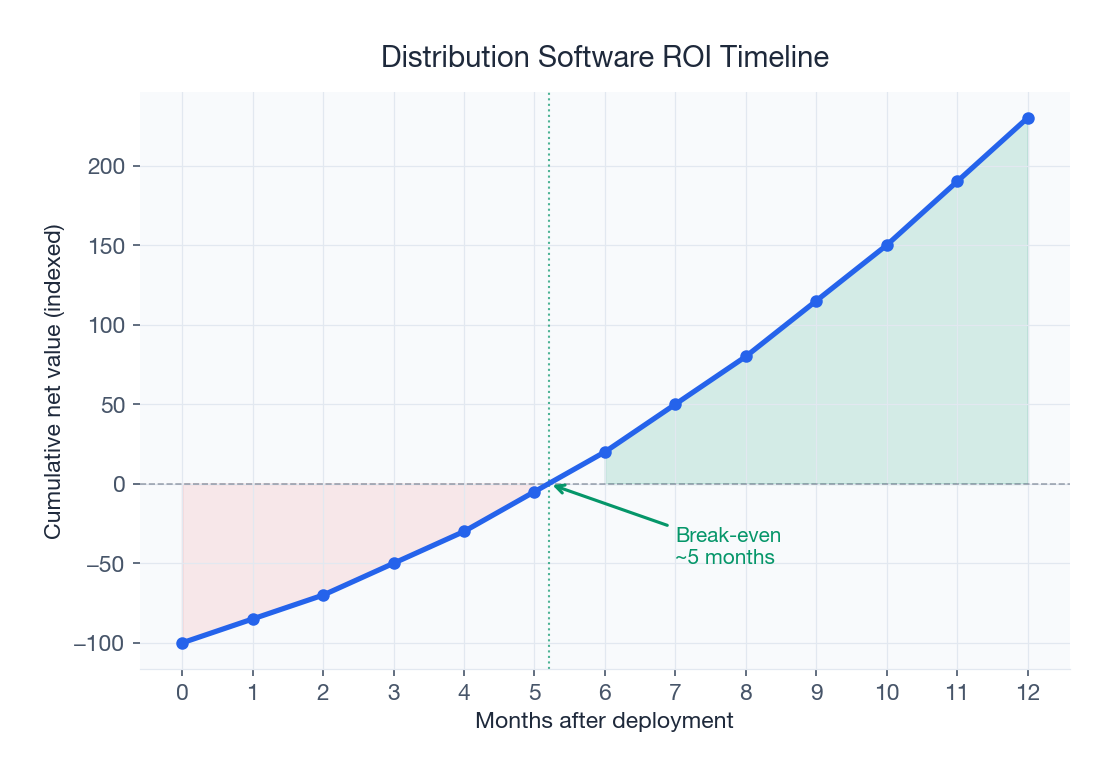
Rs 6-8 लाख वार्षिक खर्चाच्या मध्यम-श्रेणी DMS साठी (3 वर्षांमध्ये अमॉर्टाइझ केलेल्या अंमलबजावणीसह), Rs 50 कोटी डिस्ट्रिब्युशन ऑपरेशनसाठी निव्वळ ROI सामान्यत: पहिल्या वर्षात 150-400% आहे. पेबॅक कालावधी: 3-6 महिने.
हे गणित भारतभर डिस्ट्रिब्युशन सॉफ्टवेअरचे अॅडॉप्शन वेगाने का होत आहे हे स्पष्ट करते. FSSAI चा डिजिटल ट्रेसेबिलिटीवर वाढता भर (Food Safety and Standards Act दुरुस्त्यांनुसार) अतिरिक्त कम्प्लायन्स ड्रायव्हर तयार करतो — डिजिटायझेशनला विलंब करणाऱ्या कंपन्या कार्यक्षमता दंड आणि नियामक जोखीम दोन्हीचा सामना करतात.
चांगली किंमत कशी निगोशिएट करायची
भारतीय सॉफ्टवेअर विक्रेते निगोशिएशनची अपेक्षा करतात. येथे व्यावहारिक डावपेच आहेत:
- वार्षिक बिलिंगची विनंती करा — बहुतेक विक्रेते वार्षिक वि. मासिक पेमेंटसाठी 15-25% डिस्काउंट देतात.
- अंमलबजावणी बंडल करा — 2-वर्षांच्या वचनबद्धतेसह मोफत किंवा डिस्काउंटेड अंमलबजावणी निगोशिएट करा.
- पायलट किंमतीसाठी विचारा — पूर्ण डिप्लॉयमेंटला स्केल करण्यापूर्वी डिस्काउंटेड रेटवर 10-20 यूजर्ससह सुरुवात करा.
- रिन्यूअल कॅप्स निगोशिएट करा — रिन्यूअल किंमत वाढ वार्षिक 10% ओलांडणार नाही याबद्दल लिखित वचन मिळवा.
- 3 विक्रेत्यांची तुलना करा — किमान तीन प्लॅटफॉर्म्सकडून लिखित कोट्स मिळवा. तुम्ही तुलना करत आहात हे माहीत असल्यावर विक्रेते किंमत तीक्ष्ण करतात. आमचे Tally vs Bizom vs FieldAssist तुलना तुमचे मूल्यांकन स्ट्रक्चर करण्यात मदत करू शकते.
केव्हा गुंतवणूक करावी आणि केव्हा थांबावे
प्रत्येक डिस्ट्रिब्युटरला आज सॉफ्टवेअरची गरज नाही. जर तुम्ही 30 पेक्षा कमी रिटेलर्स हाताळता, दररोज 50 पेक्षा कमी ऑर्डर्स प्रक्रिया करता आणि एक डिलिव्हरी रूट आहे, तर स्प्रेडशीट्स आणि Tally खरोखरच पुरेसे असू शकतात. DMS अंमलात आणण्याचे आणि देखभाल करण्याचे ओव्हरहेड या स्केलवर खर्चाला न्याय्य ठरवू शकत नाही.
तथापि, जर तुम्ही 100 रिटेलर्स ओलांडत असाल, अनेक डिलिव्हरी रूट्स व्यवस्थापित करत असाल, ट्रेड स्कीम्स हाताळत असाल किंवा नाशवंत इन्व्हेंटरीशी झगडत असाल, तर DMS नसण्याचा खर्च स्केलसह घातीयरीत्या वाढतो. विशेषत: डेअरी डिस्ट्रिब्युटर्स आणि FMCG ऑपरेशन्ससाठी, नाशवंत वस्तू, दैनिक ऑर्डर सायकल आणि जटिल स्कीम संरचनांचे संयोजन माफक आकाराच्या पलीकडे मॅन्युअल व्यवस्थापन अव्यवहार्य बनवते.
पर्यायांचे मूल्यांकन करण्यास तयार आहात? मोफत डेमोसाठी SpireStock शी संपर्क साधा आणि तुमच्या ऑपरेशन आकारानुसार पारदर्शक किंमत मिळवा. किंवा प्रकाशित रेट कार्ड्ससाठी आमचे किंमत पृष्ठ तपासा.
स्रोत आणि संदर्भ
वारंवार विचारले जाणारे प्रश्न
किंमत चार टियर्समध्ये आहे: मोफत (Google Sheets, Tally Free), मूलभूत (अॅड-ऑन्ससह Tally/Marg साठी Rs 500-2,000/user/महिना), मध्यम-श्रेणी (SpireStock, FieldAssist, BeatRoute साठी Rs 2,000-5,000/user/महिना), आणि एंटरप्राइझ (Bizom, SAP, Oracle साठी Rs 5,000-15,000+/user/महिना). 10 यूजर्ससाठी एकूण मालकीचा खर्च Rs 1-4 लाख/वर्ष (मूलभूत) ते Rs 15-40 लाख/वर्ष (एंटरप्राइझ) पर्यंत आहे.
छुप्या खर्चांमध्ये डेटा मायग्रेशन (Rs 25,000-2 लाख), फील्ड स्टाफसाठी हार्डवेअर अपग्रेड्स (Rs 8,000-12,000 प्रति डिव्हाइस), मोबाइल डेटा प्लॅन्स (Rs 300-500/व्यक्ती/महिना), संक्रमणादरम्यान उत्पादकता डिप (4-6 आठवड्यांसाठी 15-25%), कस्टमायझेशन क्रीप आणि 15-30% रिन्यूअल किंमत वाढ समाविष्ट आहेत.
मध्यम-श्रेणी DMS (Rs 6-8 लाख/वर्ष) वापरून Rs 50 कोटीच्या डिस्ट्रिब्युशन ऑपरेशनसाठी, कामगार कपात, रूट ऑप्टिमायझेशन, क्रेट लॉस प्रतिबंध, स्कीम लीकेज दूर करणे आणि जलद कलेक्शन्समधून सामान्य वार्षिक बचत Rs 20-40 लाख आहे. ROI सामान्यत: पहिल्या वर्षात 150-400% आहे आणि 3-6 महिन्यांचा पेबॅक कालावधी आहे.
मोफत टूल्स (Google Sheets, Tally Free Edition) 30-50 पेक्षा कमी रिटेल आउटलेट्स आणि एकल डिलिव्हरी रूट असलेल्या मायक्रो-डिस्ट्रिब्युटर्ससाठी काम करतात. या स्केलच्या पलीकडे, मॅन्युअल ओव्हरहेड, एरर रेट्स आणि मोबाइल फील्ड क्षमतांचा अभाव गमावलेली उत्पादकता आणि एरर्स लक्षात घेता मोफत टूल्सना सशुल्क सॉफ्टवेअरपेक्षा अधिक महाग बनवते.
वार्षिक बिलिंगची विनंती करा (15-25% डिस्काउंट), मल्टी-इयर डील्समध्ये अंमलबजावणी खर्च बंडल करा, 10-20 यूजर्सच्या डिस्काउंटेड पायलटने सुरुवात करा, रिन्यूअल कॅप्स (कमाल 10% वार्षिक वाढ) निगोशिएट करा आणि स्पर्धात्मक दबाव निर्माण करण्यासाठी किमान 3 विक्रेत्यांकडून लिखित कोट्स मिळवा.
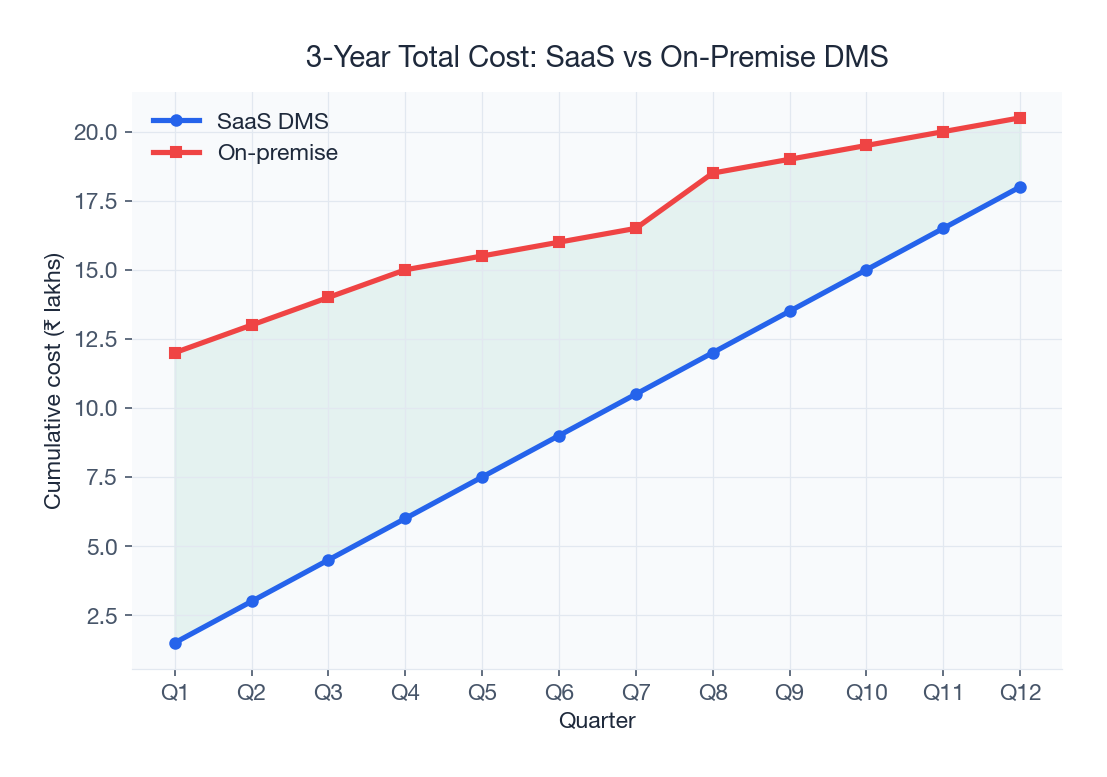
क्लाउड-आधारित DMS मध्ये कमी अपफ्रंट खर्च (सर्व्हर हार्डवेअर नाही, देखभालीसाठी IT स्टाफ नाही) आणि अंदाजे मासिक खर्च आहेत. ऑन-प्रिमाइस सुरुवातीला स्वस्त वाटू शकते पण सर्व्हर हार्डवेअर (Rs 2-5 लाख), IT स्टाफ, बॅकअप सिस्टम आणि अपग्रेड खर्चामुळे उच्च एकूण मालकी खर्च आहे. बहुतेक भारतीय SME साठी, क्लाउड-आधारित 3 वर्षांत 30-50% स्वस्त आहे.
संबंधित SpireStock वैशिष्ट्ये
संबंधित उद्योग
संबंधित उपाय
संबंधित संस्था
तुमचे वितरण सुव्यवस्थित करण्यास तयार आहात?
तुमची 14 दिवसांची मोफत चाचणी सुरू करा आणि पहा की SpireStock तुमचे डेअरी, FMCG किंवा ग्राहक वस्तू वितरण ऑर्डरपासून क्रेट रिकव्हरीपर्यंत कसे बदलू शकते.

SpireStock Team
प्रोडक्ट व इंडस्ट्री इनसाइट्स
SpireStock Team SpireStock मध्ये प्रोडक्टचे नेतृत्व करते, जिथे टीम भारतातील डेअरी, FMCG आणि कन्झ्युमर-गुड्स ब्रँड्ससाठी डिस्ट्रिब्युशन मॅनेजमेंट सॉफ्टवेअर तयार करते.