The Scale of the Crisis
Every year, Indian FMCG distributors lose between 30% and 50% of their frontline sales staff. Not senior managers or back-office employees, but the men and women who walk into retail outlets every morning, take orders, push new SKUs, collect payments, and keep the distribution engine running. They are leaving in numbers that threaten the very structure of how consumer goods reach 12 million kirana stores.
Industry surveys consistently show that FMCG distribution companies in India operate 15-20% below sanctioned field force strength at any given time. This is not a temporary hiring gap. It is a permanent deficit. For a distributor with 20 sanctioned salesmen, operating with 15-17 is the norm.
The financial cost of replacing a single salesman is higher than most distributors realize. Recruitment expenses, training costs (product knowledge, beat familiarization, app training, shadow riding), and the productivity gap during the first 2-3 months add up to Rs 50,000-1.5 lakh per replacement. A distributor losing 8-10 salesmen per year spends Rs 4-15 lakh on attrition alone, money that comes directly out of thin distribution margins.
The crisis is self-reinforcing. Fewer salesmen means higher workload for those remaining, which means more burnout and more departures. It is a vicious cycle that distributors across Mumbai, Delhi, Bangalore, and every tier-2 and tier-3 city are struggling to break.
Why FMCG Salesmen Leave
Understanding why salesmen leave is the first step toward keeping them. The reasons are structural, not anecdotal, and they have intensified dramatically since 2020. Here is an honest breakdown of what drives attrition at the frontline.
Low and Stagnant Pay
The most cited reason is compensation. An entry-level FMCG salesman in India earns Rs 12,000-18,000 per month, depending on the city and the distributor. In metro cities where the cost of living has risen sharply, Rs 15,000 does not cover rent, food, and transport for a single person, let alone a family. Annual increments of Rs 500-1,000 per month feel like insults rather than rewards. When a salesman looks at his pay slip after two years and sees Rs 16,000 compared to the Rs 14,000 he started at, the message is clear: this job does not value longevity.
The pay problem is compounded by inconsistent variable earnings. Many distributors structure compensation as a base-plus-incentive model, but incentive calculations are opaque, delayed, and frequently disputed. A salesman who believes he earned Rs 3,000 in scheme-linked incentives but receives Rs 1,800 (with vague explanations about "adjustments") loses trust fast. And once trust in the compensation system breaks, departure is just a matter of timing.
The Gig Economy Alternative
The most disruptive force in FMCG field force retention is not a competitor brand or a rival distributor. It is Swiggy, Zomato, Zepto, Blinkit, and Amazon Flex. These platforms offer delivery partners Rs 20,000-25,000 per month with flexible hours, daily or weekly payouts, and no boss standing over their shoulder. For a salesman earning Rs 15,000 with fixed hours, mandatory beat compliance, and a supervisor tracking his every move via GPS, the gig economy looks like liberation.
The comparison is even more stark when you factor in working conditions. A gig delivery partner chooses when to work, takes breaks when tired, and earns more during peak hours. An FMCG salesman walks a fixed beat in 42-degree heat or monsoon rain, cannot skip outlets without triggering an attendance alarm, and earns the same whether he covers 30 outlets or 50.
Physical Strain and Working Conditions
FMCG field sales is physically demanding work. A typical salesman walks 8-15 kilometres per day, visits 30-50 retail outlets, and does all of this in 40-degree summer heat or monsoon rain. There are no air-conditioned offices. The "office" is the street and the shop counter. Many distributors provide no rain gear, no heat allowance, and no health insurance. The message is clear: the salesman's physical well-being is not the employer's concern.
No Career Path
The typical career trajectory is salesman to senior salesman to area supervisor, and that is it. The jump from salesman to supervisor takes 5-8 years, and for every 20 salesmen there might be one supervisor position. Compare this with banking or IT where career paths are visible and discussed during hiring. FMCG distribution is a flat structure where 90% of people at the bottom stay at the bottom. Ambitious young workers see this and leave.
Lack of Recognition
Recognition in FMCG field sales is almost nonexistent. A salesman who achieves 120% of his target for three consecutive months might get a verbal "good job" from his supervisor. There are no certificates, no public acknowledgment, no leaderboard, no social media posts celebrating top performers. In an age where every pizza delivery gets a five-star rating system, FMCG salesmen work in a recognition vacuum. The psychological impact is significant. People do not leave just because of money. They leave because they feel invisible.
The Hidden Cost of Attrition
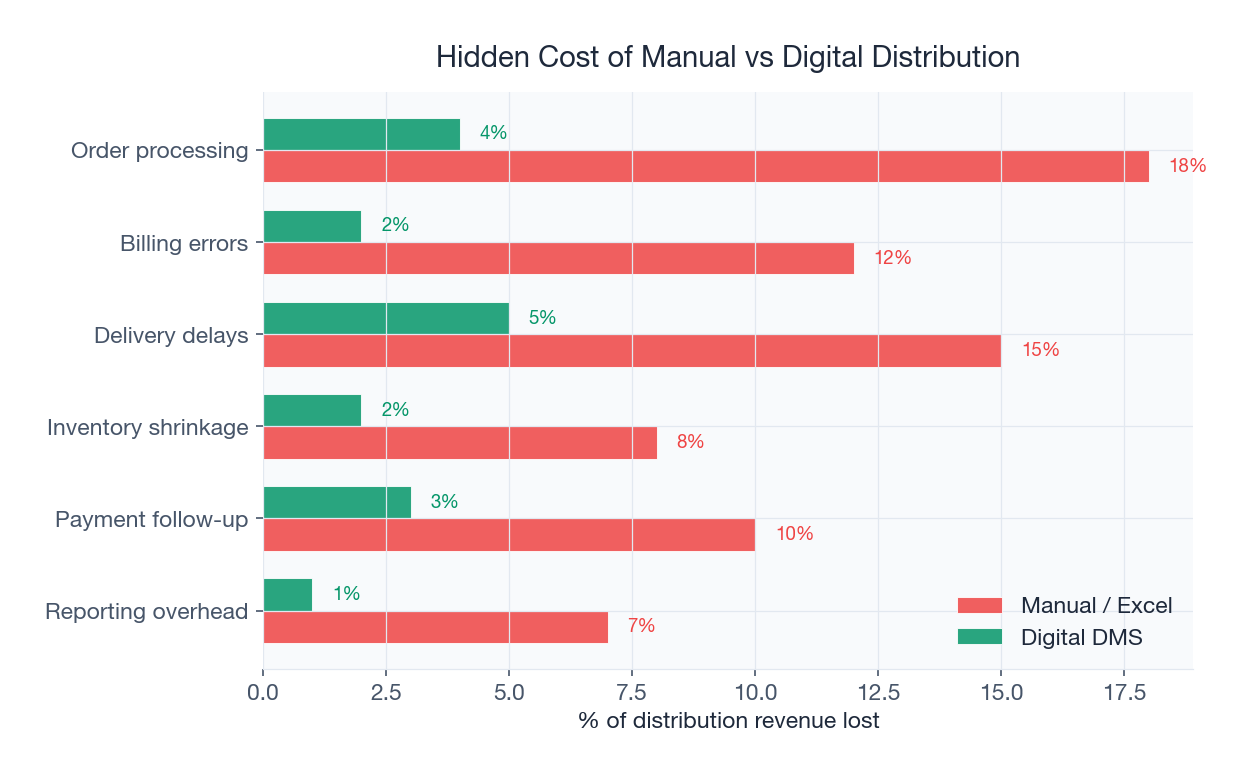
When distributors calculate the cost of salesman turnover, they typically count only the obvious expenses: recruitment ads, training sessions, maybe an agency fee. But the true cost is an iceberg, with the visible portion representing barely a third of the total damage. Here is what sits beneath the surface.
Lost Route Knowledge
An experienced salesman knows that the grocery store on MG Road wants delivery before 8 AM, the paan shop sells 5 cases during wedding season but only 1 otherwise, and which retailers pay promptly versus those who need the distributor owner to call personally. This knowledge, accumulated over months of daily visits, disappears the day the salesman leaves. No handover document captures it.
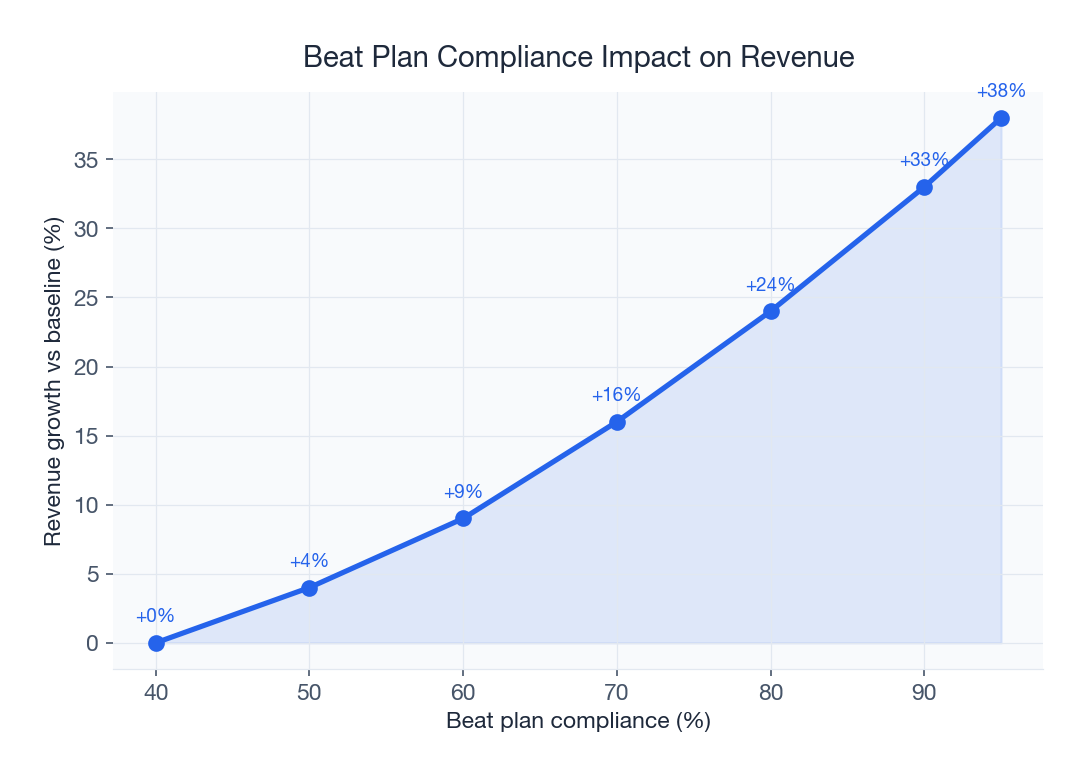
For distributors running beat plans on paper, this loss is catastrophic. The new salesman walks the same route without the context that makes it productive, visiting outlets at the wrong time and pushing the wrong SKUs.
Broken Retailer Relationships
Retailers buy from people they trust. When a salesman who has visited a retailer for 18 months is replaced by a stranger, orders drop 15-25% for 2-3 months. Competitors fill the gap. Trust must be rebuilt from scratch, one visit at a time.
In categories where credit collection is part of the role, outstanding payments that the previous salesman would have collected now sit as receivables that the new hire has neither the rapport nor the motivation to chase. Write-offs increase and cash flow suffers.
Training Investment Wasted
Every new FMCG salesman needs 2-4 weeks of structured training: product knowledge across 50-200 SKUs, scheme mechanics, DSR reporting procedures, mobile app usage, beat plan familiarization, and shadow riding with experienced staff. A distributor who trains a salesman in January and loses him by April has wasted a month of training investment plus the productivity cost of the senior salesman who mentored the new hire. Multiply this by 8-10 departures per year, and the training cost alone runs into lakhs.
Sales Dip During Transition
The sales impact of salesman turnover is quantifiable and significant. Data from multiple distributors shows a consistent pattern: when a salesman leaves and is replaced, the affected beat experiences a 15-25% sales dip for 2-3 months. For a beat generating Rs 5 lakh in monthly sales, that translates to Rs 75,000-1.25 lakh in lost revenue per month, or Rs 1.5-3.75 lakh over the transition period. For a distributor losing 8 salesmen per year, the cumulative revenue impact is Rs 12-30 lakh annually, a number that dwarfs the direct recruitment and training costs.
Scheme Errors From New Staff
At any given time, a distributor might have 10-20 active trade schemes with different eligibility rules and claim processes. An experienced salesman knows these cold. A new hire does not. The result is scheme miscommunication (promising invalid benefits), missed scheme application (pushing retailers to competitors), and incorrect claims creating reconciliation nightmares. These errors erode both the distributor's margin and the retailer's trust.
How Technology Reduces Attrition Impact
Technology cannot prevent salesman attrition entirely. No software will solve the fundamental problem of low pay or harsh working conditions. But technology can dramatically reduce the damage that attrition causes by decoupling critical business knowledge from individual people and embedding it in systems. Here is how.
App-Based Beat Plans Preserve Route Knowledge
When beat plans live in a mobile app rather than in a salesman's head, the route knowledge survives personnel changes. A properly configured beat planning system captures outlet locations, preferred visit times, order history, retailer preferences, and special instructions. When a new salesman takes over a beat, he opens the app and sees everything: which outlets to visit, in what order, what they typically order, and any special notes left by his predecessor. The institutional knowledge that used to walk out the door now stays in the system.
SpireStock's route optimization module takes this further by automatically generating the most efficient visit sequence based on outlet locations, traffic patterns, and delivery windows. A new salesman does not need to learn the optimal route through trial and error over weeks. The app shows it on day one.
Automated Orders Reduce Dependency
In traditional distribution, if the salesman does not visit, no order gets placed. Modern distribution management systems break this dependency through automated reordering. Based on historical purchase patterns, the system generates suggested orders that retailers confirm via WhatsApp, SMS, or a retailer app. The salesman remains important for relationship-building and new product introduction, but routine replenishment no longer depends on his physical presence.
Retailer Self-Ordering
The most advanced approach to reducing salesman dependency is enabling retailers to place orders themselves. A simple mobile app or WhatsApp-based ordering system lets retailers browse the product catalogue, see applicable schemes, and place orders at their convenience. This does not eliminate the need for salesmen (relationship management, new outlet acquisition, and merchandising still require human presence), but it ensures that order flow continues uninterrupted during salesman transitions.
Digital Handover When Salesmen Change
Without technology, a salesman handover is a disaster. The outgoing salesman (if he gives notice at all) spends a day walking the beat with his replacement, rattling off facts that the new hire cannot possibly absorb. Within a week, 80% of that verbal handover is forgotten. With a distribution management system, handover becomes structured and permanent. The new salesman inherits a complete digital profile of every outlet: purchase history, payment behaviour, outstanding balances, scheme eligibility, contact details, and visit notes. He walks into his first day with more context than a verbal handover could ever provide.
Making the Job Better With Software
Beyond reducing the impact of attrition, technology can address some of the root causes of attrition by making the salesman's daily experience less painful. When software is deployed thoughtfully, it does not add to the salesman's burden. It removes friction, saves time, and makes the job more bearable.
Less Paperwork Means More Selling Time
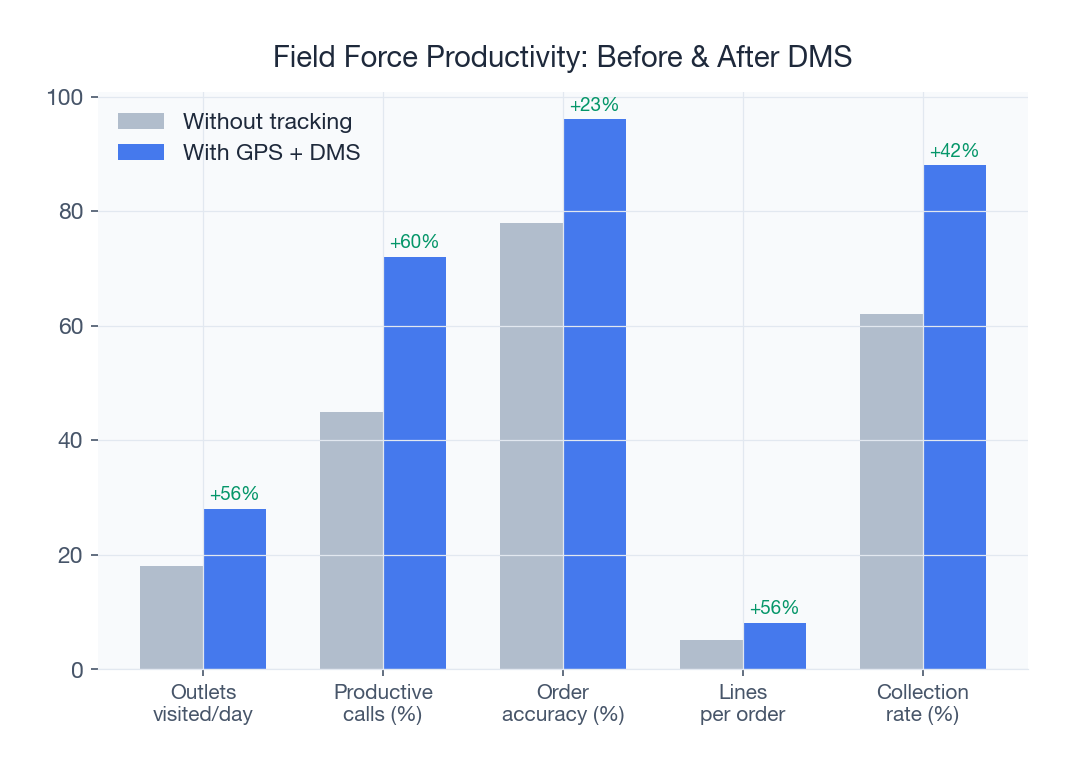
A salesman using paper-based processes spends 25-35% of his day on non-selling tasks: filling DSR forms, writing order sheets, calculating scheme discounts, and transcribing data for reports. A well-designed mobile app reduces this to minutes. Orders are placed in 2-3 taps, schemes auto-applied, and DSR generated automatically. The salesman finishes his beat an hour earlier with better data accuracy.
A salesman who finishes by 4 PM instead of 6 PM is less likely to quit. The job is still physically demanding, but removing administrative drudgery makes it tolerable. Read more in our guide to FMCG salesman DSR formats.
GPS Replaces Micromanagement
Supervisors calling every hour asking "Where are you?" feels demeaning and stressful. Ironically, GPS-based attendance and tracking reduces this micromanagement. When supervisors see salesman locations and visit completion on a real-time dashboard, they do not need to call. The phone calls stop, the nagging stops, and the salesman is left alone to do his job with transparent activity tracking. Trust replaces surveillance.
Transparent Incentive Tracking
One of the key drivers of attrition is distrust in incentive calculations. When a salesman can open his app at any time and see exactly how much incentive he has earned so far this month, which targets he has met, which ones are pending, and what the calculation formula is, the distrust evaporates. Real-time incentive dashboards eliminate end-of-month surprises and disputes. The salesman knows his earnings before pay day. There are no "adjustments" because the math is transparent and auditable. This single feature, real-time incentive visibility, has been cited by multiple distributors as the most impactful retention tool they have deployed.
Gamification of Targets
Gamification applies the psychology of recognition and progress to a job that traditionally offers neither. Leaderboards showing top performers, badges for consecutive monthly targets, milestone rewards for tenure, and daily progress bars transform the experience from "walking a beat for Rs 15,000" to "competing, progressing, and being recognized." The cost of implementing gamification is negligible compared to the attrition it prevents.
Vernacular App Reduces Learning Curve
Many FMCG salesmen in India are not comfortable with English-language interfaces. When a new hire is handed a phone with an English-only DMS app, his anxiety spikes. He makes mistakes. He feels incompetent. He considers quitting before the training period ends. Apps that support Hindi, Tamil, Telugu, Marathi, Bengali, and other regional languages dramatically reduce this barrier. The salesman can navigate the app, understand scheme details, and complete orders in his own language. First-week dropout rates, which can be as high as 15-20% for new hires, fall significantly when the technology speaks the salesman's language.
Compensation and Incentive Redesign
Technology alone will not solve the attrition crisis if the fundamental compensation structure is broken. Distributors who successfully reduce turnover combine technology deployment with thoughtful compensation redesign. Here are the models that work.
Base Plus Variable Models That Actually Work
The most effective structure is a 60:40 or 70:30 base-to-variable split. The base must cover basic living expenses (Rs 12,000-15,000 in metros, Rs 8,000-12,000 in smaller towns). The variable should let average performers (80-90% of target) earn Rs 16,000-17,000 total, while top performers (110%+) reach Rs 20,000-22,000. The formula must be simple enough for the salesman to calculate in his head. Avoid both extremes: high base with negligible variable (no motivation) or low base with high variable (financial stress drives attrition).
Daily and Weekly Payouts
The gig economy has fundamentally changed expectations around payment frequency. Swiggy and Zomato delivery partners receive daily payouts. An FMCG salesman waits 30 days. For workers living paycheck to paycheck, this difference is not a preference; it is a financial survival issue. Progressive distributors are experimenting with weekly incentive payouts and even daily earned-wage access through fintech partnerships. A salesman who can withdraw earned incentives daily or weekly feels less financial pressure and is less likely to jump to a gig platform purely for cash flow reasons.
Scheme-Linked Bonuses Visible in App
Beyond base salary and target-based incentives, scheme-linked bonuses provide an additional earning layer. When a brand runs a trade scheme, the salesman who drives scheme adoption at retail outlets earns a per-outlet or per-case bonus. The key is making these bonuses visible in real time through the field sales app. A salesman who sees "You have earned Rs 450 in scheme bonuses today" is motivated to push the scheme harder tomorrow. Delayed, opaque scheme bonuses have the opposite effect.
Productivity-Based Tiers
A tier system that rewards sustained high performance creates a career-like progression within the salesman role. For example: Tier 1 (new hires, Rs 14,000 base), Tier 2 (3 months of 90%+ achievement, Rs 16,000 base plus priority beat allocation), Tier 3 (6 months of consistent performance, Rs 18,000 base plus health insurance), Tier 4 (12 months, Rs 20,000 base plus annual bonus eligibility). This is not a promotion to supervisor. It is recognition that tenure and performance deserve progressively better compensation and benefits within the salesman role itself.
Building a Salesman Retention Strategy
Retention is not a single initiative. It is a system of interconnected practices that collectively create reasons to stay. Distributors who achieve below-average attrition rates (under 20% annually in an industry averaging 35-45%) typically implement most of the following elements.
Career Path Creation
Even within the constraints of a flat organization, distributors can create visible career paths. The progression does not have to lead to management. It can include specialization: key account salesman (handling top 10 outlets), training salesman (mentoring new hires), category specialist (focusing on high-value or complex SKUs), or digital champion (leading app adoption and troubleshooting). Each specialization carries a higher compensation tier and a distinct identity. The salesman sees a future that extends beyond "walk the same beat for the next 10 years."
Skill Development
Most distributors invest in training only at hiring. Progressive ones run monthly skill sessions: advanced selling techniques, new product training, scheme optimization, and basic business acumen. These sessions signal that the organization invests in its people beyond their immediate productivity value.
Recognition Programs
Recognition does not require large budgets. It requires consistency and visibility. Monthly top-performer announcements in team meetings, quarterly awards with certificates that salesmen can take home, annual events that celebrate tenure milestones, photo features on the distributor's WhatsApp group, small gifts (power banks, umbrellas, rain jackets) that have practical utility for field workers. The cost is minimal. The impact on motivation and belonging is disproportionately large. Sales productivity solutions can automate the tracking that feeds recognition programs.
Working Condition Improvements
Simple improvements have outsized impact: branded rain gear during monsoon, a Rs 500-1,000 heat allowance in summer, a mobile phone or device allowance for DMS app usage, and group health insurance. These are not extravagant benefits. They are basic dignity measures that signal the distributor cares about the salesman's well-being.
Flexible Beats
Traditional beat planning assigns rigid routes regardless of where salesmen live. A salesman commuting 90 minutes to a distant beat starts his day exhausted. Flexible beat allocation through route optimization software assigns beats based on residence, reducing commute time and improving work-life balance at zero coverage cost to the distributor.
The Gig Economy Alternative
If the gig economy is pulling salesmen away from FMCG distribution, some distributors are asking a provocative question: can we use gig workers for distribution? The answer is nuanced and depends heavily on the product category and distribution model.
When Gig Delivery Makes Sense
Gig-based delivery works in specific contexts: urban markets with high outlet density, commodity products with low selling complexity (packaged water, basic staples), high-frequency replenishment where retailers know exactly what they need, and last-mile quick commerce where speed matters more than relationships. In these scenarios, gig partners handle physical delivery while order-taking shifts to digital channels (retailer app, WhatsApp, automated replenishment).
When Gig Delivery Does Not Work
Gig delivery fails where selling is the core function: relationship-intensive categories (dairy, confectionery, personal care), credit collection requiring trust and knowledge of each retailer's payment patterns, complex portfolios with multiple SKUs and trade schemes, and new product launches needing explanation and persuasion. In these contexts, replacing salesmen with gig workers would collapse the distribution model within months.
Hybrid Models
The most promising approach separates selling from delivery. Dedicated salesmen handle relationships, order-taking, scheme communication, and credit collection, visiting fewer outlets but spending more time at each. Delivery is handled separately through in-house staff, third-party logistics, or gig workers. This lets distributors pay salesmen more (fewer people handling only the high-value selling function) while using lower-cost delivery resources. Van sales management software can coordinate this separation effectively.
Case Studies: Distributors Who Reduced Attrition
Theory is useful, but evidence is convincing. Here are three distributors who tackled the attrition crisis through a combination of technology adoption and better people practices.
Case Study 1: Metro Dairy Distributor in Pune
A dairy distributor in Pune with 28 salesmen was losing 12-15 people per year (over 45% attrition). The average tenure of a salesman was 7 months. The distributor was spending nearly Rs 15 lakh annually on recruitment, training, and lost productivity. In early 2025, they implemented three simultaneous changes.
First, they deployed a mobile-first DMS with vernacular support (Hindi and Marathi), reducing daily paperwork from 2.5 hours to 20 minutes. Salesmen finished their beats 90 minutes earlier on average. Second, they restructured compensation from a flat Rs 14,000 salary to a Rs 12,000 base plus a transparent, app-visible incentive structure that paid average performers Rs 16,000-17,000 and top performers Rs 20,000-22,000. Third, they introduced weekly incentive payouts instead of monthly, addressing the cash flow pressure that was driving salesmen to gig platforms.
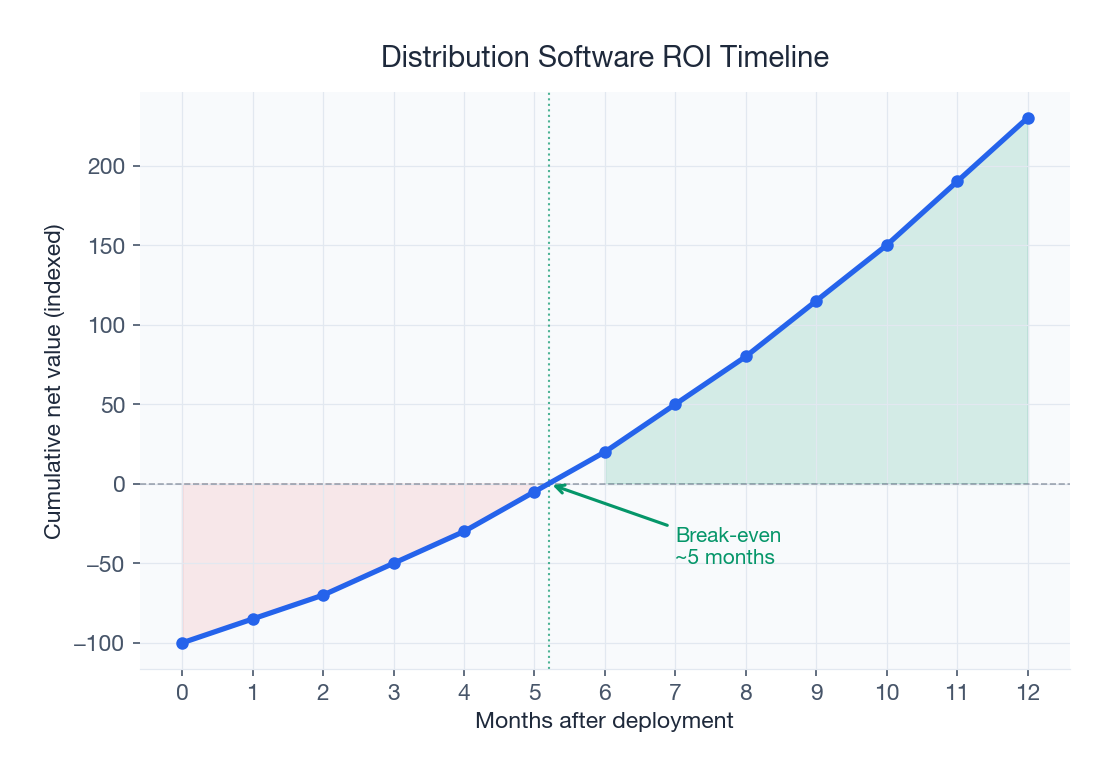
Results after 12 months: attrition dropped from 45% to 22%. Average tenure increased from 7 months to 14 months. Recruitment costs fell by Rs 8 lakh annually. Secondary sales grew 18% as beat continuity improved. The investment in technology and higher incentives was recovered within 5 months through reduced attrition costs and higher sales.
Case Study 2: Multi-Brand FMCG Distributor in Hyderabad
A large distributor in Hyderabad with 45 salesmen across 6 brands faced a new hire dropout problem: 3-4 of every 10 hires left within the first month. They implemented structured onboarding through a Telugu-language DMS app with guided beat plans, automatic scheme application, a buddy system pairing new hires with seniors for 2 weeks, gamified daily milestones (Rs 100-200 per milestone), and a Rs 5,000 retention bonus paid after 90 days.
Results: first-month dropout fell from 35% to 8%. Annual attrition decreased from 40% to 25%. The retention bonus cost Rs 2.25 lakh annually but saved Rs 9 lakh in recruitment and retraining. Salesmen who stayed past 90 days had a 78% probability of staying past 12 months, compared to 45% previously.
Case Study 3: Rural FMCG Distributor in Madhya Pradesh
A distributor covering 8 rural towns with 18 salesmen faced geographic isolation as the attrition driver. Salesmen on remote beats felt disconnected, with 50%+ annual attrition citing "loneliness" as the primary reason. They implemented daily team leaderboards visible to all salesmen, instant digital recognition with small rewards (Rs 50-100) from the distributor owner, weekly video calls for team connection, and route optimization to allocate beats closer to each salesman's home village.
Results: attrition dropped from 52% to 28%. Satisfaction scores improved from 3.1 to 4.2 out of 5. Secondary sales in remote beats grew 24%. The distributor now has a waiting list of applicants, a remarkable achievement in a rural market.
The Future of FMCG Field Sales
The FMCG salesman's role is not disappearing. But it is transforming in ways that will fundamentally change the attrition equation over the next 3-5 years. Here is what the future looks like.
AI-Assisted Selling
AI is changing what a salesman does during a visit. Instead of relying on memory, future salesmen will see AI-generated recommendations: "This outlet has not ordered biscuits in 3 weeks, suggest the new variant" or "Purchase frequency dropped 30%, possible competitor activity." AI does not replace the salesman. It makes him smarter and more valuable, and a more valuable salesman can command higher pay, reducing compensation-driven attrition. Advanced sales analytics platforms are already delivering early versions of these insights.
Retailer Self-Ordering Reducing Headcount Needs
As retailer self-ordering through apps and WhatsApp becomes mainstream, fewer salesmen will be needed per territory. Instead of 20 salesmen covering 40 outlets each, a distributor might need 12 covering 30, with remaining volume from digital orders. The 12 remaining salesmen can be paid more, trained better, and given meaningful work (relationship building, launches, category management) rather than routine order-taking. Fewer but better-compensated salesmen means lower attrition.
Upskilling the Remaining Staff
The salesmen who remain will need to understand category management, read sales data, advise retailers on assortment, and execute merchandising standards. A salesman who can read analytics dashboards and manage scheme execution is not a delivery boy with a phone. He is a distribution professional. And professionals do not leave for gig delivery jobs.
The distributors who will win the attrition battle are investing now: technology to capture institutional knowledge, compensation to compete with gig alternatives, recognition and career structures that give reasons to stay, and a gradual evolution of the role from order-taker to distribution consultant. These investments cost a fraction of persistent 40%+ attrition.
SpireStock helps FMCG and dairy distributors build resilient field force operations. From mobile apps preserving route knowledge to attendance tracking replacing micromanagement, from real-time incentive dashboards to flexible beat optimization, the platform reduces both the frequency and impact of attrition. Book a demo to see how distributors cut field force turnover by 40-60%. Or explore our pricing plans for distributors of every size.
Sources & References
Frequently Asked Questions
The average annual attrition rate for frontline FMCG salesmen in India is 30-50%, with some distributors experiencing even higher turnover. This means a distributor with 20 salesmen can expect to lose and replace 6-10 people every year, creating enormous costs in recruitment, training, and lost productivity.
The total cost of replacing a single FMCG salesman ranges from Rs 50,000 to Rs 1.5 lakh when you include recruitment expenses, 2-4 weeks of training, shadow riding with experienced staff, and the 15-25% sales dip on the affected beat during the 2-3 month transition period.
Gig platforms like Swiggy, Zomato, and Blinkit offer Rs 20,000-25,000 per month with flexible hours and daily payouts, compared to Rs 12,000-18,000 for FMCG salesmen with fixed hours and monthly payment. The combination of higher pay, flexibility, and immediate cash access makes gig delivery attractive to frontline workers.
Technology reduces attrition impact through app-based beat plans that preserve route knowledge, automated ordering that reduces dependency on individual salesmen, retailer self-ordering portals, and digital handover when staff changes. It also addresses root causes through transparent incentive tracking, reduced paperwork, gamification, and vernacular language support.
The most effective model is a 60:40 or 70:30 base-to-variable split where the base covers basic living expenses (Rs 12,000-15,000 in metros) and the variable component allows average performers to earn Rs 16,000-17,000 and top performers Rs 20,000-22,000. Weekly or daily incentive payouts and transparent real-time tracking further improve retention.
Gig workers can handle delivery for commodity products in urban areas with high outlet density. However, they cannot replace salesmen for relationship-intensive categories, credit collection, scheme communication, new product launches, or complex multi-SKU portfolios. A hybrid model separating selling from delivery is the most promising approach.
A new FMCG salesman typically takes 2-3 months to reach full productivity. The first 2-4 weeks are spent on product and scheme training, followed by 4-8 weeks of building retailer relationships on the assigned beat. During this period, sales on the beat are 15-25% below the previous salesman's run rate.
When a salesman leaves, retailer ordering on the affected beat drops 15-25% for 2-3 months as the replacement builds trust. Credit collection suffers as new hires lack the rapport needed to chase outstanding payments. Competitors often exploit the transition period to gain shelf space and mind share with retailers.
Related SpireStock Features
Mobile app for distributors, retailers, and delivery teams.
Geo-tagged attendance with location verification and travel analytics.
Powerful dashboards with sales trends, MIS reports, and distribution analytics.
Zone, town, and route-based delivery management with optimization.
End-to-end order lifecycle from placement to delivery with multi-level approval workflows.
Related Industries
Streamline FMCG distribution with order management, beat planning, retailer tracking, and GST billing. Built for Indian FMCG supply chains.
End-to-end dairy distribution software for milk, curd, paneer, and ghee brands. Manage orders, crates, cold chain, and GST billing in one platform.
Related Solutions
Boost field sales team productivity with beat planning, GPS attendance, order capture, and performance analytics. Built for Indian FMCG teams.
Track and manage your retail network. Geo-tag outlets, capture secondary sales, manage beats, and monitor retailer performance. Try SpireStock.
Related Entities
Ready to Streamline Your Distribution?
Start your free 14-day trial and see how SpireStock can transform your dairy, FMCG or consumer-goods distribution operation, from order capture to crate recovery.

SpireStock Team
Product & Industry Insights
SpireStock Team leads product at SpireStock, where the team ships distribution management software for India's dairy, FMCG and consumer-goods brands.