The Succession Crisis in Indian Distribution
The numbers are sobering. Approximately 80% of Indian family businesses fail during the transition from one generation to the next. Only 30% survive into the second generation, and barely 10-15% make it to the third. These are not abstract statistics about distant conglomerates. They describe the corner distributor whose godown has served a territory for 25 years, the dairy distributorship that a father built by waking at 3 AM every morning, the FMCG operation that feeds an extended family of 15 people.
Indian FMCG distribution is overwhelmingly family-run. An estimated 85-90% of the 7-8 million distributors and stockists in India are family businesses, typically started by one individual who secured a brand appointment, rented a godown, and built a territory through years of personal effort. The founder knows every retailer by name, every credit arrangement by memory, every route by instinct. When the founder wants to retire or is forced to step back due to health, the successor inherits a business with no operations manual and no documented processes. The "system" is the founder himself.
This crisis is happening now. India's first generation of organized FMCG distributors, who secured appointments in the 1980s and 1990s, are in their 60s and 70s. The succession window is open, and for many, it is closing fast.
Why Distribution Businesses Are Uniquely Hard to Transition
Not all family businesses face the same succession challenges. A manufacturing unit has tangible assets, documented processes, and transferable machinery. A retail shop has a fixed location and walk-in customers. A distribution business, however, is built on a foundation of intangibles that are extraordinarily difficult to transfer from one person to another.
Route Knowledge Lives in One Person's Head
The founder knows that the grocery store in Sector 14 wants delivery before 7:30 AM, that the paan shop near the bus stand sells 3 cases of biscuits during exam season because the school is 200 meters away, and which lanes flood during monsoon. This granular route intelligence, accumulated over 10-20 years, lives nowhere except in his head.
Retailer Relationships Are Personal
The retailer does not have a relationship with the distributorship. He has a relationship with the distributor owner. "Sharma ji se lena hai" is the operating principle. When Sharma ji's son shows up instead, trust must be rebuilt from scratch, and competitors who sense the transition will move aggressively to capture outlets.
Informal Credit Arrangements
A distributor extends 15 days credit to one retailer, 7 days to another, and demands cash from a third, all based on years of experience with each account's payment behaviour. These terms are rarely written down. The distributor knows who pays on time, who needs a phone call, and who will pay only when the owner visits personally. A successor walking into this blind will either extend credit to the wrong accounts or alienate reliable ones.
Undocumented Schemes and Deals
FMCG companies run dozens of trade schemes simultaneously. The experienced distributor knows the unwritten rules: which schemes stack, which retailers are eligible for special deals negotiated with the area sales manager, and which company schemes eat into margins. This knowledge comes from years of negotiation, not any company circular.
Paper-Based Operations
A staggering number of Indian distributorships still run on physical registers, handwritten bills, and mental arithmetic. Handing over a business means handing over a room full of registers that only one person can interpret. Even the filing system follows a logic that exists only in the founder's mind.
The Five Pillars of Succession Readiness
Successful succession does not happen by accident. It requires deliberate preparation across five dimensions that together create a business capable of operating independently of any single individual. These five pillars are: knowledge documentation, relationship transfer, financial formalization, technology adoption, and legal structuring.
Think of these pillars as a checklist. A distributorship that scores well on all five can survive a transition. One that is weak on even two or three is at serious risk. The rest of this guide examines each pillar in detail, with practical steps that Indian distributors can implement starting today.
The good news is that preparing for succession does not just protect against future risk. Every step you take to document knowledge, formalize finances, and adopt technology makes your business more efficient and profitable right now. Succession planning is not a retirement project. It is an operational upgrade.
Documenting Route Knowledge and Relationships
The single most important step in succession planning is extracting the knowledge that lives in the founder's head and putting it into a system. Not a manual that no one will read, but a living, digital record that can be accessed, updated, and transferred.
Creating a Digital Retailer Database
Every retailer in your territory needs a digital profile: shop name, owner name, GPS coordinates, phone number, GST number, channel classification, product categories purchased, average monthly order value, credit terms, payment history, preferred visit day and time, and special notes. A distribution management system creates this database automatically as salesmen take orders through the mobile app. Over 6-12 months, you build a comprehensive digital asset that any successor can access on day one.
Capturing Visit History and Credit Behaviour
Visit history captured through a distribution tracking system reveals the rhythm of your business: when each retailer orders, seasonal patterns, and which outlets need weekly versus fortnightly visits. For credit, document agreed terms, actual payment days, collection methods, and the relationship dynamics of each account. Does this retailer pay on time? Does he require a personal visit? This creates a credit risk profile for every account that any successor can rely on.
Mapping Key Accounts
Every territory has 15-20 retailers contributing 50-60% of revenue. These key accounts need special documentation: decision-makers, specific requirements, competing distributors, negotiated terms, and relationship history. Losing even two or three during a succession can devastate the business.
How a DMS Preserves Institutional Knowledge
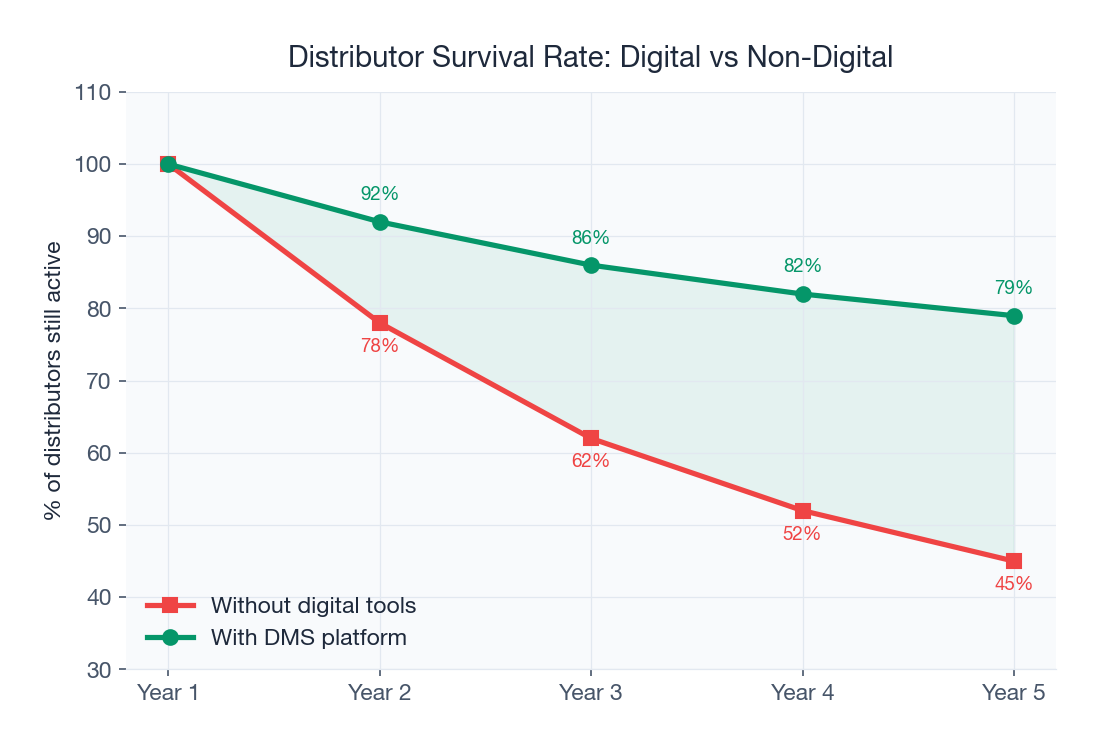
The manual approach of writing everything out is practically doomed. No distributor has time to document 500 retailers in a spreadsheet. The only viable approach is letting technology capture knowledge organically. When salesmen use a distribution management system for order-taking, the system automatically builds the institutional knowledge base. After 12 months, you have a comprehensive digital record that transfers seamlessly to the next generation.
Training the Next Generation on Modern Tools
The generational technology gap in Indian distribution is both a challenge and an opportunity. The founder built the business on personal knowledge and paper registers. The next generation grew up with smartphones and data. Bridging this gap means combining the best of both.
From Ledger Books to DMS
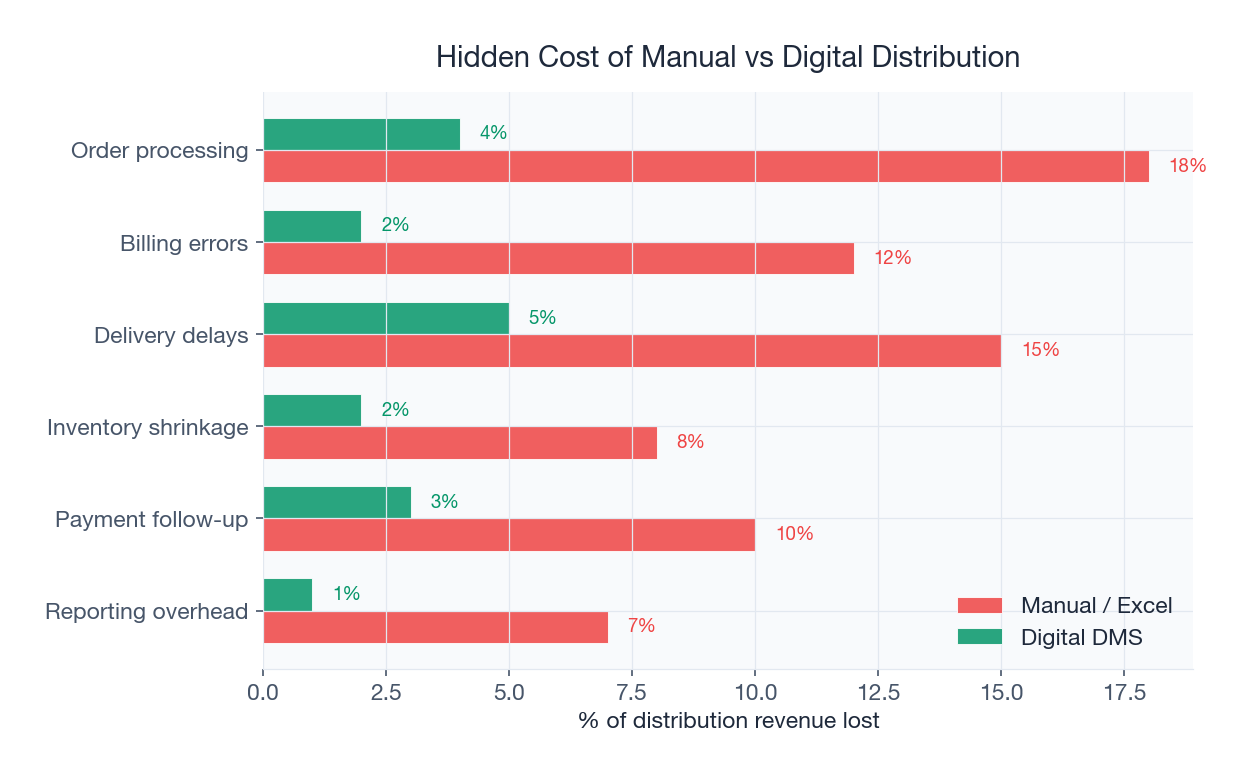
The transition from paper to digital is a fundamental shift. Paper-based systems are opaque, personal, and fragile. A modern order management system creates visibility into sales patterns, stock movement, scheme performance, and salesman productivity that paper never could. For the successor, DMS adoption means inheriting a business with dashboards instead of diaries, survival equipment for someone stepping into a complex operation without 20 years of accumulated intuition.
Making Technology the Bridge Between Generations
The most successful transitions treat technology as a common language. The founder may not be comfortable with apps, but he understands the data behind them. When the DMS presents familiar information digitally, the founder validates its accuracy while the successor learns to operate with it. Start DMS adoption 2-3 years before the planned transition. This gives the founder time to verify that the system captures his knowledge accurately, correct gaps, and add qualitative notes ("Gupta ji gets upset if we deliver after 9 AM"). By the handover, the DMS is a trusted repository of the founder's lifetime of knowledge.
Reverse Mentoring
Reverse mentoring, where the younger generation teaches technology while the older generation teaches trade, is particularly powerful. The successor teaches the founder how to read analytics dashboards and use UPI for collections. The founder teaches the successor how to read a retailer's body language, negotiate with a company ASM, and build trust with a new outlet. When father teaches son and son teaches father, both feel valued, and the transition feels collaborative rather than confrontational.
Financial Structuring for Smooth Transition
Financial messiness kills more succession plans than any other factor. In Indian family distribution businesses, personal and business finances are often hopelessly intertwined: the godown is personal property used for business, family expenses are booked as business costs, profits are distributed informally as household spending. Untangling this web is essential before any transition.
Separating Business and Personal Finances
Create a complete list of every asset and liability used in the business: godown, vehicles, equipment, inventory, receivables, bank loans, supplier credit, and tax obligations. For each item, determine whether it is owned personally or by the business entity. The goal is a clean balance sheet where everything is clearly assigned. This separation is not just good accounting. It is a legal necessity for GST compliance, income tax filing, and any future valuation.
Clear Partnership Agreements
If the business involves multiple family members, formal partnership agreements are non-negotiable. Specify capital contribution, profit-sharing ratio, roles, decision-making authority, withdrawal limits, dispute resolution, and exit clauses. Too many family businesses operate on verbal understandings that fracture under the stress of succession.
GST, Bank Accounts, and Insurance
GST registration is tied to the business entity. If the founder is a sole proprietor, the registration must be transferred or a new one obtained, requiring amendment of details, transfer of input tax credit balances, and notification to all suppliers. Bank account transitions (adding successor as signatory, transferring overdraft facilities, updating payment mandates) move slowly, so start 12 months early. Stock, vehicle, godown, and key person insurance policies must be reviewed, transferred, and updated to prevent catastrophic gaps during transition.
Legal Considerations
Family disputes over business succession are among the longest-running cases in Indian courts. Proper legal structuring prevents these disputes or provides clear resolution mechanisms.
Will vs Partnership Deed
A will distributes personal assets after death. A partnership deed governs business operations during life. A will cannot override a partnership deed, and a partnership deed does not automatically transfer to heirs. Both must be aligned. If the founder wants his eldest son to run the business but his will divides assets equally among three children, conflict is guaranteed. Draft both documents together with the same lawyer to ensure consistency.
Power of Attorney
During the transition, the successor needs legal authority to sign contracts, manage bank accounts, deal with government agencies, and make business decisions. A general power of attorney for business operations, combined with specific powers for banking and property transactions, prevents interruptions, especially if the founder steps back due to health.
Brand Appointment Transfer Clauses
The distributorship agreement with each FMCG company contains clauses about transferability. Some companies allow family transfer with approval. Others require a fresh appointment process. Read every agreement carefully, identify transfer clauses and notice requirements, and start conversations with company area managers 12-18 months before the transition. Companies prefer continuity but need time and formal documentation.
Employee and Property Transition
In a proprietorship, a change in proprietor triggers gratuity obligations, PF transfer issues, and potential labor disputes. Converting to a partnership or company before the transition simplifies employee continuity. For leased godowns, review assignment clauses and transfer leases from the founder's personal name to the business entity. For owned property used by the business, a formal rental agreement provides the successor with legal certainty of access.
The Role of Technology in Succession
A properly implemented distribution management system addresses the core challenge of succession: converting personal, tacit knowledge into institutional, explicit knowledge that transfers with the business rather than walking out with the founder.
DMS as Institutional Memory
Over 2-3 years, a DMS captures every order (seasonality, preferences, trends), every visit (coverage patterns, optimal timing, outlet notes), every payment (creditworthiness, collection patterns), every stock movement (fast movers, dead stock), and every scheme executed (ROI, uptake, participation). This is the digital equivalent of the founder's 20 years of experience. The successor who inherits 2-3 years of DMS data inherits a comprehensive operational playbook, seeing patterns and identifying risks from day one without learning by trial and error.
Analytics Dashboards Replacing Gut-Feel Decisions
The founder's intuitive decisions are usually accurate but not transferable. Analytics dashboards make the invisible visible: sales trends by product and territory, retailer scoring based on order frequency and payment discipline, stock optimization based on demand patterns, and salesman performance metrics. These dashboards provide the factual foundation the successor needs to develop good judgment faster.
App-Based Operations That Any Trained Person Can Run
The ultimate test of succession readiness: can the business operate for a month without the founder? When orders flow through the app, deliveries are tracked digitally, and stock is managed through automated alerts, the business becomes a system rather than a person. Any trained individual can operate it. This is not just succession readiness. It is business resilience.
A 3-Year Succession Timeline
Succession is not an event. It is a process that should take a minimum of 3 years from initiation to completion. Rushing the timeline is the most common mistake founders make, typically triggered by a health scare or a sudden desire to retire. The following timeline provides a structured approach that Indian distributors can adapt to their specific circumstances.
Year 1: Shadow and Learn
The successor joins as an observer-participant. In the first quarter, they spend time in every function: riding with salesmen, working in the godown, sitting with the accountant, and attending company meetings. The goal is not to take charge but to understand how everything works.
In the second quarter, the successor takes ownership of implementing or expanding the DMS. Working with a platform like SpireStock to set up retailer databases, beat plans, and order management gives hands-on experience with operational details while digitizing institutional knowledge.
In the second half, the successor accompanies the founder on key relationships: visiting top retailers, attending company meetings, and handling government interactions. The founder introduces the successor as "my business partner who is taking on more responsibility," not "my son." This framing signals authority to external stakeholders. By year-end, the successor should understand the complete operation, have relationships with all key stakeholders, and have the DMS operational.
Year 2: Co-Lead
The successor takes direct responsibility for daily sales review using analytics dashboards, order processing through the DMS, financial operations, and new retailer acquisition. The founder retains key account relationships, company relationship management, major financial decisions, and crisis management.
Financial and legal structuring must be completed in Year 2: partnership deeds, GST registration updates, bank account transitions, insurance transfers, and brand appointment discussions. The critical dynamic is that the founder must resist overriding the successor's decisions. Mistakes will happen. They are learning opportunities, not evidence of incompetence. The founder shifts from decision-maker to advisor.
Year 3: Handover With Mentor on Standby
The successor runs the business day-to-day. The founder's involvement reduces progressively: daily check-ins in Q1, weekly reviews in Q2, fortnightly discussions in Q3, and monthly advisory meetings in Q4. Stress-test the transition with extended founder absences, a 2-week vacation early in the year, then a month-long trip, proving the business operates smoothly without daily intervention.
The mobile app plays a crucial role. Even from a distance, the founder can monitor performance through dashboards and provide informed advice during advisory conversations. Technology enables staying connected without being controlling.
Case Studies
Succession planning theory is useful, but real examples demonstrate how these principles work in practice. Here are two Indian family distributorships that successfully transitioned to the next generation, each with different circumstances and approaches but with common threads of planning, technology adoption, and deliberate knowledge transfer.
Case Study 1: Multi-Brand FMCG Distributor in Ahmedabad
Ramesh Patel built his FMCG distribution business in Ahmedabad over 28 years, growing to Rs 8 crore annual turnover across 5 brands and 1,200 retail outlets. By 2022, at age 62 with health complications, he planned the transition to his son Karan, 29, who was working in IT in Bangalore. The challenge: Ramesh ran the business from memory, with paper registers and two brands having "non-transferable" appointment clauses.
In Year 1, Karan implemented a DMS, digitizing 1,200 retailer profiles and configuring digital beat plans. When a dashboard revealed 180 outlets unvisited due to unreported salesman absences, Ramesh shifted from skeptic to advocate. In Year 2, Karan used analytics to reorganize beats, improving salesman productivity by 22%, while Ramesh introduced him to top retailers and company managers. The "non-transferable" brand appointments were renegotiated after company ASMs saw Karan's data-driven approach.
In Year 3, Karan ran the business independently. Ramesh took a 45-day overseas trip, the longest absence in 28 years, and sales grew 4%. The business transitioned from proprietorship to partnership, with all legal and financial restructuring complete. Turnover grew to Rs 9.5 crore, and the DMS had generated a comprehensive operational record that served as the business's first-ever operations manual.
Case Study 2: Dairy Distribution Business in Lucknow
Sunita Verma inherited a dairy distribution operation after her husband's unexpected death in 2021. The business handled dairy products for two brands across 650 outlets in Lucknow. Sunita had been involved peripherally in accounts, but the operational knowledge, cold chain management, retailer relationships, and 3 AM logistics were entirely her husband's domain.
The first six months were survival mode. Sunita retained the senior-most salesman with a 15% raise and profit-sharing, while implementing a mobile-based distribution tracking system. Every salesman logged visits, orders, and retailer notes through the app, capturing in six months what would have taken years to document manually.
When her daughter Priya joined in 2022 after completing her MBA, she inherited a partially digitized operation. Priya focused on cold chain optimization through temperature monitoring, a WhatsApp-based ordering system that reduced salesman dependency for routine orders, and financial restructuring. The mother-daughter team practiced reverse mentoring: Sunita taught trade negotiation, spoilage management, and early morning logistics; Priya taught dashboards, analytics, and DMS operations.
By 2024, turnover grew from Rs 4.2 crore to Rs 5.8 crore. Spoilage dropped from 4.2% to 1.8%. WhatsApp ordering handled 35% of routine orders. Both had clear roles codified in a partnership deed. The business emerged stronger, more digital, and more resilient than it had been under a single operator.
Getting Started With Succession Planning
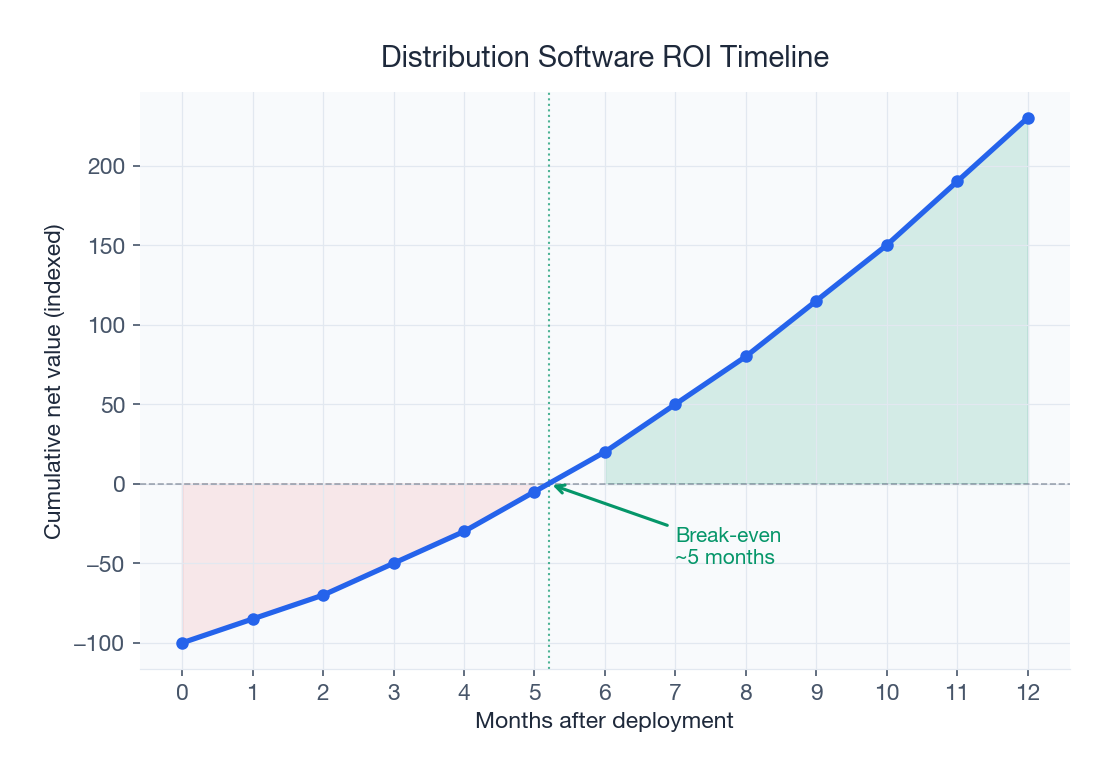
The single most important step you can take today is to start digitizing your operations. You cannot document knowledge without a system. You cannot formalize finances without digital records. You cannot train the next generation without tools they can learn on. Begin with a distribution management system that captures orders, visits, payments, stock, and schemes. Within 6-12 months, you will have a digital record more comprehensive than anything you could write manually. This record is your succession insurance.
Second, start financial separation: open a dedicated business bank account, route all business transactions through it, and stop paying personal expenses from the business account. Third, consult a chartered accountant and lawyer who specialize in family business succession. Template partnership deeds will not cover the complexities of brand appointments, trade credit, and inventory financing.
Finally, have the conversation with your family. Who wants to join the business? Who has the aptitude? What are the expectations? These conversations are uncomfortable, but far less painful than disputes that arise when a founder exits without a plan.
SpireStock helps Indian distributors build businesses that outlast their founders. From order management and distribution tracking that capture institutional knowledge, to analytics dashboards that replace gut-feel with data, to mobile apps that make operations transferable, the platform is designed for businesses that think beyond one generation. Book a demo to see how distributors across India are building succession-ready operations. Or explore our pricing plans to get started today.
Sources & References
Frequently Asked Questions
Approximately 80% of Indian family businesses fail during generational transition because critical business knowledge lives entirely in the founder's head. Route knowledge, retailer relationships, informal credit arrangements, and undocumented schemes cannot be transferred verbally. Without digital systems to capture institutional knowledge, the successor inherits a business they cannot operate at the founder's level of efficiency.
A minimum of 3 years is recommended. Year 1 focuses on shadowing and learning the business while implementing digital systems. Year 2 involves co-leading with the successor taking direct responsibility for specific functions. Year 3 is the handover phase where the successor runs operations independently with the founder in an advisory role.
Digitizing operations through a distribution management system is the single most important step. A DMS captures every order, visit, payment, and scheme execution automatically, building a comprehensive digital record of the business that any successor can access. This institutional memory is impossible to create through manual documentation.
Brand appointment transfer depends on the distributor agreement clauses. Review each agreement for transferability terms, notice requirements, and approval processes. Start conversations with company area managers 12-18 months before the planned transition. Most FMCG companies prefer continuity and will approve family succession if the successor demonstrates competence, but formal documentation and advance notice are essential.
Key documents include a partnership deed or company formation documents with succession clauses, a will that aligns with the business structure, power of attorney for the transition period, updated GST registration, brand appointment transfer approvals, employee transition documentation, and property or godown lease assignments. All documents should be drafted by a lawyer experienced in family business succession.
A distribution management system captures institutional knowledge automatically through daily operations. Over 2-3 years, it builds a complete digital record of retailer profiles, order history, payment behaviour, visit patterns, scheme performance, and stock movement. This data is the digital equivalent of the founder's decades of experience, accessible to any successor from day one.
Critical financial steps include separating personal and business finances, creating formal partnership agreements with clear profit-sharing and exit clauses, planning GST registration transfer, transitioning bank accounts and overdraft facilities, updating insurance policies, and conducting a proper business valuation. Start financial restructuring at least 12-18 months before the planned handover.
You can start planning, but the transition will be significantly harder without digital systems. Paper-based operations are opaque, personal, and non-transferable. Implementing a DMS should be the first step in your succession plan, ideally 2-3 years before the handover. The system captures institutional knowledge organically through daily operations, eliminating the impossible task of manually documenting everything.
Related SpireStock Features
Powerful dashboards with sales trends, MIS reports, and distribution analytics.
End-to-end order lifecycle from placement to delivery with multi-level approval workflows.
Real-time GPS tracking of vehicles and drivers with route optimization for faster deliveries.
Mobile app for distributors, retailers, and delivery teams.
Related Industries
Streamline FMCG distribution with order management, beat planning, retailer tracking, and GST billing. Built for Indian FMCG supply chains.
End-to-end dairy distribution software for milk, curd, paneer, and ghee brands. Manage orders, crates, cold chain, and GST billing in one platform.
Related Entities
Ready to Streamline Your Distribution?
Start your free 14-day trial and see how SpireStock can transform your dairy, FMCG or consumer-goods distribution operation, from order capture to crate recovery.

SpireStock Team
Product & Industry Insights
SpireStock Team leads product at SpireStock, where the team ships distribution management software for India's dairy, FMCG and consumer-goods brands.