Why Cold Chain Monitoring Matters
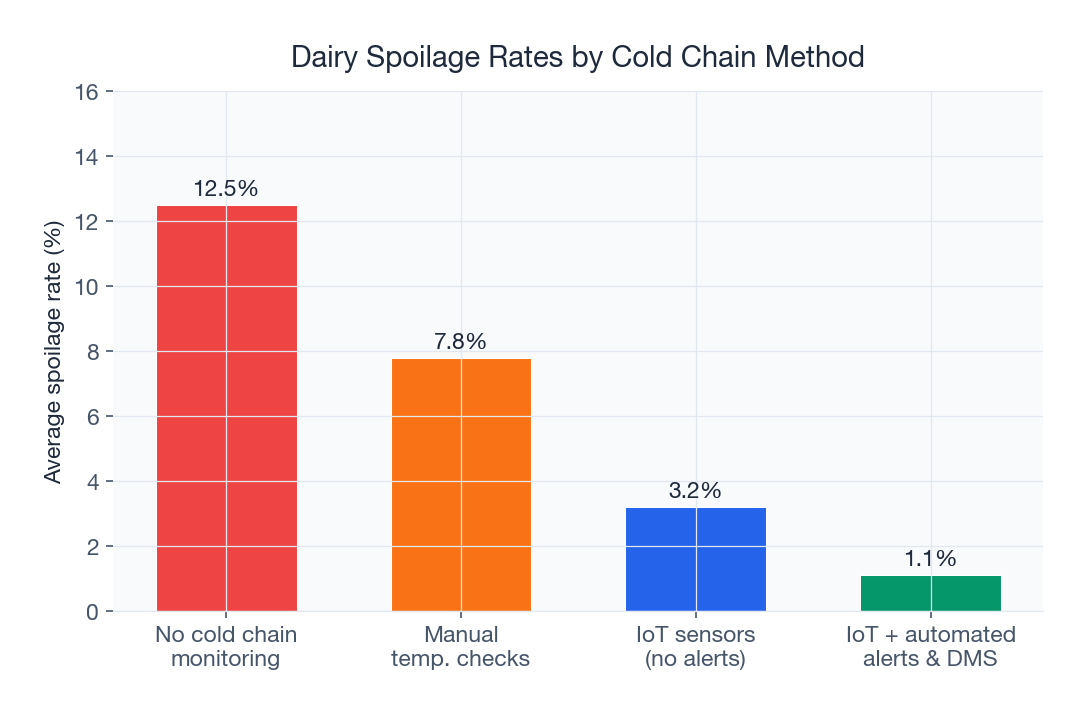
India produces over 230 million tonnes of milk annually, making it the largest dairy producer in the world. Yet an estimated 2-3% of this output, roughly Rs 50,000 crore worth of dairy products, is lost to spoilage before it reaches consumers. Add frozen foods, ice cream, and temperature-sensitive FMCG products, and the total cold chain wastage in India exceeds Rs 90,000 crore every year. The root cause is not a lack of refrigeration. It is a lack of monitoring. Products sit in cold rooms that malfunction at 2 AM. Reefer vehicles lose cooling during traffic jams. Distributor cold storage runs 3-5 degrees above the required temperature because nobody checks until the morning shift arrives.
A dairy distributor managing 15 vehicles and 3 cold rooms has hundreds of temperature-critical points. Manual monitoring, where someone walks around with a thermometer and writes readings in a register every 4 hours, catches fewer than 30% of temperature breaches. The remaining 70% happen between readings, during nights, on weekends, and in transit. By the time a breach is discovered, entire batches of paneer, curd, or ice cream have been compromised.
Regulatory pressure is intensifying. FSSAI now mandates temperature logging and traceability for all dairy and perishable food products under Schedule 4 of the Food Safety and Standards Regulation. Distributors who cannot produce continuous temperature records during audits face penalties, license suspension, and reputational damage. Manual logbooks with intermittent readings no longer satisfy auditors who know what continuous digital monitoring looks like.
IoT-based cold chain monitoring solves this by placing wireless sensors at every critical point in the distribution chain, from the factory cold room to the last-mile delivery vehicle, streaming temperature data continuously to a cloud dashboard. Breaches trigger instant alerts via SMS, WhatsApp, or app notifications. Compliance reports generate automatically. The distributor finally sees what is actually happening to his products instead of what a logbook says should be happening.
How IoT Cold Chain Monitoring Works
An IoT cold chain monitoring system has four layers: sensors that measure temperature (and sometimes humidity, door status, and GPS location), a connectivity layer that transmits data to the cloud, a cloud platform that stores and visualizes the data, and an alert mechanism that notifies stakeholders when something goes wrong.
Sensor Types
Thermocouples are the oldest and cheapest option, accurate to within 1-2 degrees Celsius. They are rugged and fast-responding but require wired connections, making them impractical for in-transit monitoring. They work well for fixed installations like cold rooms and walk-in freezers.
Resistance Temperature Detectors (RTDs) offer higher accuracy, typically within 0.1-0.5 degrees Celsius. RTDs are the preferred choice for applications where regulatory compliance demands high-precision records, such as pharmaceutical cold chains. For dairy distribution, they are becoming more affordable and are increasingly found in premium wireless loggers.
Wireless digital temperature loggers are the most common choice for FMCG and dairy distribution. These compact, battery-powered devices combine a digital sensor with a wireless transmitter (BLE, WiFi, or cellular), measure temperature at configurable intervals, store readings locally, and transmit data when connectivity is available. Battery life ranges from 6 months to 3 years. They are the backbone of most IoT cold chain deployments in India.
Connectivity Options
4G/LTE cellular connectivity is the most straightforward option. A SIM-equipped sensor transmits data directly to the cloud. It works anywhere there is cellular coverage and supports real-time alerting, but costs Rs 50-150 per month per device and depends on network availability.
LoRaWAN uses low-power, long-range radio signals to transmit data over 2-15 kilometres. A single LoRa gateway at the warehouse can receive data from dozens of sensors. It is ideal for campus-level monitoring but does not work for in-transit routes beyond the gateway's range.
Bluetooth Low Energy (BLE) is the lowest-cost option. Sensors transmit to a nearby smartphone within 10-30 metres. A salesman's phone acts as the gateway, picking up sensor data when he opens the delivery vehicle. BLE is inexpensive but requires human proximity, making it unsuitable for unattended overnight monitoring.
Satellite IoT is the newest entrant, offering connectivity in areas with zero cellular coverage via LEO satellite networks. The cost is higher (Rs 5-15 per transmission) but justified for high-value perishable cargo traversing remote areas.
Cloud Dashboards and Alert Mechanisms
The cloud platform shows real-time temperature readings from all sensors on a single screen, colour-coded by status. Historical trends reveal patterns: a cold room that creeps up 2 degrees every afternoon has a compressor issue needing preventive maintenance, not a crisis response after product is spoiled.
Alert mechanisms are the most critical feature. Multi-channel alerting (SMS, WhatsApp, app push notification, automated phone call) ensures that breaches reach someone who can act. Escalation rules ensure that if the first responder does not acknowledge within 15 minutes, the next level is notified. The difference between a 10-minute response and a 2-hour response can be Rs 5-10 lakh worth of inventory.
Types of Sensors and Their Costs
Choosing the right sensor depends on deployment location, accuracy needs, and budget. Here is a comparison of the four main categories available in the Indian market.
| Sensor Category | Cost Range | Accuracy | Connectivity | Battery Life | Best For |
|---|---|---|---|---|---|
| Basic USB/PDF Loggers | Rs 2,000-5,000 | +/- 0.5C | USB download only | 1-3 years | Shipment-level compliance, audit trails |
| Wireless BLE/WiFi Sensors | Rs 5,000-10,000 | +/- 0.3C | BLE or WiFi to gateway | 6 months-2 years | Cold rooms, warehouses, fixed locations |
| GPS + Temperature Combo | Rs 10,000-15,000 | +/- 0.3C | 4G cellular | Vehicle-powered | Reefer vehicles, in-transit monitoring |
| Full IoT Gateway System | Rs 20,000-40,000 | +/- 0.1C | Multi-protocol (BLE + 4G + LoRa) | Mains-powered with battery backup | Large cold rooms, multi-zone monitoring |
Basic USB/PDF loggers are disposable or reusable devices placed inside a shipment that record temperature at set intervals. At the destination, a PDF report is generated via USB download. They are cheap and reliable but provide no real-time alerts. You discover the breach after the product arrives, not while it is happening.
Wireless BLE and WiFi sensors are the workhorse of fixed-location monitoring. Placed inside cold rooms and storage facilities, they transmit readings to a local gateway every 1-15 minutes. For a distributor with 2-3 cold rooms, 4-6 sensors with one gateway provide comprehensive coverage at Rs 40,000-80,000 total.
GPS plus temperature combo devices are designed for in-transit monitoring. Hardwired to the vehicle, they report both location and cargo temperature in real time. If a reefer unit fails on the highway, the alert arrives immediately with GPS coordinates, enabling rapid response.
Full IoT gateway systems are enterprise-grade solutions for large cold rooms with multiple temperature zones. A single gateway connects to 20-50 sensors across frozen (-18C), chilled (2-4C), and ambient (15-25C) zones, runs edge analytics, and includes battery backup for power outages.
Monitoring Points in the Cold Chain
A cold chain is only as strong as its weakest point. For a typical dairy or FMCG distribution operation, there are five critical monitoring zones.
Cold Room at the Manufacturing Plant
The plant cold room is the most controlled environment in the chain, yet temperature breaches here are more common than manufacturers admit. Compressor failures overnight, degrading door seals, and overloading that blocks air circulation all cause excursions. IoT sensors serve as the baseline: if product leaves the factory at correct temperature, any subsequent breach is attributable to the distribution chain. A typical plant cold room needs 3-6 sensors at different heights (temperature stratification means the top can be 3-5 degrees warmer), costing Rs 15,000-60,000.
Loading Dock
The loading dock is the first break in the cold chain. In Indian summers, ambient dock temperatures exceed 45 degrees Celsius. IoT monitoring includes timed alerts (if product is on the dock for more than 10-15 minutes) and pre-cooling verification sensors inside reefer vehicles to confirm target temperature before loading. Without pre-cooling verification, products are loaded into vehicles at 15 degrees instead of -18 degrees, and the reefer unit spends 30-60 minutes just catching up.
In-Transit: Reefer Vehicle
In-transit monitoring is where IoT delivers the most value. Reefer vehicles on Indian roads encounter traffic jams (reefer units lose cooling when engines idle), frequent door openings for multi-drop deliveries, and stretches of highway with no cellular coverage. GPS-temperature sensors correlate data intelligently: temperature rising while the vehicle is stationary indicates a door-open event, while temperature rising during highway travel signals a reefer malfunction. For distributors managing multiple vehicles, distribution tracking integrated with temperature monitoring creates a unified view of fleet location and cargo condition.
Distributor Cold Storage
The distributor's cold storage is often the weakest link. Unlike factory cold rooms with industrial equipment, distributor cold rooms frequently use commercial-grade refrigeration, lack backup power, and are managed by staff with limited training. A 4-hour power cut in a tier-2 city can raise temperatures by 15-20 degrees, compromising an entire dairy inventory. IoT sensors here need to be simple and tamper-proof, with WhatsApp-based alerts and power monitoring that estimates time-to-breach based on the cold room's thermal mass.
Last-Mile Delivery
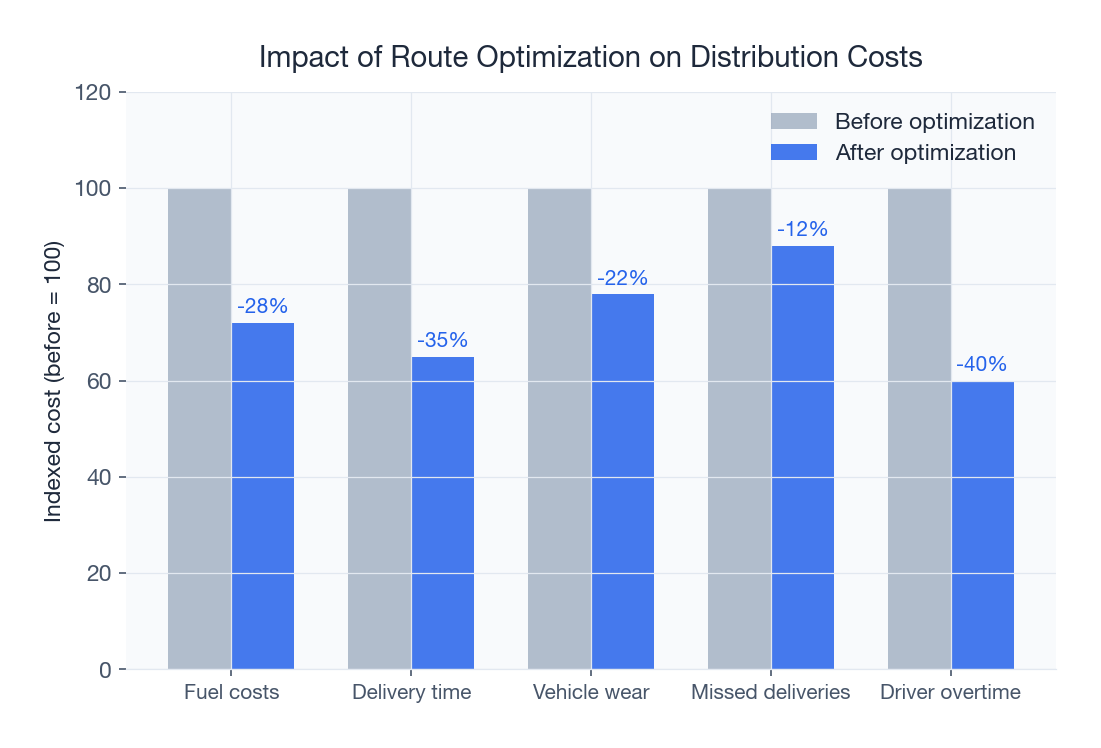
The last mile is the most difficult to monitor and the most common failure point. Delivery vehicles are often unrefrigerated vans or two-wheelers with insulated boxes. Low-cost BLE sensors in delivery crates provide visibility, with the delivery person's smartphone acting as gateway. This approach costs Rs 2,000-3,000 per sensor and identifies systemic issues: routes where delivery times are too long, vehicles needing insulation upgrades, or time-of-day patterns suggesting schedule shifts. Route optimization that accounts for product temperature sensitivity is the next evolution.
FSSAI Compliance: What the Law Requires
FSSAI has progressively tightened cold chain requirements. For dairy distributors and FMCG companies handling temperature-sensitive products, compliance is no longer optional.
Schedule 4: Temperature Logging Requirements
FSSAI's Schedule 4 mandates temperature logs for all cold storage and refrigerated transport. Storage temperatures must comply with product-specific requirements (dairy at 2-5 degrees Celsius, frozen products at -18 degrees or below), records must be maintained at regular intervals, and must be available for inspection at any time. Five years ago, handwritten 4-hourly readings satisfied most inspectors. Today, food safety officers increasingly demand continuous digital monitoring records and evidence of corrective action when breaches occurred.
Traceability Mandates
FSSAI requires "one step back, one step forward" traceability including temperature conditions during storage and transport. If a batch of milk is found contaminated at a retail outlet, the distributor must produce records showing storage temperature, transport conditions, and delivery timing. IoT monitoring generates this automatically. Every sensor reading is tagged with timestamp, location, and device identifier. For distributors managing crate-level tracking, correlating temperature data with specific batches creates the granular traceability regulators increasingly demand.
Audit Documentation
IoT systems generate three of the four documents inspectors review automatically: continuous tamper-proof temperature logs, corrective action records (who was notified, when they responded, what action was taken), and equipment calibration records through periodic sensor self-checks. A distributor presenting an FSSAI inspector with a cloud dashboard showing 365 days of continuous monitoring is in a fundamentally different position than one handing over logbooks with gaps and illegible handwriting.
Integration with Distribution Management Software
IoT cold chain monitoring delivers the most value when integrated with operational software. Temperature data in isolation tells you something went wrong. Temperature data correlated with orders, deliveries, and inventory tells you what to do about it.
When IoT sensor data flows into a distribution management system, the operations team sees temperature alongside orders, inventory, and deliveries. A single dashboard shows that Vehicle 7 is on Route 12, has delivered 8 of 14 stops, and the cargo compartment is at 3.2 degrees Celsius. SpireStock connects with leading IoT platforms through API integration, allowing temperature data to appear alongside distribution tracking, route optimization, and sales analytics.
Automated shipment rejection is a powerful integration point. When a reefer vehicle arrives at a warehouse, the IoT system checks the trip temperature record. If the threshold was exceeded, the DMS automatically flags the shipment for inspection, preventing compromised product from entering inventory. Advanced platforms also predict when breaches are likely based on trending data, triggering proactive alerts and automatic inventory reallocation.
SpireStock's distributor management platform integrates with IoT systems to enable temperature-tagged delivery confirmations, automated compliance reports combining temperature with batch and route data, and spoilage analytics by route, vehicle, and product category. For distributors already using SpireStock for fleet management, adding IoT temperature monitoring extends existing workflows rather than adding a new system to learn.
ROI Calculation: The Business Case for IoT Cold Chain Monitoring
A mid-sized distributor with 20 reefer vehicles, 3 cold rooms, and 50 delivery routes represents a typical deployment scenario. Vehicle sensors (GPS plus temperature) at Rs 12,000 per vehicle total Rs 2,40,000. Cold room sensors (4 per room, 3 rooms) at Rs 7,000 each total Rs 84,000. IoT gateways (one per cold room) at Rs 25,000 each total Rs 75,000. Cloud platform subscription runs Rs 60,000 annually, and installation approximately Rs 50,000. The total first-year investment is Rs 3-6 lakh.
Such a distributor typically experiences 3-5% spoilage from cold chain failures, amounting to Rs 30-50 lakh annually. IoT monitoring reduces this by 60-80%, yielding annual savings of Rs 15-30 lakh. Additional savings come from reduced returns, lower insurance premiums (10-15% discounts for IoT-monitored cold chains), energy cost reductions, and fewer compliance penalties. The payback period is 3-6 months.
ROI by Fleet Size
| Fleet Size | First-Year Investment | Annual Spoilage (Before) | Annual Savings (After IoT) | Payback Period | 3-Year ROI |
|---|---|---|---|---|---|
| 5 vehicles, 1 cold room | Rs 1.2-1.8L | Rs 8-12L | Rs 5-8L | 2-4 months | 8-15x |
| 10 vehicles, 2 cold rooms | Rs 2-3.5L | Rs 15-25L | Rs 10-18L | 2-4 months | 9-16x |
| 20 vehicles, 3 cold rooms | Rs 3-6L | Rs 30-50L | Rs 18-35L | 2-5 months | 9-18x |
| 50 vehicles, 5 cold rooms | Rs 7-12L | Rs 75-1.2Cr | Rs 45-85L | 2-4 months | 12-22x |
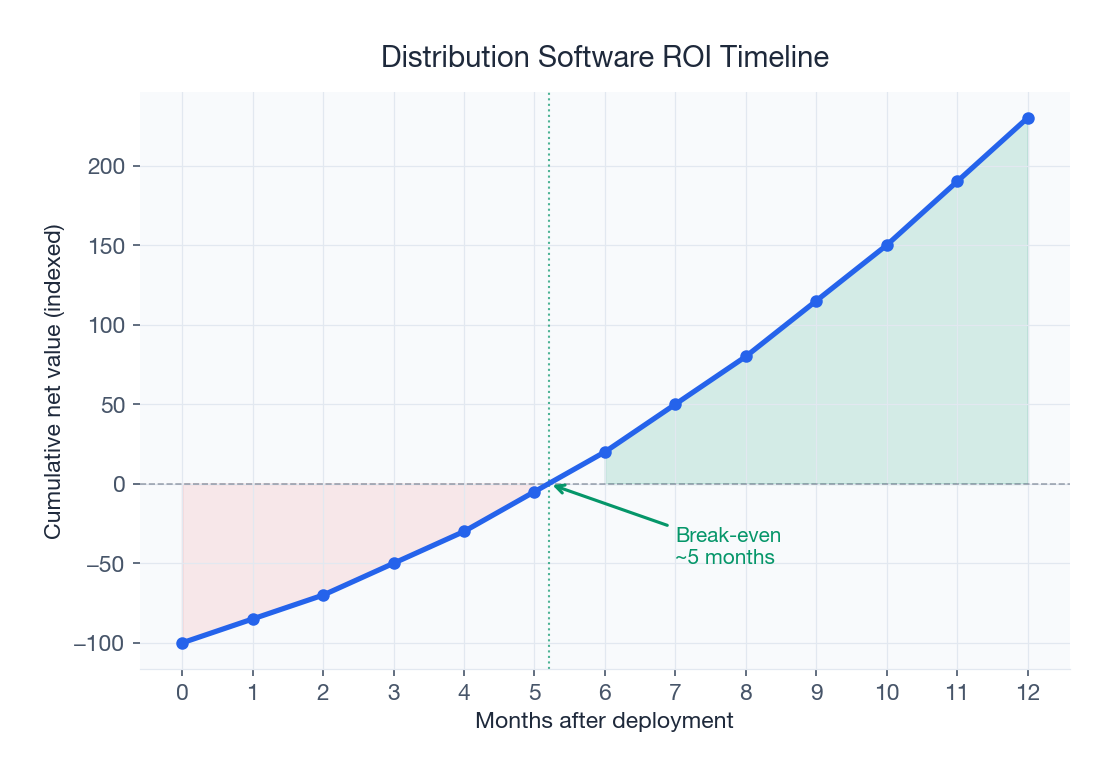
Even a 5-vehicle operation sees payback within 4 months, making IoT cold chain monitoring one of the few technology investments viable for small distributors as well as large ones.
Connectivity Challenges in Rural India
An estimated 68% of dairy and FMCG distribution routes pass through areas with poor or no cellular coverage. A dairy distributor in Gujarat collecting milk from village cooperatives traverses stretches where 4G disappears entirely. For IoT systems that depend on cellular connectivity, these gaps create blind spots precisely where temperature breaches are most likely.
Store-and-Forward Architecture
Sensors store temperature readings locally when connectivity is unavailable and upload the complete dataset when connectivity resumes, with original timestamps intact. High-quality devices store 10,000 to 50,000 readings locally, equivalent to weeks of data at 5-minute intervals. Real-time alerting is unavailable during blackouts, but the complete record exists for compliance and analysis. The key requirement is that the device must continue measuring even when it cannot transmit.
LoRaWAN for Semi-Rural Coverage
LoRaWAN offers coverage for areas beyond WiFi range but within 5-15 kilometres of a fixed installation. A LoRa gateway at a dairy cooperative or collection centre receives data from vehicles and sensors across a wide area without cellular dependency. The cost is Rs 15,000-30,000 per gateway serving 500+ sensors. For a cooperative serving 50 villages within 10 kilometres, a single gateway provides cold chain monitoring for the entire network at Rs 300-600 per village.
Satellite IoT for Remote Areas
LEO satellite networks provide coverage everywhere, including areas with zero cellular infrastructure, at Rs 5-15 per transmission. In practice, a hybrid approach works best: cellular for urban routes (80% of transit time), LoRaWAN for fixed rural installations, store-and-forward for temporary gaps, and satellite for truly remote segments.
Case Studies: IoT Cold Chain Monitoring in Action
Theory and ROI models are useful, but real-world deployments reveal the practical challenges and benefits that spreadsheets cannot capture. Here are three Indian distributors who implemented IoT cold chain monitoring and the results they achieved.
Case Study 1: Dairy Distributor in Gujarat
A dairy distributor in Ahmedabad handling Amul and regional brands across 12 reefer vehicles and 2 cold rooms was experiencing 4.5% spoilage due to process failures: vehicles loaded without pre-cooling verification, drivers turning reefer units off during fuel stops, and sub-distributor cold rooms operating at 8-10 degrees instead of the required 2-4 degrees.
They deployed GPS-temperature sensors in all 12 vehicles, 8 wireless sensors in cold rooms, and 4 sensors at sub-distributor locations. Total investment: Rs 3.2 lakh. After 8 months, spoilage dropped from 4.5% to 1.2%, saving Rs 22 lakh annually. Pre-cooling compliance reached 98% (up from 60%). Two chronic temperature violators were identified and upgraded their cold storage. Payback period: 7 weeks.
Case Study 2: Frozen Foods Company in Bangalore
A frozen foods company in Bangalore had a technically sound cold chain but could not prove compliance to institutional customers (hotel chains, QSR brands) who demanded continuous digital temperature documentation. They were losing contracts worth Rs 40-50 lakh annually.
They deployed 18 vehicle sensors, 12 cold room sensors across 3 facilities, and integrated with their existing distribution management software. Investment: Rs 5.8 lakh. The platform generated automated delivery temperature certificates for each shipment. Within 4 months, they won back contracts worth Rs 28 lakh annually and identified a faulty thermostat relay (Rs 2,000 fix) saving Rs 1.8 lakh per year in electricity. Total first-year benefit: Rs 35.6 lakh.
Case Study 3: Ice Cream Brand in North India
A regional ice cream brand distributing across UP, Haryana, and Rajasthan faced extreme temperatures (45+ degrees), unreliable power, poor cellular coverage, and varying distributor cold chain discipline. Summer spoilage was 8-12%, wiping out peak season margins.
Phase 1 covered 25 company vehicles and 4 cold rooms with GPS-temperature sensors and power monitoring (Rs 8.5 lakh). Phase 2 extended BLE sensors to 40 distributor cold rooms across 3 states (Rs 4 lakh), with the brand providing sensors free of charge as a quality assurance investment. The hybrid connectivity approach was essential: 4G in urban areas, store-and-forward with automatic upload at distributor WiFi locations, and LoRaWAN at 3 large distributor hubs serving as regional gateways.
Results after the first summer: spoilage dropped from 9.5% to 2.8%, saving Rs 1.2 crore in product losses during a single season. Eighteen non-compliant distributor cold rooms were identified and upgraded (the brand offered interest-free loans for equipment). Customer complaints about soft or re-frozen ice cream fell 75%. The continuous temperature data also enabled the brand to optimize storage conditions and reduce retailer returns by an additional Rs 15 lakh annually.
Choosing the Right IoT Cold Chain Solution
The Indian market now has over 50 IoT cold chain providers. Here is an 8-point evaluation checklist.
First, sensor accuracy and certification: verify NABL-calibrated sensors with documented recalibration schedules. Second, connectivity flexibility: look for multi-mode support (cellular plus BLE plus store-and-forward) for routes with variable coverage. Third, alert reliability: test time-to-alert and verify WhatsApp/SMS delivery, not just email notifications. Fourth, cloud platform uptime: demand 99.5%+ SLA and 2-3 year data retention for FSSAI compliance. Fifth, integration capability: the IoT platform must connect via API to your DMS, ERP, or fleet management system. Sixth, total cost of ownership over 3 years: factor in subscriptions, SIM costs, battery replacement, and sensor recalibration. Seventh, local support and service: a vendor with technicians in your region resolves issues in hours, not days, which is critical for fresh produce and dairy distributors where every hour of unmonitored storage is a risk. Eighth, scalability: the solution must grow from 10 vehicles to 50+ without a platform change.
Build vs Buy vs Partner
Building in-house (buying sensors, setting up cloud infrastructure, developing dashboards) offers maximum customization but requires Rs 15-30 lakh in development and 6-12 months to operational readiness. This option makes sense only for very large distributors (50+ vehicles) with in-house IT capability.
Buying a commercial platform (Rs 2-8 lakh per year, operational in 2-4 weeks) is the fastest path. Most platforms offer hardware-as-a-service models where sensors are included in the subscription, eliminating upfront capital expenditure. This suits most 5-50 vehicle distributors.
Partnering with your DMS or fleet management provider is the emerging best practice. Companies like SpireStock offer IoT integration as part of their distribution platform, providing seamless data flow between temperature monitoring and operational workflows with a single vendor relationship and unified support. For distributors already using a DMS, this is typically the most efficient path. Contact SpireStock to discuss IoT integration options for your operation.
Getting Started: A Practical Roadmap
Start with your highest-risk monitoring points: the main cold room and 2-3 vehicles carrying the most valuable products. This pilot costs Rs 50,000-1,00,000 and will reveal baseline spoilage patterns, identify process gaps, and demonstrate continuous monitoring value within 30 days.
Phase 2 extends monitoring to all vehicles and cold rooms under your direct control, integrating temperature data with your DMS for dairy cold chain management workflows and compliance reporting. Phase 3 extends to sub-distributor storage, last-mile delivery, and sales analytics integration for spoilage-adjusted demand forecasting.
Sensor costs are declining 15-20% annually. Connectivity options are expanding. Regulatory requirements are tightening. Continuous monitoring is a matter of when, not if. Distributors who deploy now gain competitive advantage in product quality, compliance, and efficiency. Those who wait will deploy under regulatory pressure, paying more and starting from behind.
SpireStock helps dairy and FMCG distributors integrate IoT cold chain monitoring with their distribution operations. From real-time fleet tracking to temperature-aware route optimization, from crate-level traceability to automated FSSAI compliance reporting, the platform connects every piece of your cold chain into a single dashboard. Book a demo to see how IoT integration works with SpireStock. Or explore our pricing plans to find the right fit for your distribution operation.
Sources & References
- FSSAI, Food Safety and Standards Authority of India, Schedule 4 Regulations
- NCCD, National Centre for Cold-chain Development, Cold Chain Infrastructure Report
- NDDB, National Dairy Development Board, Dairy Sector Statistics
- NASSCOM, NASSCOM, IoT in Indian Agriculture and Food Processing Report
- IBEF, India Brand Equity Foundation, Cold Chain Industry Report
Frequently Asked Questions
IoT cold chain monitoring uses wireless sensors placed at critical points (cold rooms, reefer vehicles, distributor storage, delivery vehicles) to continuously measure and transmit temperature data to a cloud platform. The system provides real-time dashboards showing temperatures across the entire distribution chain, sends instant alerts when temperatures breach safe thresholds, and generates automated compliance reports for FSSAI audits. For dairy distribution, sensors typically monitor the 2-5 degree Celsius range for chilled products and -18 degrees for frozen products.
A small dairy distributor with 5 vehicles and 1 cold room can deploy IoT monitoring for Rs 1.2-1.8 lakh in the first year, including sensor hardware (Rs 60,000-75,000 for vehicle sensors, Rs 28,000-35,000 for cold room sensors), one IoT gateway (Rs 25,000), cloud platform subscription (Rs 60,000/year), and installation (Rs 20,000-30,000). Annual recurring costs from year 2 onward are Rs 60,000-80,000 for the cloud platform and SIM charges.
For a 20-vehicle dairy or FMCG distributor, the typical first-year investment is Rs 3-6 lakh. Annual spoilage savings range from Rs 15-30 lakh, yielding a payback period of 3-6 months. Additional benefits include reduced product returns, lower insurance premiums, energy savings from identified refrigeration inefficiencies, and avoided FSSAI compliance penalties. The 3-year ROI typically ranges from 9x to 18x the initial investment.
Yes. FSSAI Schedule 4 mandates that food business operators maintain temperature logs for all cold storage and refrigerated transport. Temperature records must comply with product-specific requirements (2-5 degrees Celsius for dairy, -18 degrees for frozen), be maintained at regular intervals, and be available for inspection at any time. While FSSAI does not explicitly mandate IoT or digital monitoring, inspectors increasingly expect continuous digital records rather than intermittent manual logbooks.
GPS-plus-temperature combo sensors (Rs 10,000-15,000) are the best choice for reefer vehicles. They are hardwired to the vehicle power supply (eliminating battery concerns), provide real-time location and temperature data via 4G cellular connectivity, and generate trip-level temperature reports for compliance documentation. The cloud platform correlates temperature with GPS data to distinguish door-open events from reefer malfunctions based on whether the vehicle is stationary or moving.
Three solutions address connectivity gaps in rural India. Store-and-forward architecture lets sensors store readings locally (10,000-50,000 readings) and upload automatically when connectivity resumes. LoRaWAN gateways at fixed locations (dairy cooperatives, collection centres) provide 5-15 kilometre coverage without cellular dependency. Satellite IoT provides universal coverage but at higher cost (Rs 5-15 per transmission). A hybrid approach using all three modes ensures continuous monitoring regardless of location.
Yes. Modern IoT platforms integrate with distribution management systems through APIs, enabling temperature data to appear alongside order, delivery, and inventory information in a unified dashboard. Key integration points include automated shipment rejection when trip temperatures exceed thresholds, temperature-tagged delivery confirmations, spoilage prediction alerts, and automated FSSAI compliance reports. SpireStock integrates with major IoT platforms to provide this unified view.
A pilot deployment covering 2-3 vehicles and 1 cold room can be operational within 1-2 weeks. Full deployment for a 20-vehicle fleet with 3 cold rooms typically takes 3-4 weeks including sensor installation, gateway setup, cloud platform configuration, alert rule setup, and staff training. Commercial IoT platforms with hardware-as-a-service models are the fastest to deploy, while custom-built solutions take 6-12 months.
Related SpireStock Features
Real-time GPS tracking of vehicles and drivers with route optimization for faster deliveries.
Zone, town, and route-based delivery management with optimization.
Complete returnable crate tracking across plant, transporter, and retail levels.
Powerful dashboards with sales trends, MIS reports, and distribution analytics.
Related Industries
End-to-end dairy distribution software for milk, curd, paneer, and ghee brands. Manage orders, crates, cold chain, and GST billing in one platform.
Distribution management for fruits, vegetables, and perishable goods. Cold chain tracking, wastage reduction, and daily order management. Try free.
Related Solutions
GPS fleet tracking, driver management, and route optimization for dairy and FMCG delivery vehicles. Reduce fuel costs by 25%. Try SpireStock.
Manage your entire distributor network digitally. Onboarding, credit limits, outstanding tracking, and performance analytics. Start free trial.
Related Entities
Ready to Streamline Your Distribution?
Start your free 14-day trial and see how SpireStock can transform your dairy, FMCG or consumer-goods distribution operation, from order capture to crate recovery.

SpireStock Team
Product & Industry Insights
SpireStock Team leads product at SpireStock, where the team ships distribution management software for India's dairy, FMCG and consumer-goods brands.