Why FMCG Distributors Need Transit Insurance
An average mid-size FMCG distributor in India dispatches goods worth Rs 5-50 lakh every single day. Multiply that across 300+ working days and the annual value of goods on the road ranges from Rs 15 crore to Rs 150 crore. Yet a staggering number of distributors operate with either no transit insurance or policies so inadequate that they would cover less than 20% of actual losses in the event of a major incident.
The risks are not theoretical. India's road freight infrastructure -- on which 65% of all FMCG distribution depends -- presents a catalogue of hazards. Road accidents account for roughly 4.6 lakh incidents annually according to Ministry of Road Transport data, with commercial vehicles involved in a disproportionate share. Cargo theft remains an underreported but persistent problem, particularly on interstate routes through states with weaker law enforcement infrastructure. Monsoon flooding damages or destroys goods worth hundreds of crores every season. Fire, whether from vehicle malfunction or external causes, can obliterate an entire truckload in minutes.
For dairy distributors and those handling perishable goods, the risk profile is even more severe. A refrigeration unit failure during a 12-hour transit window does not just damage goods -- it renders the entire consignment worthless. Temperature-sensitive products like dairy, frozen foods, and certain pharmaceuticals face dual jeopardy: the standard physical risks that all goods face, plus the constant threat of cold chain breakdown.
The financial consequences of being underinsured are devastating. Consider a distributor moving Rs 20 lakh of goods daily across 4 vehicles. A single accident that destroys one fully loaded vehicle means an immediate Rs 5 lakh loss. Without adequate insurance, that loss comes directly from the distributor's working capital -- money that was supposed to fund the next week's purchases, retailer credit, and operational expenses. For a business operating on 3-5% net margins, a Rs 5 lakh uninsured loss wipes out the profit from Rs 1-1.7 crore in sales.
Most distributors underinsure for three reasons. First, they underestimate the probability of loss because they have not experienced a major incident yet -- a classic survivorship bias. Second, they view insurance premiums as an unnecessary cost rather than a business continuity investment. Third, and most commonly, they simply do not understand the different policy types, coverage options, and premium structures available to them. This guide addresses all three barriers.
If you manage a distribution fleet and want to understand how real-time distribution tracking and digital proof-of-delivery can strengthen your insurance position, the sections on documentation and DMS integration below will be particularly relevant.
Types of Transit Insurance Policies
Transit insurance for goods falls under the broader category of marine inland transit insurance in Indian insurance law, regardless of whether goods travel by road, rail, or inland waterway. The terminology can be confusing -- there is nothing "marine" about a truck carrying biscuits from Mumbai to Pune -- but the legal framework traces back to marine cargo insurance traditions. Understanding the different policy structures is essential for choosing the right coverage for your distribution operation.
Marine Inland Transit Policy (Single Consignment)
A single-consignment or specific-voyage policy covers one shipment from origin to destination. You declare the goods, their value, the route, and the mode of transport. The insurer issues a policy for that specific movement. This structure suits one-off high-value shipments or distributors who dispatch infrequently. For daily FMCG distribution operations, individual policies are impractical -- the administrative overhead of insuring every truck every day would be unmanageable.
Open Cover Policy
An open cover policy is a framework agreement between the distributor and the insurer that covers all shipments within defined parameters over a specified period (usually 12 months). You declare the types of goods, typical routes, modes of transport, and estimated annual turnover. Individual shipments are automatically covered without separate policy issuance. You periodically declare actual dispatches and settle premiums accordingly. This is the most common structure for FMCG distributors with regular dispatch schedules.
Open Policy (Floating Policy)
Similar to open cover but with a pre-paid sum insured. You deposit a premium for a fixed total value (say Rs 2 crore), and each shipment debits from that pool. When the pool is exhausted, you top up. This structure works well for distributors who want predictable insurance costs and have reasonably consistent shipment values. The key advantage is that coverage is guaranteed as long as the pool has balance -- there is no risk of a lapsed policy on a critical shipment.
Annual Transit Policy
An annual transit policy provides blanket coverage for all goods movements during the policy year, typically with per-consignment and aggregate limits. Premium is calculated on estimated annual throughput. This is the simplest structure for medium and large distributors, though it may cost slightly more than open cover because the insurer prices in the convenience factor.
Comprehensive Transit Insurance
Comprehensive policies bundle transit coverage with storage risk, loading and unloading damage, and sometimes even temporary warehousing at intermediate points. For distributors who use fleet management systems with multiple hub-and-spoke touchpoints, comprehensive coverage eliminates gaps that can arise between separate transit and storage policies.
Policy Comparison
| Policy Type | Best For | Coverage Scope | Premium Range | Administrative Effort | Key Limitation |
|---|---|---|---|---|---|
| Specific Voyage | One-off high-value shipments | Single consignment, specific route | 0.1-0.5% of consignment value | High (per-shipment paperwork) | Impractical for daily operations |
| Open Cover | Regular FMCG distribution | All shipments within agreed parameters | 0.05-0.3% of declared turnover | Low (periodic declarations) | Must declare shipments; undeclared goods may not be covered |
| Open / Floating Policy | Distributors wanting cost predictability | All shipments until sum insured is exhausted | 0.05-0.25% (pre-paid lump sum) | Low (auto-debit from pool) | Pool exhaustion risk if not monitored |
| Annual Transit | Medium to large distributors | Blanket annual coverage with limits | 0.08-0.4% of annual throughput | Very low (single annual policy) | Per-consignment limits may be restrictive |
| Comprehensive | Hub-and-spoke operations | Transit + storage + loading/unloading | 0.15-0.5% of annual throughput | Very low | Higher premium; may include unnecessary coverage |
For most FMCG distributors operating 2-10 vehicles with daily dispatches, an open cover policy or annual transit policy provides the best balance of coverage, cost, and administrative simplicity. Distributors with cold chain operations or high-value specialty products should consider comprehensive policies that include temperature break coverage.
What Is Covered and What Is Not
Understanding the boundary between covered and excluded risks is where most distributors make costly mistakes. A transit insurance policy is not a blanket guarantee against all loss. It is a contract that covers specific, defined perils. Knowing exactly what falls inside and outside that boundary determines whether your premium payments will actually protect you when an incident occurs.
Standard Coverage (Typically Included)
- Road traffic accidents: Collision, overturning, derailment of the carrying vehicle. This is the most commonly claimed peril and is covered under virtually all transit policies.
- Fire and explosion: Whether originating from the vehicle, the goods themselves (spontaneous combustion), or external sources. Fire is the second most common transit loss for FMCG goods.
- Theft and burglary: Complete loss of consignment due to theft, armed robbery, or hijacking. Most policies require evidence of forced entry or violence; mysterious disappearance may not be covered under basic policies.
- Natural disasters: Flood, earthquake, landslide, storm, lightning. Given India's monsoon exposure, this coverage is critical for distributors operating in flood-prone regions. Check our monsoon distribution challenges guide for related operational planning.
- Water damage: Rain ingress, river crossing mishaps, waterlogging. Covered under most policies but may have sub-limits for goods susceptible to water damage.
- Loading and unloading damage: Goods damaged during the physical process of loading onto or unloading from the vehicle. Coverage varies -- some policies include this automatically while others require an add-on.
- General average and salvage charges: Applicable primarily to multimodal transport involving waterways, but relevant for distributors using inland water transport in states like Kerala or West Bengal.
Common Exclusions (Typically NOT Covered)
- Inherent vice: This is the most frequently misunderstood exclusion. If goods deteriorate due to their own nature -- milk souring because it is milk, not because of any transit incident -- the loss is excluded. Expiry of perishable goods during transit delays is inherent vice, not insurable transit damage. This distinction is critical for perishable goods distributors.
- Poor or inadequate packaging: If goods are damaged because they were insufficiently packed for the journey, the insurer will deny the claim. FMCG goods must be packed according to industry standards for the specific product type and transit duration.
- Delay and consequential losses: If a truck breaks down and goods arrive late, causing a retailer to cancel the order, the financial loss from the cancellation is not covered. Transit insurance covers physical damage to goods, not business interruption.
- Wilful misconduct or negligence: If the driver was intoxicated, the vehicle was knowingly unroadworthy, or goods were loaded in a manifestly unsafe manner, the insurer can reject the claim.
- War, civil unrest, and strikes: Standard policies exclude damage from riots, strikes, and civil commotion. Coverage for these perils requires a separate SRCC (Strikes, Riots, and Civil Commotion) add-on, which is advisable for distributors operating in politically volatile regions.
- Nuclear and radioactive contamination: Standard exclusion across all commercial insurance.
- Gradual deterioration and wear: Normal wear and tear, rust, oxidation, or gradual quality degradation during transit is excluded.
A critical tip for FMCG distributors: always request the Institute Cargo Clauses (A) level of coverage, which provides the broadest "all risks" protection. Clauses (B) and (C) cover only named perils and are significantly more restrictive. The premium difference between Clause (A) and Clause (C) is typically only 0.05-0.1% of goods value -- a negligible cost for substantially better protection.
How Much Transit Insurance Costs
Premium costs for transit insurance are expressed as a percentage of the declared goods value. For FMCG goods transported by road within India, premiums typically range from 0.05% to 0.5% of the consignment value, depending on several factors. This section breaks down the cost structure so you can estimate your actual premium and evaluate whether you are overpaying or underinsured.
Factors Affecting Premium Rates
| Factor | Lower Premium | Higher Premium |
|---|---|---|
| Product type | Non-perishable, low-value (biscuits, snacks) | Perishable, high-value (dairy, frozen, pharmaceuticals) |
| Packaging quality | Factory-sealed, cardboard cartons, palletised | Loose packing, fragile items, irregular shapes |
| Route and distance | Short urban routes (under 100 km), highways | Long-distance interstate, hill routes, flood-prone areas |
| Vehicle type | Closed body trucks, containerised | Open trucks, tempo, three-wheelers |
| Claims history | No claims in last 3 years | Multiple claims, high claim ratio |
| Sum insured | Higher annual throughput (volume discount) | Low volumes (no scale benefit) |
| Security measures | GPS tracking, sealed containers, trained drivers | No tracking, unsealed vehicles, casual labor |
| Coverage scope | Named perils only (Clause C) | All risks (Clause A) with add-ons |
Cost Examples for Different Fleet Sizes
The following examples illustrate annual premium costs for typical FMCG distribution operations. All assume open cover policies with Institute Cargo Clauses (A) and standard deductibles.
Small Distributor (2 vehicles, Rs 5 lakh daily dispatch)
- Annual goods value in transit: Rs 15 crore (300 working days)
- Premium rate: 0.08% (low-risk FMCG, short routes, clean claims history)
- Annual premium: Rs 1,20,000
- Monthly cost: Rs 10,000
- Cost per vehicle per day: Rs 200
Mid-Size Distributor (5 vehicles, Rs 15 lakh daily dispatch)
- Annual goods value in transit: Rs 45 crore
- Premium rate: 0.06% (volume discount, established relationship with insurer)
- Annual premium: Rs 2,70,000
- Monthly cost: Rs 22,500
- Cost per vehicle per day: Rs 180
Large Distributor (10 vehicles, Rs 40 lakh daily dispatch, includes cold chain)
- Annual goods value in transit: Rs 120 crore
- Premium rate: 0.1% (cold chain goods, longer routes, comprehensive coverage)
- Annual premium: Rs 12,00,000
- Monthly cost: Rs 1,00,000
- Cost per vehicle per day: Rs 400
Dairy Distributor (4 refrigerated vehicles, Rs 12 lakh daily dispatch)
- Annual goods value in transit: Rs 36 crore
- Premium rate: 0.15% (perishable goods, temperature break add-on, higher risk profile)
- Annual premium: Rs 5,40,000
- Monthly cost: Rs 45,000
- Cost per vehicle per day: Rs 450
To put these costs in perspective: a mid-size distributor paying Rs 22,500 per month in premium is spending approximately 0.06% of revenue on transit insurance. A single uninsured accident that destroys goods worth Rs 5-10 lakh would cost more than two years of premium payments. The math overwhelmingly favors insurance, yet industry surveys suggest that 40-60% of small and mid-size FMCG distributors in India operate without adequate transit coverage.
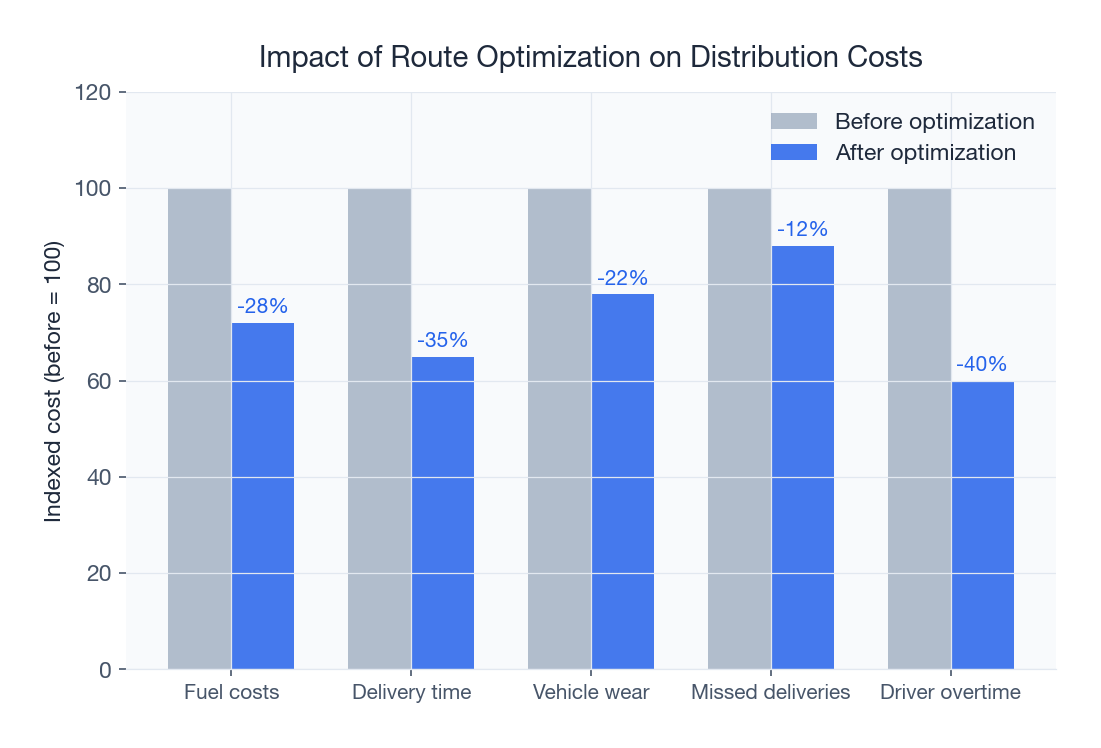
Distributors using route optimization and GPS-tracked vehicles can often negotiate 10-15% lower premiums because insurers recognize the reduced risk profile that comes with better fleet management and visibility.
Documenting Damage for Successful Claims
The single biggest reason transit insurance claims get rejected or severely reduced in India is not policy exclusions -- it is inadequate documentation. Insurers and their surveyors need evidence that is timely, detailed, and consistent. The distributor who can produce timestamped photographs, GPS records, signed delivery reports, and a clear timeline will receive a settlement. The distributor who calls the insurer three days later with a verbal description of the damage will receive a fraction of the claim, or nothing at all.
Essential Documentation Checklist
From the moment damage is discovered, the clock starts. Every piece of evidence you collect in the first 2-4 hours strengthens your claim exponentially compared to evidence gathered days later.
1. Photographic Evidence
- Photographs of the damaged goods from multiple angles, showing the extent and nature of damage
- Photographs of the vehicle showing the condition of the cargo area, locks, seals, or any signs of impact
- Photographs of packaging -- both damaged and undamaged items in the same consignment for comparison
- Wide-angle shots showing the overall scene (accident site, flooding, etc.)
- Close-up shots of specific damage points
- All photos should have timestamps. Smartphone cameras embed metadata (EXIF data) automatically, which surveyors use to verify timing. A mobile DMS app that captures photos with GPS coordinates and timestamps creates even stronger evidence.
2. Delivery and Dispatch Records
- Original dispatch note or challan showing goods loaded, quantities, and condition at loading
- Delivery receipt or proof of delivery (POD) with the receiver's acknowledgment of damage
- Loading photographs showing goods in undamaged condition before dispatch
- Vehicle inspection report at the time of loading
3. Driver and Witness Statements
- Written statement from the driver describing what happened, when, and where
- Statements from any witnesses to the incident
- If a third party is involved (another vehicle in a collision), exchange of details and photographs
4. Police and Official Reports
- FIR (First Information Report) for theft, robbery, or criminal damage -- this is mandatory for theft claims
- Police accident report for road traffic incidents
- Fire brigade report for fire damage
- Weather reports from the India Meteorological Department for natural disaster claims
5. Timeline Documentation
- Exact time of dispatch from origin
- GPS route data showing the vehicle's path and any deviations or stops
- Time of incident (as precise as possible)
- Time of first notification to insurer
- Time of arrival at destination (if applicable)
How DMS Auto-Captures Evidence
Modern distribution management systems transform the documentation process from a manual scramble into an automated, ongoing evidence trail. When a distributor uses a DMS with mobile app capabilities, the system continuously generates claims-ready documentation as part of normal daily operations -- no special action required during an incident.
For instance, the dispatch process in SpireStock automatically captures: loading photographs with GPS coordinates and timestamps, the condition of goods at loading verified by the driver through the app, the exact inventory list with batch numbers and values, and the vehicle inspection checklist. This documentation exists before any incident occurs, which is precisely what makes it so powerful in claims situations. The insurer can compare pre-dispatch records against post-incident condition to establish the exact nature and extent of damage.
Distribution tracking features provide the GPS route record, showing exactly where the vehicle was at every point during transit. This eliminates disputes about route deviations, unauthorized stops, or the location of the incident. Combined with fleet management data, the evidence package is comprehensive and largely self-generating.
The Claims Process Step by Step
Filing a transit insurance claim in India follows a structured process. Understanding each step, the expected timelines, and the common pitfalls at each stage helps distributors navigate the process efficiently and avoid the mistakes that lead to claim rejection or underpayment.
Step 1: Immediate Intimation (Within 24 Hours)
Notify your insurer or broker immediately upon discovering the loss or damage. Most policies require written intimation within 24 hours -- some allow 48 hours, but sooner is always better. Intimation can be made by phone initially, but must be followed by written communication (email or the insurer's online claims portal) within the stipulated period.
Include in your intimation: policy number, date and time of incident, location, nature of loss or damage, estimated value of loss, and a brief description of what happened. Do not speculate about causes -- state facts only.
Common mistake: Delaying intimation because the full extent of damage is not yet known. You do not need to know the exact loss amount at this stage. Intimate immediately and update the figures later. Late intimation is one of the top reasons insurers reject otherwise valid claims.
Step 2: Surveyor Appointment (1-3 Days)
For claims above Rs 50,000 (the threshold may vary by insurer and policy), the insurance company appoints a licensed surveyor to inspect the damage. The surveyor's role is to verify the cause of damage, assess the extent of loss, confirm that the claim falls within policy coverage, and estimate the fair value of the loss.
Your responsibilities during the survey: preserve the damaged goods in their current state until the surveyor inspects them; do not dispose of, sell, or further handle damaged goods before survey; provide the surveyor with all documentation collected (see previous section); be available to answer questions and provide access to records.
Common mistake: Disposing of damaged perishable goods before the survey. Even if dairy products are spoiling, you need photographic evidence and ideally a surveyor inspection before disposal. If disposal is urgent for health reasons, document the disposal with photographs and witnesses, and notify the insurer of the disposal and the reason.
Step 3: Documentation Submission (7-14 Days)
Submit a complete claims file to the insurer. The file should include:
- Claim form (provided by the insurer)
- Copy of the insurance policy or certificate
- Original invoices and packing lists for the damaged goods
- Dispatch note, lorry receipt (LR), or consignment note
- Delivery receipt with damage notation
- All photographic evidence
- Driver's statement
- Police FIR or accident report (as applicable)
- Surveyor's preliminary report (if available)
- Repair or replacement quotations (if goods are partially damaged)
- Salvage value assessment (if damaged goods have residual value)
Incomplete documentation is the most common cause of delayed settlements. Missing even one document from the required list can stall the process by weeks.
Step 4: Assessment and Surveyor Report (15-30 Days)
The surveyor submits a detailed assessment report to the insurer. This report includes the surveyor's findings on the cause of loss, assessment of whether the loss falls within policy coverage, valuation of the loss, and any deductions (depreciation, salvage, excess/deductible). If the surveyor's valuation differs significantly from your claimed amount, you have the right to provide additional evidence or request a re-survey.
Step 5: Settlement (30-90 Days)
The insurer reviews the surveyor's report and makes a settlement offer. Under IRDAI (Insurance Regulatory and Development Authority of India) guidelines, insurers are required to settle or reject claims within 30 days of receiving all documents and the surveyor's report. In practice, settlements for straightforward claims typically take 45-60 days from intimation. Complex claims involving large sums, multiple vehicles, or disputed coverage can take 90+ days.
Settlement is typically made by bank transfer. The insurer deducts the policy excess (deductible), salvage value, and any depreciation before arriving at the net settlement amount.
Common Rejection Reasons and How to Avoid Them
| Rejection Reason | How to Avoid |
|---|---|
| Late intimation beyond policy deadline | Notify insurer within 24 hours, always in writing |
| Damage attributed to inherent vice | Document that goods were in good condition at dispatch; show that damage resulted from an insured peril, not natural deterioration |
| Inadequate packaging proven by surveyor | Use industry-standard packaging; photograph goods at loading to show proper packing |
| Policy lapsed or premium unpaid | Set up auto-renewal; verify policy status before dispatch season |
| Goods not declared under open cover | Declare all shipments per policy requirements; use DMS to auto-generate dispatch declarations |
| Driver negligence or intoxication | Implement driver training; use GPS monitoring; enforce strict no-alcohol policies with verification |
| Goods stored beyond transit scope | Ensure comprehensive policy if goods are warehoused at intermediate points |
| Missing FIR for theft claims | File FIR immediately at nearest police station; never delay hoping goods will be recovered |
Insurance for Perishable and Cold Chain Products
Perishable goods distribution -- dairy, frozen foods, fresh produce, meat, and certain bakery products -- introduces insurance complexities that ambient FMCG products do not face. The core challenge is distinguishing between transit damage (an insurable event) and inherent vice (not insurable). This distinction is where most perishable goods claims succeed or fail.
Transit Damage vs Inherent Vice in Perishables
If a refrigerated truck carrying dairy products is involved in an accident and the goods are physically damaged by the impact, that is transit damage -- straightforward and covered. If the same truck's refrigeration unit fails due to a mechanical fault and the dairy products spoil, the situation becomes more nuanced. Most standard transit policies do not cover refrigeration failure because spoilage due to temperature change can be classified as inherent vice (the goods deteriorated because of their perishable nature).
To cover refrigeration failure, you need a specific temperature break clause or spoilage extension added to your transit policy. This add-on explicitly covers loss or damage resulting from failure or breakdown of the cooling system, provided the system was in working order at the start of the journey and was properly maintained.
What Temperature Break Coverage Requires
- Pre-trip inspection: Documented proof that the refrigeration unit was inspected and functioning at the required temperature before loading. A mobile app that captures temperature readings at dispatch creates excellent evidence.
- Continuous temperature logging: Many insurers require temperature data loggers in the vehicle that record readings at regular intervals (every 15-30 minutes). If a temperature excursion occurs, the logger shows exactly when the break happened and how long it lasted.
- Maintenance records: Regular maintenance logs for the refrigeration unit, showing that the equipment was serviced per manufacturer recommendations.
- Immediate notification: If a temperature break is detected during transit, the driver must notify dispatch immediately. Some advanced DMS platforms with real-time tracking can automatically alert dispatchers when temperature sensors detect deviations.
Premium Impact for Perishable Coverage
Temperature break coverage adds approximately 0.05-0.15% to the base premium rate. For a dairy distributor with Rs 36 crore annual throughput, this translates to Rs 1.8-5.4 lakh additional annual premium. Given that a single full-truck spoilage event for dairy products can cost Rs 3-8 lakh, the math strongly favors the add-on.
Cold Chain Documentation Best Practices
For perishable goods distributors, the documentation requirements are more demanding than for ambient products. Beyond the standard evidence listed in the documentation section above, cold chain distributors should maintain:
- Temperature logs from loading point through delivery, with no gaps
- Calibration certificates for temperature monitoring equipment
- Refrigeration unit service records and maintenance schedules
- Standard Operating Procedures (SOPs) for cold chain handling, demonstrating that the distributor follows industry best practices
- Training records for drivers on cold chain protocols
A DMS that integrates with temperature sensors and automatically logs cold chain data throughout the transit journey creates an unbroken evidence chain. This is not just useful for insurance -- it is increasingly becoming a requirement from brands and regulatory bodies for maintaining cold chain compliance. See how distributor management solutions handle cold chain documentation end-to-end.
Integrating Insurance Documentation with DMS
The strongest insurance claim is one where the evidence already exists before the incident occurs. A distribution management system that captures comprehensive operational data as part of daily workflows creates an automatic, timestamped, GPS-tagged evidence repository that transforms the claims process from a reactive scramble into a structured retrieval exercise.
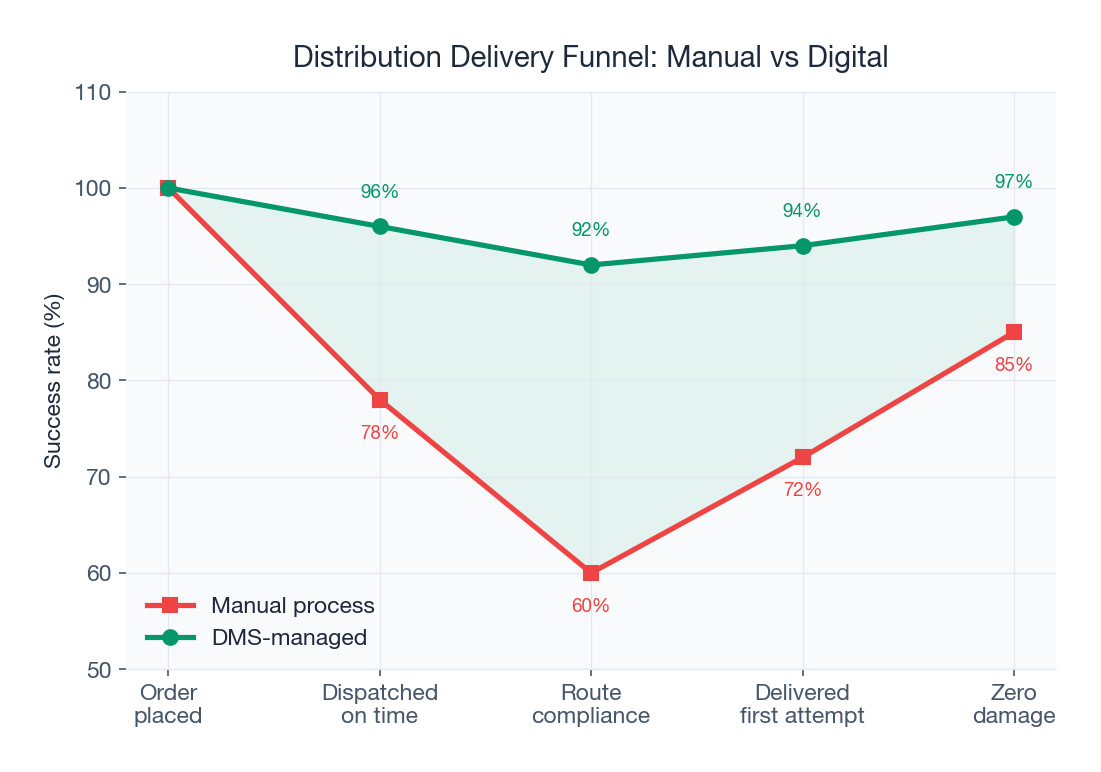
Auto-Generated Delivery Proof
Every delivery executed through a DMS generates a digital proof-of-delivery (POD) that includes the recipient's electronic signature, timestamp of delivery, GPS coordinates of the delivery location, and any notes or exceptions recorded by the driver. If goods arrive damaged, the driver records the damage in the app at the point of delivery -- creating a contemporaneous record that is far more credible to surveyors than a report filed hours or days later.
SpireStock's mobile application takes this further by requiring photographic capture at both loading and delivery touchpoints. The loading photos establish the condition of goods at dispatch; the delivery photos document their condition at arrival. The delta between the two sets of photos provides clear, visual evidence of exactly what damage occurred during transit.
GPS Tracking for Route Verification
One of the most common challenges in transit claims is proving where and when the damage occurred. Without GPS data, the insurer relies entirely on the driver's account, which is subjective and sometimes unreliable. With GPS tracking integrated into the distribution tracking system, the exact route taken, every stop made, the duration of each stop, and the vehicle's speed profile throughout the journey are all recorded automatically.
This data serves multiple insurance purposes. It proves the vehicle followed the declared route (important for policies with route restrictions). It identifies the precise location and time of any incident. It shows whether the vehicle made unauthorized stops that might have contributed to theft or tampering. And it provides corroborating evidence for the driver's statement, increasing its credibility.
Timestamp Evidence at Every Touchpoint
A well-integrated DMS creates timestamps at every operational touchpoint: order confirmation, pick and pack completion, loading start and end, dispatch, each delivery attempt, successful delivery, and return to depot. This chain of timestamps establishes a precise timeline for the entire consignment journey. In a claims scenario, this timeline helps the surveyor and insurer understand exactly when the incident occurred and whether the claim notification was made within the required timeframe.
Photo Capture at Loading and Unloading
The most powerful evidence in a transit claim is photographic comparison between goods at loading and goods at delivery. When the DMS mandates photo capture at both ends, the distributor has visual proof of the before-and-after condition without any special action taken during the incident. The photos are embedded in the delivery record with metadata (timestamp, GPS, device ID) that makes them tamper-evident.
For distributors handling perishable goods, photo capture at delivery is particularly valuable because it documents not just physical damage but visible signs of temperature exposure -- condensation on packaging, discoloration, swelling of sealed containers, or ice crystal formation on frozen goods.
How SpireStock Creates Claims-Ready Documentation
SpireStock's platform generates a comprehensive documentation package for every consignment that can be exported for insurance purposes within minutes. The export includes:
- Dispatch manifest with complete goods list, batch numbers, and values
- Loading photographs with GPS coordinates and timestamps
- Vehicle inspection record at dispatch
- Complete GPS route trace for the journey
- All stop durations and locations
- Delivery photographs and POD with receiver signature
- Any exception reports or damage notes recorded during delivery
- Temperature logs (for cold chain shipments with integrated sensors)
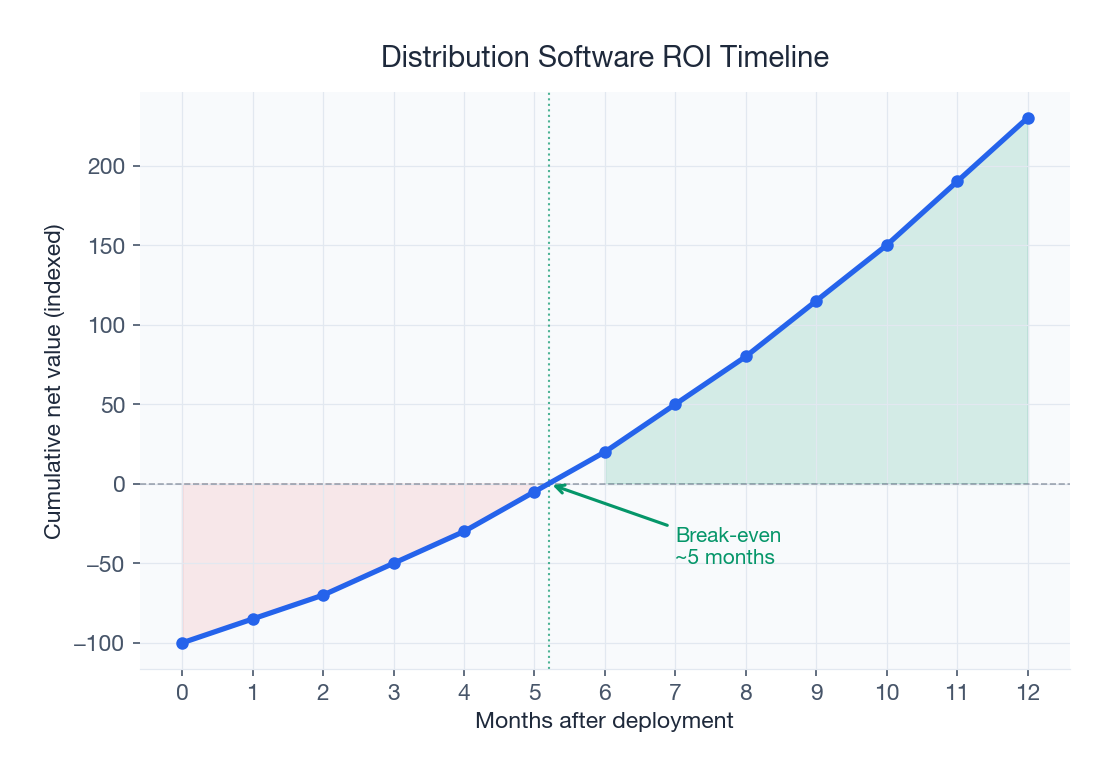
This package addresses every documentation requirement that surveyors and insurers look for. Distributors who have used this evidence package report significantly faster claim processing and higher settlement ratios compared to their pre-DMS experience. Contact us to see a demo of how SpireStock's documentation supports the claims process, or explore our pricing plans to get started.
Choosing the Right Insurance Provider
India's general insurance market includes over 30 providers, but only a handful have the product expertise, claims infrastructure, and distribution sector understanding to serve FMCG distributors effectively. Choosing an insurer is not just about premium rates -- it is about claims settlement reliability, surveyor network, and understanding of your specific product category.
Leading Insurers for Transit Coverage
New India Assurance
India's largest general insurer with the widest branch and surveyor network. Government-owned, which provides stability but sometimes means slower claims processing. Strong for high-volume policies and has extensive experience with FMCG cargo. Premium rates are competitive due to scale. Best for distributors who value network reach and government-backed security over speed.
TATA AIG General Insurance
Combines Tata's India expertise with AIG's global cargo insurance knowledge. Their marine and transit insurance products are sophisticated, with options for temperature break coverage, comprehensive transit-cum-storage policies, and customized endorsements for specific product categories. Claims processing is generally faster than PSU insurers. Best for cold chain distributors and those needing specialized coverage.
ICICI Lombard General Insurance
Strong digital claims infrastructure with online filing, real-time tracking, and a large panel of surveyors. Premium pricing is competitive for clean-record distributors. Their commercial insurance team understands FMCG distribution well. Best for tech-forward distributors who value digital claims management.
Bajaj Allianz General Insurance
Wide distribution network with aggressive pricing for commercial cargo insurance. Good claims settlement ratio and reasonable processing timelines. Offers bundled products combining transit with warehouse and liability coverage. Best for distributors looking for competitive premiums with adequate coverage.
National Insurance Company
Another major PSU insurer with extensive reach in eastern and northeastern India. Strong for distributors operating in regions where private insurers have limited surveyor networks. Premium rates are competitive. Claims processing can be slower than private insurers. Best for distributors in eastern India or those with government contracting requirements.
What to Compare When Choosing a Provider
| Comparison Factor | What to Look For | Red Flag |
|---|---|---|
| Claims settlement ratio | Above 90% for cargo/marine segment | Below 80% or unwillingness to share segment-specific data |
| Average settlement time | 45-60 days for straightforward claims | Above 90 days as standard; no committed SLA |
| Surveyor network | Surveyors available in your operating geography within 24-48 hours | No surveyors in your region; reliance on travelling surveyors |
| Policy flexibility | Willingness to customize coverage, add endorsements, adjust deductibles | One-size-fits-all policies with no room for negotiation |
| Premium competitiveness | Within 10-15% of market average for your risk profile | Dramatically lower premium (may indicate coverage gaps or exclusions) |
| Digital capabilities | Online claims filing, document upload, status tracking | Paper-only claims process; no digital infrastructure |
| Renewal terms | No-claim bonus of 5-15% for clean years; auto-renewal option | Premium increases after clean years; punitive renewal terms |
Broker vs Direct Purchase
FMCG distributors have two channels for purchasing transit insurance: directly from the insurer, or through an insurance broker. Each has advantages.
Direct purchase works well for distributors with straightforward needs -- standard FMCG goods, simple routes, and no special coverage requirements. You deal with the insurer's commercial team, negotiate your own terms, and handle renewals directly. The advantage is a direct relationship with the underwriter; the disadvantage is that you are limited to one insurer's products and pricing.
Insurance brokers are recommended for distributors with complex needs -- cold chain operations, multi-state distribution, high-value goods, or a history of claims that makes standard policies expensive. A good broker will obtain quotes from multiple insurers, negotiate coverage terms, assist with claims filing, and advocate on your behalf during disputes. Brokers earn their commission from the insurer (typically 10-15% of premium), so there is no direct cost to the distributor. The trade-off is that brokers may steer you toward insurers who pay higher commissions; always compare the broker's recommendation against at least one direct quote.
For distributors moving goods worth over Rs 1 crore monthly, using a specialist cargo insurance broker is almost always worth it. The premium savings from competitive quoting and the claims support typically exceed any difference in commission-adjusted pricing.
Case Studies
The following case studies illustrate how digital documentation through a DMS transformed the insurance claims experience for two FMCG distributors -- one recovering from a road accident and the other from monsoon flooding.
Case Study 1: Arjun Distributors, FMCG Distributor in Maharashtra
Arjun Distributors operates a 6-vehicle fleet covering the Mumbai-Pune corridor and surrounding districts, distributing personal care and packaged food products for three FMCG brands. In March 2026, one of their fully loaded trucks carrying goods worth Rs 8.2 lakh was involved in a collision on the Mumbai-Pune Expressway. The truck overturned, and approximately 60% of the cargo was damaged beyond salvageable condition.
Before SpireStock (how claims used to work): Prior to implementing a DMS, Arjun Distributors had experienced a similar incident two years earlier. That time, the claims process was a nightmare. The driver called the owner, who called the insurance broker the next day. No photographs were taken at the accident site because the driver was focused on getting help. The insurer's surveyor arrived 4 days later, by which time the damaged goods had been moved by the police to clear the expressway. The claim for Rs 6.5 lakh was settled at Rs 2.8 lakh -- a 57% haircut -- primarily because the surveyor could not independently verify the extent of damage from the available evidence.
With SpireStock (the 2026 incident): When the March 2026 accident occurred, the digital documentation ecosystem was already in place. The sequence of events demonstrated the difference:
- Immediate evidence: The driver used the SpireStock mobile app to capture 15 photographs of the accident scene, damaged goods, and vehicle condition within 30 minutes of the incident. Each photo was automatically tagged with GPS coordinates, timestamp, and device ID.
- Loading record: The system already contained loading photographs from that morning showing all goods in perfect condition, the dispatch manifest with exact quantities, batch numbers, and invoice values, and the vehicle inspection record confirming the truck was in good condition at departure.
- GPS evidence: The distribution tracking system showed the complete route history, proving the driver was on the declared route, travelling at a normal speed, with no unauthorized stops before the accident.
- Instant intimation: The dispatch manager was alerted automatically when the vehicle stopped unexpectedly and the driver marked an incident in the app. The insurer was notified within 2 hours of the accident, well within the 24-hour deadline.
- Complete claims package: Within 24 hours, Arjun Distributors exported a complete documentation package from SpireStock containing loading photos, dispatch manifest, GPS route data, accident site photos, and the driver's in-app incident report. This package was emailed to the insurer along with the formal claim.
Result: The surveyor completed the assessment in 2 days (vs 4 days in the previous incident) because all evidence was available digitally. The claim for Rs 8.2 lakh was settled at Rs 7.6 lakh (after deductible and salvage) within 38 days. The settlement represented 93% of the claimed amount, compared to 43% in the pre-DMS incident. The Rs 4.8 lakh difference in outcome more than justified the annual cost of the mobile DMS platform.
Case Study 2: Krishna Cold Chain, Dairy Distributor in Gujarat
Krishna Cold Chain distributes dairy products -- milk, curd, paneer, buttermilk, and ice cream -- across Ahmedabad and surrounding districts using 4 refrigerated vehicles. During the 2025 monsoon, severe flooding in parts of Ahmedabad's industrial area submerged their loading dock and damaged two refrigerated vehicles. The combined loss included Rs 4.8 lakh in dairy products (destroyed by water ingress and subsequent temperature break) and Rs 1.2 lakh in packaging materials.
The challenge: Dairy products and flood damage create a complex claims scenario because insurers need to distinguish between flood damage (covered) and spoilage due to inherent perishability (not covered). In this case, the goods were destroyed by a combination of water ingress into the vehicle cargo areas and subsequent refrigeration failure when floodwater damaged the reefer units. The insurer could potentially argue that the spoilage was inherent vice rather than flood damage.
How DMS documentation made the difference:
- Temperature logs: SpireStock's integrated temperature monitoring showed that both vehicles maintained correct temperatures (2-4 degrees Celsius for dairy, minus 18 for ice cream) until the exact moment floodwater entered the cargo areas. The logs showed a sharp temperature spike from 3 degrees to 22 degrees within 40 minutes, proving the temperature break was caused by the flood event, not by inherent product deterioration or equipment neglect.
- Pre-flood loading records: The morning dispatch records showed all products loaded in perfect condition with correct temperatures, with photographic evidence and batch-level documentation.
- Real-time flood alerts: The tracking system recorded when the vehicles were immobilized by rising water, with GPS data showing their exact positions in the flood zone.
- Maintenance records: Refrigeration unit maintenance records stored in the system proved both units were serviced within the last 90 days and were in good working order, eliminating any argument of equipment neglect.
Result: The surveyor accepted that the spoilage was a direct consequence of the flood event (covered peril) rather than inherent vice. The claim for Rs 6 lakh (products plus packaging) was settled at Rs 5.4 lakh within 52 days. Krishna Cold Chain's insurance provider specifically noted that the temperature logs were the decisive evidence -- without them, the claim would likely have been contested or significantly reduced.
Both case studies highlight the same principle: digital documentation does not just help with insurance claims -- it transforms the economics of being insured. When settlement ratios improve from 40-60% to 90%+, the effective return on insurance premiums multiplies accordingly. For distributors evaluating whether to invest in a DMS, the insurance documentation benefit alone can justify the platform cost within the first significant claim. Explore SpireStock's distributor management solution to see how these documentation capabilities work in practice.
Protect your goods and your margins. SpireStock helps FMCG distributors build claims-ready documentation automatically through daily operations -- from GPS-tracked routes and timestamped delivery proof to photo capture at every touchpoint. When an incident happens, the evidence is already there. Book a free demo or check our pricing plans to get started.
Sources & References
- IRDAI, Insurance Regulatory and Development Authority of India
- Ministry of Road Transport, Road Accidents in India Report
- IBEF, FMCG Sector Overview: India Brand Equity Foundation
- Marine Insurance Act, The Marine Insurance Act, 1963 (India)
Frequently Asked Questions
Goods-in-transit insurance (also called marine inland transit insurance) covers physical loss or damage to goods while they are being transported from one location to another. For FMCG distributors, it protects against financial losses from accidents, theft, fire, natural disasters, and water damage during delivery runs. Policies are available as single-consignment, open cover, floating, annual, or comprehensive types, with premiums typically ranging from 0.05% to 0.5% of goods value.
Transit insurance premiums for FMCG distributors in India typically range from 0.05% to 0.5% of the declared goods value, depending on product type, route, vehicle, packaging, and claims history. A mid-size distributor moving Rs 15 lakh daily across 5 vehicles can expect annual premiums of Rs 2-3 lakh for comprehensive coverage. Perishable and cold chain goods attract higher premiums of 0.1-0.3% due to the additional temperature break coverage required.
Standard transit insurance excludes inherent vice (natural deterioration of perishable goods), poor or inadequate packaging, delay and consequential losses, wilful misconduct or driver negligence, war and civil unrest (unless SRCC add-on is purchased), gradual deterioration, and mysterious disappearance under basic policies. For perishable goods, spoilage due to refrigeration failure requires a separate temperature break clause -- it is not covered under standard transit policies.
The process involves five steps: (1) Immediate intimation to the insurer within 24 hours with basic incident details. (2) Surveyor appointment by the insurer within 1-3 days for claims above Rs 50,000. (3) Documentation submission within 7-14 days including photographs, invoices, dispatch notes, driver statements, and police FIR if applicable. (4) Surveyor assessment and report within 15-30 days. (5) Settlement within 30-90 days. The key to successful claims is comprehensive documentation collected within the first 2-4 hours of discovering damage.
Standard transit insurance covers physical damage to dairy products from accidents, fire, theft, and natural disasters. However, spoilage due to refrigeration failure or temperature exposure requires a specific temperature break clause or spoilage extension added to the policy. This add-on costs an additional 0.05-0.15% of goods value and requires evidence of pre-trip refrigeration inspection, continuous temperature logging during transit, and regular maintenance records for cooling equipment.
Essential evidence includes: timestamped photographs of damaged goods from multiple angles, original dispatch notes and invoices, delivery receipts with damage notation, driver's written statement, police FIR for theft or criminal damage, GPS route data showing vehicle path, loading photographs showing goods in undamaged condition before dispatch, and weather reports for natural disaster claims. A distribution management system (DMS) that auto-captures photos, GPS data, and timestamps at loading and delivery creates the strongest evidence package.
The best insurer depends on your specific needs. TATA AIG offers sophisticated cargo products with temperature break coverage, ideal for cold chain distributors. ICICI Lombard provides strong digital claims infrastructure for tech-forward distributors. Bajaj Allianz offers competitive pricing with adequate coverage. New India Assurance has the widest surveyor network and government-backed stability. For distributors with complex needs or annual goods movement above Rs 1 crore monthly, working with a specialist cargo insurance broker who can obtain competitive quotes from multiple insurers is recommended.
Open cover is a framework agreement where individual shipments are automatically covered within agreed parameters, with premiums settled based on periodic dispatch declarations. Annual transit policy provides blanket coverage for all goods movements during the policy year with per-consignment and aggregate limits and a single annual premium. Open cover is more flexible and often slightly cheaper but requires regular declarations. Annual transit is simpler administratively with a single policy and premium payment. For most FMCG distributors with daily dispatches, either works well.
Related SpireStock Features
Related Industries
Streamline FMCG distribution with order management, beat planning, retailer tracking, and GST billing. Built for Indian FMCG supply chains.
End-to-end dairy distribution software for milk, curd, paneer, and ghee brands. Manage orders, crates, cold chain, and GST billing in one platform.
Related Solutions
GPS fleet tracking, driver management, and route optimization for dairy and FMCG delivery vehicles. Reduce fuel costs by 25%. Try SpireStock.
Manage your entire distributor network digitally. Onboarding, credit limits, outstanding tracking, and performance analytics. Start free trial.
Related Entities
Ready to Streamline Your Distribution?
Start your free 14-day trial and see how SpireStock can transform your dairy, FMCG or consumer-goods distribution operation, from order capture to crate recovery.

SpireStock Team
Product & Industry Insights
SpireStock Team leads product at SpireStock, where the team ships distribution management software for India's dairy, FMCG and consumer-goods brands.