
The Monsoon Impact on Indian FMCG Distribution
India receives 70% of its annual rainfall in just four months -- June through September. For the 8 million FMCG distribution points scattered across the country, this is not merely a weather event. It is the single largest seasonal disruption to FMCG distribution in any major economy, and its effects cascade from primary transport to last-mile delivery.
The numbers tell a stark story. During peak monsoon, average transport times increase by 40% as vehicles navigate flooded roads, detour around washed-out bridges, and wait for waterlogged stretches to drain. Logistics costs spike by 15% on average -- and much higher in flood-prone corridors across Assam, Bihar, Kerala, and coastal Maharashtra. Damage claims triple compared to dry months, with water ingress, moisture absorption, and temperature excursions destroying goods that were perfectly fine when they left the warehouse.
India's FMCG sector generates approximately Rs 14 lakh crore in annual revenue. The June-September window accounts for roughly 60% of annual distribution activity because it coincides with peak consumption periods for beverages, packaged foods, and personal care. Industry estimates suggest monsoon-related product damage costs Indian FMCG distributors Rs 4,000-6,000 crore annually -- including direct product loss, insurance claims, retailer returns, and lost sales from out-of-stock situations. For individual distributors operating on 3-5% net margins, a single bad monsoon week can erase an entire month of profit.
Yet the monsoon is predictable. The southwest monsoon hits Kerala around June 1, reaches Mumbai by June 10-15, covers most of India by July 15, and begins withdrawing from northwest India by September 1. This predictability makes poor monsoon preparation inexcusable. Distributors who treat it as a surprise rather than a scheduled operational challenge will always lose money during these four months.
Five Product Categories Most Affected by Monsoon
Not all FMCG products suffer equally during monsoon. Understanding which categories face the highest risk allows distributors to prioritize protection investments and pre-positioning strategies.
1. Biscuits, Snacks, and Namkeen
This category tops the monsoon damage list every year. Biscuits, chips, and namkeen are hygroscopic -- they absorb moisture from the air. Even without direct water contact, sustained humidity above 70% causes these products to lose crunch, develop staleness, and become unsaleable. A carton of biscuits sitting in a humid godown for 48 hours can absorb enough moisture to trigger retailer rejection.
The financial exposure is significant. Biscuits alone are a Rs 45,000 crore category in India, and distributors handling major brands report monsoon damage rates of 3-8% of monthly stock versus under 1% in dry months. For a distributor moving Rs 20 lakh of biscuits monthly, that translates to Rs 60,000-1,60,000 in monsoon damage per month. Protection requires shrink-wrapping cartons in polyethylene film, storing on raised pallets (minimum 6 inches above floor), using desiccant packets inside secondary packaging, and maintaining godown humidity below 65% with industrial dehumidifiers. FIFO discipline becomes critical -- older stock exposed to more humidity days must move first.
2. Dairy and Cold Chain Products
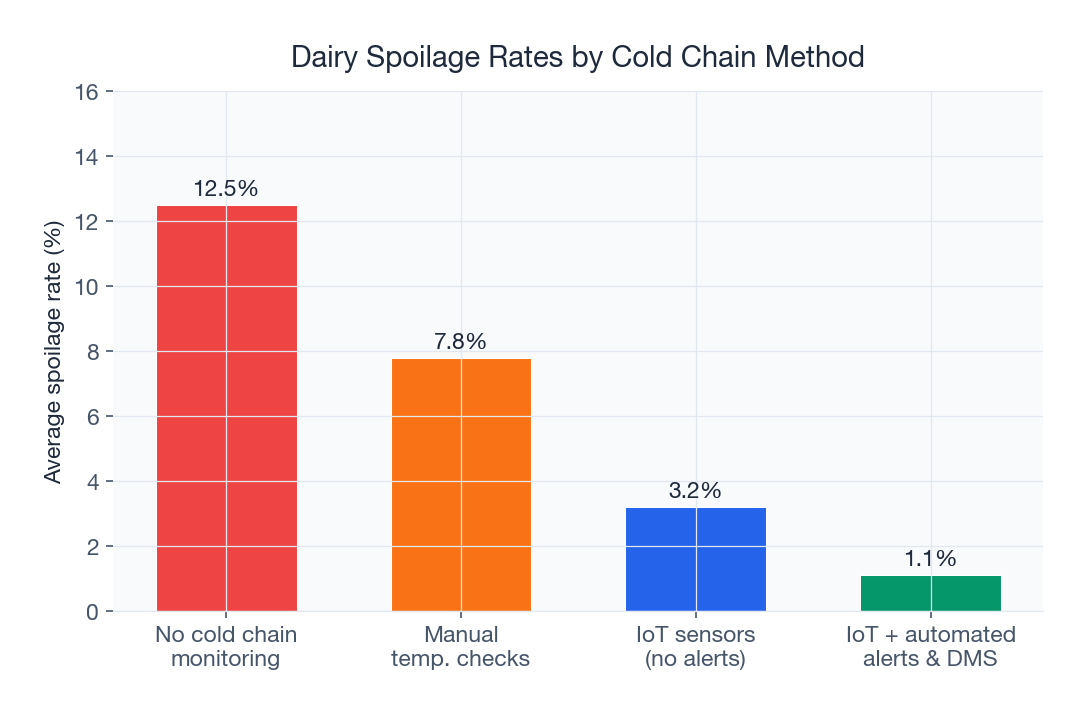
Dairy distribution faces a double threat: power outages disrupt cold chain equipment, and road delays extend transit time without adequate refrigeration. A milk tanker delayed 3 hours on a flooded Maharashtra highway can lose its entire load. Curd, paneer, and buttermilk have shelf lives measured in hours at ambient temperature. During monsoon, cold chain disruptions cost dairy distributors 5-10% of monthly revenue in affected regions. Critical interventions include backup generators, GPS-enabled temperature monitoring (see our dairy cold chain guide), and buffer stock at forward cold storage points.
3. Paper Products
Toilet paper, tissues, and paper-packaged goods are destroyed by even brief water contact. Unlike moisture damage that degrades quality gradually, water damage to paper products is instant and total. Distributors must invest in HDPE-lined cartons, waterproof vehicle cargo areas, and pre-monsoon godown roof inspections.
4. Personal Care and Cosmetics
Cardboard secondary packaging absorbs moisture and collapses, making products unsaleable even when the primary product inside is fine. Labels peel, metal caps develop rust, and powder products absorb moisture through micro-perforations. The solution is primarily packaging-level: wax-coated or poly-lined outer cartons, dehumidified storage zones, and strict visual inspection at receiving docks.
5. Fresh Produce and Perishables
High temperature plus high humidity creates ideal conditions for fungal growth and bacterial multiplication. A shipment of bananas that survives a 6-hour transit in March may spoil during the same 10-hour monsoon transit. For perishable distributors (see our guide on perishable goods distribution), monsoon planning requires shorter order-to-delivery windows, smaller and more frequent loads, and reusable plastic crates via a robust crate management system that protects produce far better than cardboard in wet conditions.
Route Planning During Monsoon
Route planning is the first operational system that breaks during monsoon. Roads reliable for 8 months become impassable for 4. A distributor in Mumbai whose routes include the Andheri subway or Hindmata Bridge knows that heavy rain can add 2-4 hours to deliveries -- or make them impossible entirely.
Pre-Monsoon Route Audits
The single most effective intervention is a pre-monsoon route audit in April-May. Physically drive every primary delivery route, identify flood-prone spots and potential closures, and document GPS coordinates of each risk point, typical water levels, estimated closure duration, and two alternative routes. The National Highways Authority reports that 15-20% of national highway sections face disruption during peak monsoon weeks. For state highways and rural roads, this figure reaches 30-40%.
How DMS Auto-Rerouting Works
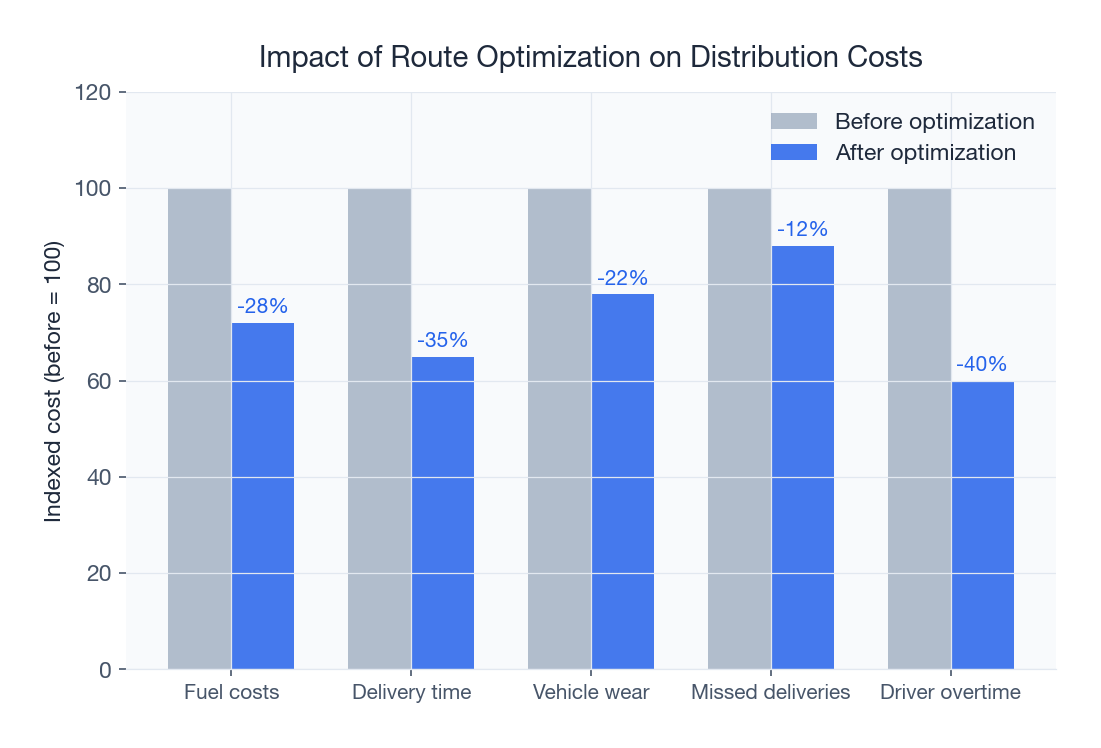
Modern route optimization systems integrate three data sources: real-time weather data from IMD (India Meteorological Department) and private weather APIs, historical road closure data from previous monsoon seasons, and live GPS feeds from delivery vehicles showing actual transit speeds. When heavy rainfall is reported or forecast in a delivery zone, the system automatically identifies routes passing through known flood points, calculates alternative routes factoring in distance, time, and vehicle load capacity, and re-sequences delivery stops to optimize the modified route.
For example, a distributor in Pune covering 15 outlets across Kothrud, Warje, and Sinhagad Road faces regular flooding on the Sinhagad Road low-lying section. The DMS automatically moves Sinhagad Road outlets to the end of the delivery sequence (allowing time for water to recede) or reroutes through Sahkar Nagar bypass, notifying affected retailers of revised delivery windows. Distribution tracking provides real-time visibility into where each vehicle is and whether the rerouted plan is working. Pre-loaded monsoon route configurations alone can reduce delivery delays by 25-30%.
Building a Monsoon Route Playbook
Every distributor should maintain a monsoon route playbook that includes the top 10 flood-prone points on their delivery routes with GPS coordinates, three alternative route options for each disruption point, estimated additional time and fuel cost for each alternative, a list of retailers that become inaccessible during extreme rainfall (with protocols for serving them on the next clear day), and emergency contact numbers for local municipal authorities and highway patrols. This playbook should be updated annually based on the previous monsoon's actual disruption data.
Warehouse and Godown Protection
Warehousing failures during monsoon cause more financial damage than transport disruptions because they affect your entire stock -- not just one vehicle's load. A roof leak undetected overnight can damage goods worth lakhs.
Structural Preparedness
Begin pre-monsoon warehouse inspection in April covering roof integrity, wall seepage points, floor drainage, electrical safety (waterproofing switch panels, checking earthing), and loading dock protection. FSSAI mandates food products on platforms raised at least 6 inches above floor level; during monsoon, double this to 12 inches where possible. Palletized storage with moisture barriers between pallet and floor is the gold standard.
Humidity Control and Storage Practices
Wrap all pallets in stretch film, place desiccant packets in moisture-sensitive cartons, maintain air gaps between pallets for ventilation, and separate moisture-sensitive products from liquids. Industrial dehumidifiers maintaining warehouse humidity below 65% cost Rs 30,000-80,000 for a 2,000 sq ft godown -- a fraction of a single damage incident's cost. IoT humidity sensors that alert warehouse managers when thresholds are breached can prevent damage before it occurs, particularly critical for dairy cold rooms.
FSSAI Compliance and Insurance
FSSAI requires food products stored off-floor on clean dry pallets, pest-free premises (monsoon creates ideal infestation conditions), adequate backup lighting during power outages, and continuous cold chain records. Non-compliance risks penalties and license suspension, and FSSAI surprise inspections increase during monsoon. Every distributor should also verify their stock insurance covers flood and inundation, storm and tempest, stock-in-transit during loading/unloading, and consequential loss from business interruption.
Stock Pre-Positioning Strategy
The most effective monsoon strategy is also the simplest: move stock before the rain arrives. Pre-positioning decouples your retail delivery capability from primary supply chain disruptions.
Build 15-20 Days Buffer by May
Standard distributors maintain 7-10 days of inventory cover. For monsoon, increase to 15-20 days by the last week of May. Buffer calculations should be category-specific: 10-12 days for high-velocity perishables (milk, bread), 15-20 days for medium-velocity products (biscuits, soaps), and 25-30 days for long-shelf-life items (canned goods, detergents). Sales analytics help model requirements based on previous monsoon consumption patterns -- cold beverages surge 30-40%, hot beverages decline 15-20%, comfort foods rise 10-15%.
Regional Redistribution and Pre-Loading Calendar
Push stock to high-disruption regions 2-3 weeks before the monsoon front arrives. A distributor covering Mumbai and Pune should load Mumbai warehouses by late May before Mumbai-Pune expressway disruptions begin. Follow this systematic calendar:
| Timeline | Action | Categories |
|---|---|---|
| April 1-15 | Forecast monsoon demand from previous year data | All categories |
| April 15-30 | Place advance orders with companies | Long-shelf-life (detergents, canned goods) |
| May 1-15 | Receive and warehouse buffer stock | Biscuits, snacks, personal care, paper |
| May 15-25 | Complete forward positioning at sub-depots | High-velocity and monsoon-surge products |
| May 25-31 | Final cold chain top-up at forward cold stores | Dairy, frozen foods |
| June onwards | Switch to monsoon cadence (smaller, more frequent orders) | All categories |
Fleet and Vehicle Preparedness
A vehicle breakdown during monsoon does not just delay deliveries -- it can destroy the cargo. Every delivery vehicle needs a comprehensive monsoon-readiness check by mid-May.
Waterproofing: Inspect and repair cargo covers, tarpaulins, and container seals. For open-body vehicles, install heavy-duty waterproof covers with tie-downs at 12-inch intervals. Tires: Minimum 3mm tread depth for monsoon. Underinflated tires hydroplane more easily -- check pressure weekly. Brakes: Wet brakes lose 30-40% stopping power. Inspect pads, discs, and hydraulic lines. Electrical: Check wiring insulation, seal exposed connections, ensure all lights are functional -- monsoon visibility drops dramatically. Wipers: Replace streaking blades, test defoggers against interior fogging.
Cargo Protection and GPS Tracking
Implement three-layer cargo protection: product-level (shrink-wrap, poly-lined cartons), vehicle-level (waterproof covers, sealed containers), and loading dock-level (covered bays or portable awnings). GPS-enabled fleet management during monsoon provides real-time location tracking during delays, speed monitoring for wet-road safety (40-50 km/h highway, 20-30 km/h urban recommended), geofence alerts for flood-prone zones, and SOS functionality for stranded drivers.
Driver Safety Protocols
Establish clear monsoon driving rules: do not drive through water deeper than the exhaust pipe (12-18 inches), pull over if visibility drops below 50 meters, never park under trees during storms, and carry emergency supplies (flashlight, first aid kit, reflective triangles, tow rope). Define a "no-go" policy -- weather conditions under which deliveries are suspended rather than risking safety. A delayed delivery is recoverable; an accident is not.
Last-Mile Delivery Adaptations
Two-Wheeler Delivery Challenges
In congested market areas, the last mile often relies on two-wheelers carrying 30-50 kg. During monsoon, this creates severe rider safety risks, product exposure, and increased accident probability. Consider switching to auto-rickshaw or mini-van delivery during peak monsoon for longer routes -- the Rs 15-25 additional cost per delivery is justified by reduced damage. For short-distance last-mile, hard-shell waterproof delivery boxes (Rs 3,000-5,000) mounted on two-wheelers provide adequate protection. Bakery and confectionery distributors should pay special attention here -- cream-based products and fresh bread are among the most vulnerable items in two-wheeler last-mile delivery during rain.
Delivery Time Window Adjustments
Heavy rainfall typically concentrates in early morning (4-7 AM) and late afternoon (3-8 PM) windows, with midday generally lighter. Restructure delivery to prioritize the 9 AM-3 PM window. Early morning dairy deliveries may shift 1-2 hours later; evening restaurant deliveries may shift earlier. The SpireStock mobile app lets delivery staff update retailers in real-time about revised times, reducing frustration and preventing them from ordering from competitors.
Customer Communication
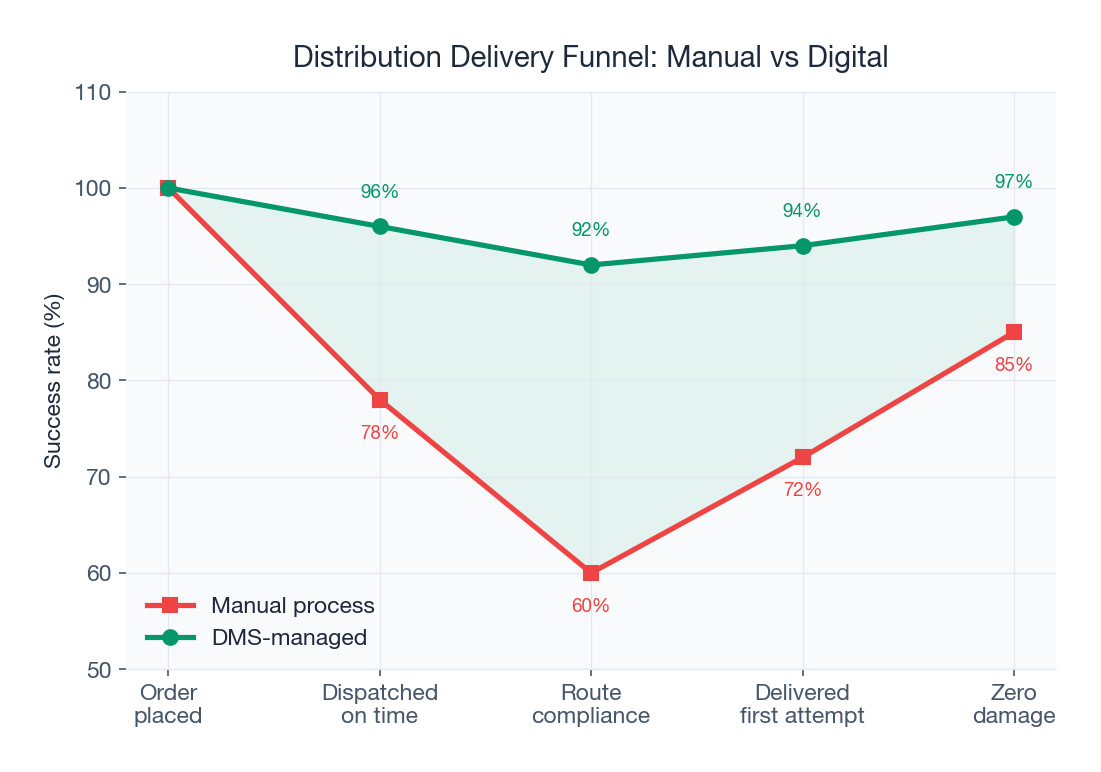
Proactive communication is a powerful differentiator. Implement a three-step protocol: (1) morning alert if deliveries will be delayed with revised timing, (2) real-time updates when the vehicle is 30-60 minutes away, (3) end-of-day notification if deliveries were cancelled with rescheduled dates. Distribution management platforms automate these notifications. Retailers remember which distributors communicated well during disruptions -- this builds loyalty that lasts year-round.
Insurance and Claims Management
Even the most prepared distributor will face damage incidents during four months of sustained rainfall. The difference between absorbing losses and recovering them lies in insurance coverage and claims discipline.
Transit Insurance
Many distributors carry warehouse stock insurance but lack adequate transit coverage -- where the majority of monsoon damage occurs. Activate or enhance goods-in-transit insurance before monsoon with all-risk coverage (not just named perils) covering water damage, moisture, and temperature excursion. Include coverage during loading/unloading and at temporary storage points. Cost is typically 0.1-0.3% of insured value per transit -- Rs 300-900 for a Rs 3 lakh vehicle load, versus Rs 50,000-3,00,000 for a single damaged load.
Damage Documentation
The biggest reason claims get rejected is inadequate documentation. Insurance requires contemporaneous evidence -- photos and records created at the time of damage. Document with photographs showing damage nature and cause, written records of discovery time and personnel, inventory counts of damaged versus undamaged goods, temperature logs for cold chain products, and IMD weather records for the date and location. The SpireStock mobile app enables timestamped, geolocated damage photos linked to specific orders and invoices, dramatically improving claim approval rates.
Claims Best Practices
Most policies require notification within 24-48 hours and formal filing within 7-14 days. Designate a single claims coordinator, pre-fill claim templates with distributor details, maintain a running damage log through monsoon, file individually for incidents above Rs 25,000 while batching smaller ones weekly, and keep copies of all purchase invoices as proof of stock value.
Technology Solutions for Monsoon Distribution
Technology cannot stop the rain, but it dramatically reduces rain's impact. Modern distribution management systems offer monsoon-specific capabilities that turn reactive scrambling into proactive management.
Real-Time Weather Integration
Weather APIs provide hyperlocal pin-code-level forecasts with hourly rainfall predictions. Integrated with a DMS, this enables automatic schedule adjustments based on forecasted rainfall, proactive retailer notifications before the rain starts, route risk scoring, and historical pattern analysis. When IMD issues an orange alert for specific districts, the DMS automatically flags affected routes, proposes alternatives, and notifies the operations team -- before the first drop falls.
Dynamic Route Optimization and Automated Reporting
Monsoon route optimization must factor in flood-risk zones, real-time road conditions, vehicle type suitability, time-of-day rainfall patterns, and delivery priority (perishables first). The system recalculates routes in real-time as conditions change, updating driver instructions and retailer ETAs within minutes. Without technology, this requires hours of phone calls producing suboptimal ad-hoc solutions.
Automated damage reporting through mobile apps allows field staff to report incidents in under 2 minutes using structured forms with photo capture, auto-populated order details, and simultaneous notification to warehouse managers, insurance coordinators, and brand representatives.
IoT Moisture Sensors
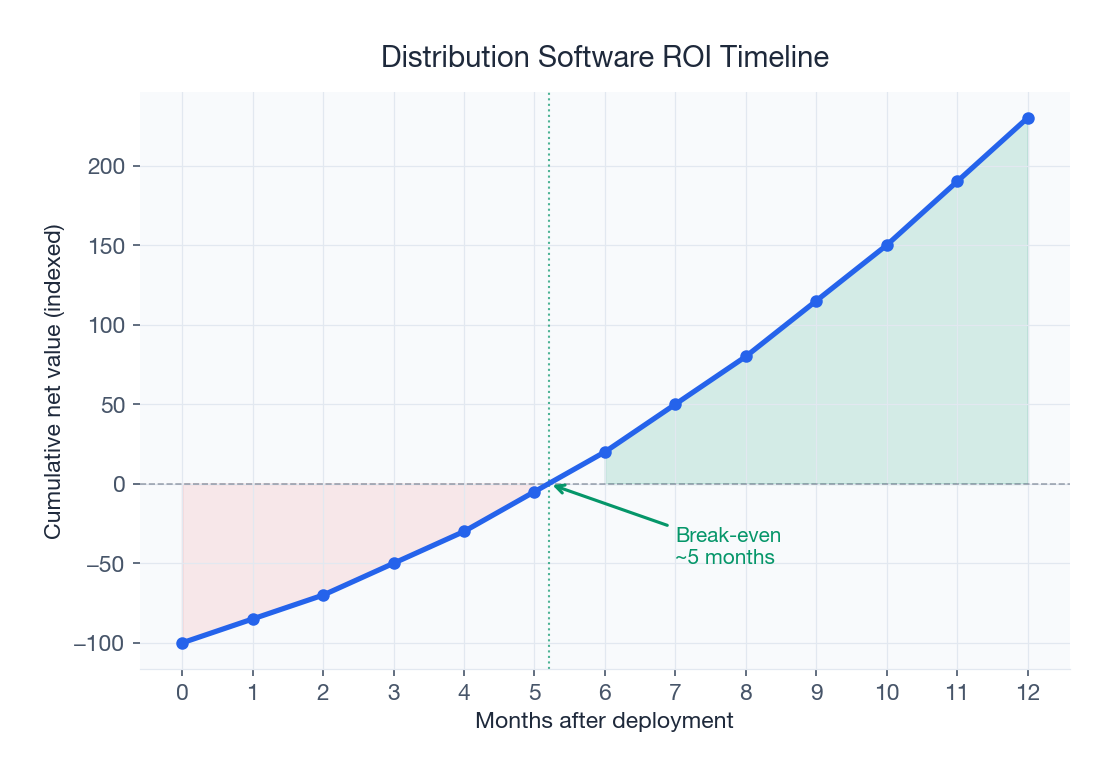
IoT-enabled moisture and temperature sensors address the detection gap. Traditional damage discovery happens at delivery inspection -- by which time damage may have been spreading for hours. Sensors inside cargo containers and warehouse zones provide real-time alerts when moisture exceeds safe thresholds. A basic setup for a mid-sized distributor (3-4 godowns, 10-15 vehicles) costs Rs 2-4 lakh. If it prevents even one major incident (typically Rs 50,000-2,00,000), it pays for itself within a single monsoon season.
90-Day Monsoon Preparedness Checklist
Phase 1: Planning (April)
- Review previous monsoon's damage data, disruption logs, and insurance claims
- Analyze previous year's monsoon sales data to forecast category-wise demand shifts
- Conduct pre-monsoon route audit -- physically drive every primary route and identify flood points
- Review and update insurance policies (warehouse, transit, vehicle, business interruption)
- Assess warehouse structural integrity -- schedule repairs and waterproofing
- Place advance orders for buffer stock of long-shelf-life products
- Budget for monsoon investments (dehumidifiers, rain covers, IoT sensors)
- Update DMS with monsoon route alternatives and weather alert thresholds
Phase 2: Execution (May)
- Complete vehicle monsoon-readiness inspection for every fleet vehicle
- Install rain covers, waterproof cargo protection, and loading dock awnings
- Procure warehouse dehumidifiers, IoT sensors, and backup power systems
- Receive buffer stock and forward-position at sub-depots in flood-prone zones
- Train delivery staff on monsoon SOPs: driving protocols, damage documentation, SOS procedures
- Test DMS auto-rerouting, weather integration, and mobile app damage reporting
- Communicate monsoon delivery schedule changes to all retailers
- Conduct mock drill: simulate a heavy rain day and test response at every level
Phase 3: Monitoring (June-September)
- Daily weather check at 6 AM and route plan adjustment based on IMD forecasts
- Real-time GPS monitoring of all delivery vehicles with speed and location alerts
- Daily warehouse humidity and temperature checks (automated where possible)
- Weekly damage incident review -- analyze patterns, identify root causes, implement fixes
- Fortnightly insurance claim filing for accumulated incidents
- Monthly stock audit to verify buffer levels and replenishment needs
- Continuous proactive retailer communication on delays and confirmations
Phase 4: Review (October)
- Compile monsoon season data: total damage, insurance recovered, delivery performance
- Post-monsoon route assessment -- identify new problem areas and successful routes
- Calculate ROI on technology and infrastructure investments
- Document lessons learned and update the monsoon playbook for next year
- File outstanding insurance claims before policy deadlines
- Schedule vehicle maintenance for monsoon wear
Case Studies: Distributors Who Cracked Monsoon Operations
Case Study 1: Mumbai FMCG Distributor Reduces Damage by 72%
A mid-sized FMCG distributor in Mumbai covering 600 retail outlets across Andheri, Borivali, and Thane faced Rs 18.4 lakh in monsoon damage during 2024 -- primarily moisture damage to biscuits stored in a ground-level Andheri godown and transit damage from Western Express Highway waterlogging.
For 2025, they invested Rs 2.5 lakh in warehouse upgrades (raised 12-inch platforms, two dehumidifiers, roof repairs), Rs 1.2 lakh in vehicle rain covers, and adopted a DMS with weather-integrated route optimization. Most critically, they pre-positioned 18 days of buffer stock at a secondary Thane godown (better drainage than Andheri) by May 25. When July rains hit, their Andheri godown experienced waterlogging -- but the bulk of moisture-sensitive stock was safely in Thane.
Results: Monsoon 2025 damage was Rs 5.1 lakh -- a 72% reduction. Delivery success rate improved from 74% to 91%. The Rs 4.2 lakh total investment produced Rs 9.1 lakh in net savings within a single season. The distribution tracking system cut rerouting decision time from 2-3 hours to 15 minutes.
Case Study 2: Kerala Dairy Distributor Maintains 96% Delivery Rate
Kerala receives among the highest rainfall of any Indian state, with many districts recording over 3,000 mm annually. A dairy distributor in Kochi serving 450 outlets across Ernakulam faced the ultimate monsoon challenge: dairy products have zero tolerance for cold chain breaks, and Kerala's monsoon routinely floods roads and disrupts power for hours.
In 2024, they achieved a 96% delivery success rate -- versus the 70-75% industry average for Kerala dairy distributors. Their approach included fitting every vehicle with generator-backed refrigeration and real-time temperature sensors, restructuring from two daily delivery runs to three shorter runs (5-8 AM before heavy rain, 10 AM-1 PM during the driest window, 3-5 PM covering nearby outlets), building five forward cold storage points at partner retailer premises across Ernakulam under revenue-sharing arrangements, and using the SpireStock mobile app for automated 5 AM WhatsApp delivery confirmations with 30-minute rescheduling notifications.
The three-run model increased fuel costs by 20% but reduced per-trip transit time by 35%, significantly lowering spoilage risk. While monsoon operating costs rose by Rs 3.5 lakh, spoilage losses decreased by Rs 8.2 lakh -- net savings of Rs 4.7 lakh. More importantly, the distributor retained every retail account through the monsoon while competitors lost 8-12% of outlets to alternative suppliers.
Conclusion: The Monsoon Is Predictable -- Your Preparation Should Be Too
The Indian monsoon arrives on roughly the same date every year, follows roughly the same trajectory, and creates roughly the same disruptions in roughly the same locations. And yet, thousands of FMCG distributors treat it as an unpredictable force of nature rather than a scheduled operational challenge with known parameters and proven solutions.
The distributors who win during monsoon are not the ones with the biggest budgets or the largest fleets. They are the ones who start preparing in April instead of June. Who invest in Rs 30,000 dehumidifiers instead of absorbing Rs 3 lakh in damage claims. Who pre-position stock at forward locations instead of scrambling to deliver through flooded roads. Who communicate with retailers proactively instead of going silent during disruptions.
Technology amplifies every one of these advantages. A distribution management system with weather integration, dynamic route optimization, real-time tracking, and mobile-enabled damage reporting turns monsoon management from reactive firefighting into a proactive, data-driven operation. The investment pays for itself within a single monsoon season -- and the operational discipline it instills benefits your distribution year-round.
The 2026 monsoon is arriving now. If you have not started preparing, today is the day. Use the 90-day checklist in this guide, adapt it to your geography and product mix, and commit to making this your best monsoon season yet. Contact SpireStock for a personalized monsoon preparedness assessment, or explore our pricing plans to see how our DMS can protect your distribution from seasonal disruptions.
Sources & References
- India Meteorological Department, Southwest Monsoon Seasonal Forecast and Monitoring
- FSSAI, Food Safety and Standards Authority of India: Storage and Transportation Guidelines
- IBEF, FMCG Sector Overview: India Brand Equity Foundation
- NielsenIQ, India FMCG Seasonal Consumption Trends and Distribution Analysis
- National Highways Authority of India, Monsoon Road Condition and Highway Disruption Reports
Frequently Asked Questions
The Indian monsoon (June-September) increases average transport times by 40%, raises logistics costs by 15%, and triples damage claims compared to dry months. Road flooding, bridge closures, power outages disrupting cold chains, and sustained high humidity damaging moisture-sensitive products like biscuits and paper goods are the primary challenges. Industry estimates put monsoon-related product damage costs at Rs 4,000-6,000 crore annually for Indian FMCG distributors.
The five most affected categories are: (1) Biscuits and snacks, which absorb moisture and lose crunch even without direct water contact, (2) Dairy and cold chain products, where power outages and transit delays break the cold chain, (3) Paper products, which are instantly destroyed by water contact, (4) Personal care items, where cardboard packaging collapses and labels peel in humidity, and (5) Fresh produce, where high temperature and humidity accelerate spoilage. Biscuit distributors report 3-8% monsoon damage rates compared to under 1% in dry months.
Distributors should increase inventory cover from the standard 7-10 days to 15-20 days by the last week of May. The buffer should be category-specific: 10-12 days for high-velocity perishables (milk, bread), 15-20 days for medium-velocity products (biscuits, soaps, snacks), and 25-30 days for long-shelf-life items (canned goods, detergents). Buffer building should start with advance orders in mid-April and complete forward positioning at sub-depots by May 25.
A DMS with weather-integrated route optimization automatically identifies routes passing through flood-prone zones, calculates alternative routes factoring in distance and vehicle capacity, and re-sequences delivery stops in real-time. When integrated with IMD weather data and historical road closure patterns, the system can proactively switch to pre-planned monsoon routes before disruptions occur. Distributors using such systems report 25-30% reduction in monsoon delivery delays.
Key warehouse measures include raising storage platforms to at least 12 inches above floor level, installing industrial dehumidifiers to maintain humidity below 65%, wrapping pallets in stretch film as moisture barriers, conducting pre-monsoon roof and drainage inspections, ensuring FSSAI-compliant storage conditions, installing backup power for cold storage, and using IoT moisture sensors for continuous monitoring. A dehumidifier for a 2,000 sq ft godown costs Rs 30,000-80,000 -- a fraction of typical monsoon damage costs.
Activate transit insurance before monsoon with all-risk coverage for water damage, moisture, and temperature excursion. Document damage immediately with timestamped, geolocated photos using mobile apps. Claims must be notified within 24-48 hours and formally filed within 7-14 days. Designate a claims coordinator, maintain a running damage log, file individually for incidents above Rs 25,000, and batch smaller ones weekly.
A pre-monsoon route audit involves physically driving every primary delivery route in April-May to identify flood-prone spots, potential road closures, and alternative bypasses. The audit documents GPS coordinates of each risk point, typical water levels during moderate and heavy rain, estimated closure duration, and two alternative routes for each risk point. This data is loaded into the DMS so the system can automatically switch to pre-planned alternatives when disruptions occur.
Dairy distributors should fit vehicles with generator-backed refrigeration units, install real-time temperature sensors, restructure delivery into shorter and more frequent runs to reduce transit time, establish forward cold storage points near retail clusters, and use insulated boxes for last-mile delivery. A Kerala dairy distributor using these methods achieved 96% delivery success during peak monsoon compared to the industry average of 70-75%.
Related SpireStock Features
Zone, town, and route-based delivery management with optimization.
Real-time GPS tracking of vehicles and drivers with route optimization for faster deliveries.
Mobile app for distributors, retailers, and delivery teams.
Powerful dashboards with sales trends, MIS reports, and distribution analytics.
Complete returnable crate tracking across plant, transporter, and retail levels.
Related Industries
Streamline FMCG distribution with order management, beat planning, retailer tracking, and GST billing. Built for Indian FMCG supply chains.
End-to-end dairy distribution software for milk, curd, paneer, and ghee brands. Manage orders, crates, cold chain, and GST billing in one platform.
Distribution software for bakeries and confectionery brands. Manage short-shelf-life products, daily dispatch, returns, and retailer credit efficiently.
Related Solutions
GPS fleet tracking, driver management, and route optimization for dairy and FMCG delivery vehicles. Reduce fuel costs by 25%. Try SpireStock.
Manage your entire distributor network digitally. Onboarding, credit limits, outstanding tracking, and performance analytics. Start free trial.
Related Entities
Ready to Streamline Your Distribution?
Start your free 30-day trial and see how SpireStock can transform your dairy, FMCG or consumer-goods distribution operation, from order capture to crate recovery.

SpireStock Team
Distribution Experts
SpireStock Team writes for SpireStock on distribution management, supply-chain optimisation and field operations for Indian dairy and FMCG brands.