The Distribution Challenge for Dairy Startups
You have a great dairy product, a strong brand idea, and maybe even initial production capability. But how do you get your products into the hands of consumers? For dairy startups in India, distribution is often the make-or-break challenge, more difficult than product development, more expensive than marketing, and more complex than manufacturing. Country Delight, Akshayakalpa, and dozens of D2C dairy brands have shown it is possible, but they have also shown how easy it is to burn Rs 10 crore on distribution mistakes in the first year.
This guide distills practical advice for dairy startups building distribution networks in India, from pre-launch planning through multi-city scaling. The lessons apply equally to adjacent categories, beverage and bakery startups face the same challenges with slightly different cold chain and shelf-life constraints.
Stage 1: Pre-Launch (Before First Sale)
Choose Your Distribution Model
Dairy startups in India typically choose from these models:
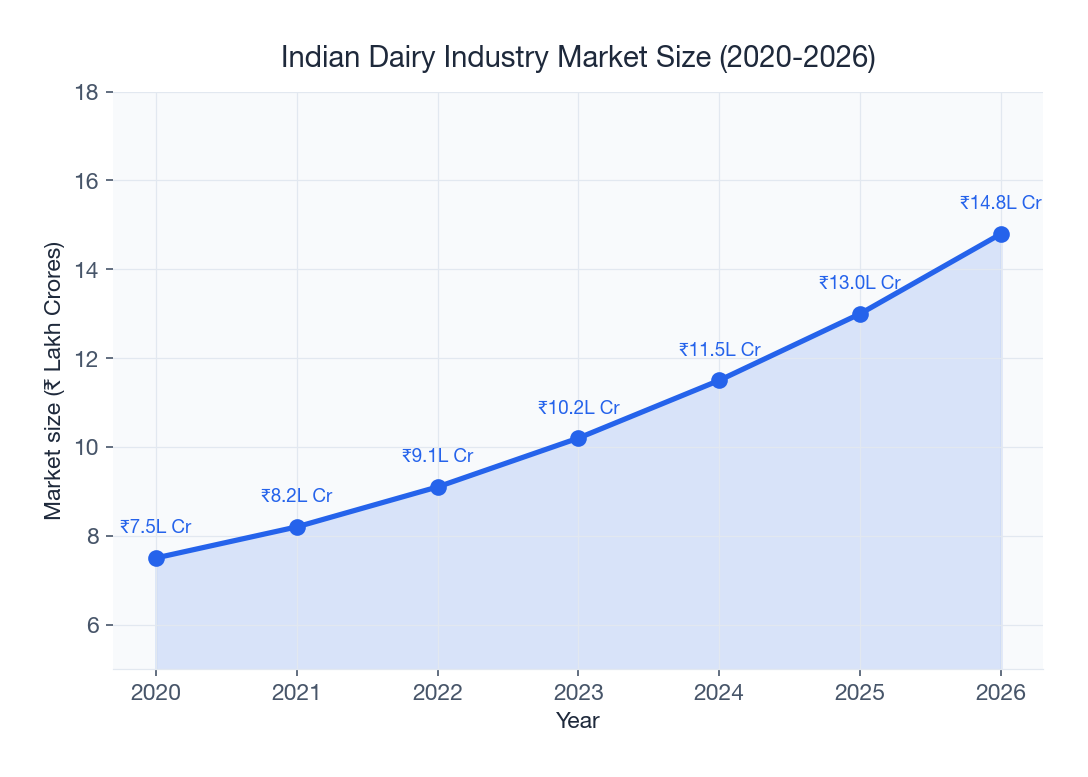
- Direct-to-Consumer (D2C), App-based delivery to homes. Higher control, higher logistics cost. Works for premium products in metro cities.
- Distributor model, Appoint distributors who sell to retailers. Lower control, broader reach. The traditional model that still dominates.
- Hybrid, D2C in core markets + distributor model for expansion. Increasingly popular approach.
- Modern trade first, Start with chains like D-Mart, Spencer's, Reliance Fresh. Volume play, requires trade margins and promotional budgets.
Plan Your Cold Chain
Before selling a single packet, ensure your cold chain is airtight:
- Production facility → cold storage/warehouse (refrigerated transport)
- Warehouse → distributor (refrigerated/insulated vehicles)
- Distributor → retailer (temperature-monitored delivery)
Don't compromise on cold chain to save costs, one food safety incident can end a startup. See the companion cold chain guide for temperature specs and FSSAI requirements.
Set Up Technology Early
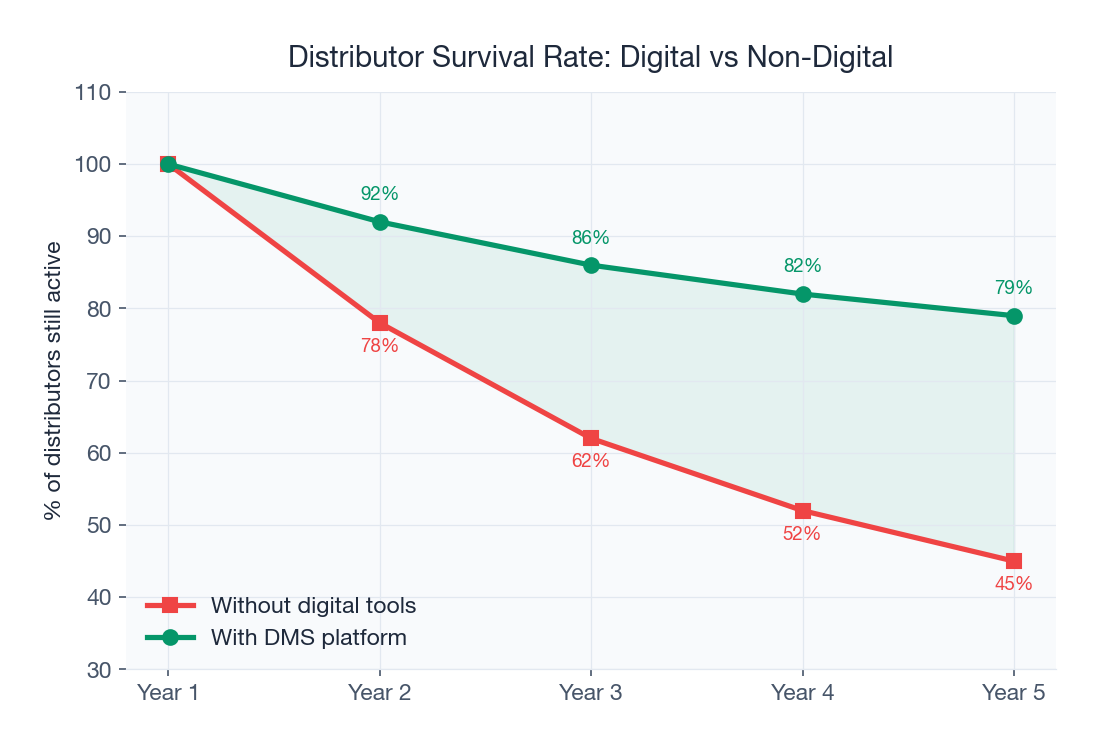
Many startups plan to "add technology later." Don't. Start with a distribution management platform from day one. The data you collect from the beginning is invaluable for optimization, and changing systems mid-growth is painful. Digital order management, billing, and tracking are not luxuries, they are foundational capabilities.
Startup Distribution Cost Snapshot
| Item | D2C Launch (1 city) | Distributor Launch (1 city) | Hybrid |
|---|---|---|---|
| Cold storage & warehouse | Rs 6-10 lakh | Rs 3-6 lakh | Rs 6-10 lakh |
| Refrigerated vehicles (2-3) | Rs 20-30 lakh | Rs 10-15 lakh | Rs 15-25 lakh |
| Opening inventory | Rs 3-5 lakh | Rs 5-10 lakh | Rs 5-8 lakh |
| Crates & returnables | Rs 1-2 lakh | Rs 2-4 lakh | Rs 2-4 lakh |
| Distribution software (SaaS, 12 mo) | Rs 1-3 lakh | Rs 1-3 lakh | Rs 1.5-3 lakh |
| Field team salaries (6 mo) | Rs 8-15 lakh | Rs 3-6 lakh | Rs 6-10 lakh |
| Launch marketing | Rs 5-15 lakh | Rs 2-5 lakh | Rs 5-10 lakh |
| Total (Year 1) | Rs 45-80 lakh | Rs 26-49 lakh | Rs 40-70 lakh |
Stage 2: Launch (First 3 Months)
Start Small, Start Right
- Launch in one city or one zone of a large city, Bangalore, Mumbai, and Hyderabad are classic D2C starting points
- Appoint 3-5 distributors (or start with own delivery for D2C)
- Focus on 200-500 retail outlets initially
- Offer a focused product range (3-5 SKUs), don't spread too thin
Get Distribution Basics Perfect
In the first 3 months, nail the fundamentals:
- Consistent, on-time delivery every single day
- Fresh products with maximum remaining shelf life
- Accurate billing with zero errors
- Responsive customer service for distributors and retailers
- Crate tracking from the start, don't accumulate crate debt
Collect Data Obsessively
Use your distribution platform's analytics to understand:
- Which products sell best in which areas
- What is your actual shelf life in market conditions
- Which retailers reorder (indicating consumer pull) vs one-time buyers
- Your true distribution costs (delivery, returns, crates)
Stage 3: Growth (Months 3-12)
Expand Methodically
- Add new territories within your launch city before jumping to new cities
- Appoint new distributors using learnings from initial partners
- Expand product range based on demand data (not assumptions)
- Use route optimization to manage growing delivery complexity
Build Distributor Relationships
- Regular engagement with distributors, don't just dump product and disappear
- Trade schemes to incentivize performance
- Marketing support, retailer displays, sampling, local promotion
- Technology tools that make their operations easier, not harder
- Adopt a distributor management scorecard early, it prevents the "favourite distributor" trap
Stage 4: Scale (Year 1+)
Multi-City Expansion
Expanding to new cities requires:
- Cold chain infrastructure in each new city
- Local distributor recruitment and onboarding (see our distributor onboarding guide)
- City-specific market understanding (pricing, competition, preferences)
- Scalable technology that handles multi-city operations from a single platform, typically through multi-tenant workspaces
- Central vs local production balance, handled via multi-plant distribution setups
Operational Excellence at Scale
What worked with 5 distributors may break at 50. Invest in:
- Automated order processing that handles volume without adding headcount
- Real-time monitoring across all cities and distributors
- Standardized processes replicated across territories
- Team training and capacity building for scale
- Structured payment collection to keep working capital healthy as scale grows
Benchmarks from Indian Dairy Startups
| Benchmark | Good | Average | Red Flag |
|---|---|---|---|
| Product returns | <3% | 3-6% | >8% |
| Cold-chain compliance | >98% | 93-97% | <92% |
| On-time delivery | >97% | 92-96% | <90% |
| Active retailer coverage in 90 days | >80% | 60-79% | <60% |
| Distribution cost as % of revenue | 6-9% | 10-13% | >15% |
| Working capital cycle | <25 days | 25-40 days | >45 days |
Common Startup Distribution Mistakes
- Expanding cities before perfecting one, Get one city right before replicating
- Underpricing for distribution, Ensure your pricing covers cold chain, crate, and delivery costs
- Ignoring returns and spoilage, Budget for 5-10% returns in your financial model
- Over-relying on one distributor, Single points of failure are dangerous for startups
- Delaying technology adoption, Manual processes that work at 100 orders/day collapse at 1,000
- Fighting cooperatives head-on, Amul, Nandini, and Mother Dairy have unbeatable scale, differentiate on freshness, quality, or subscription convenience
Distribution is where dairy startup dreams meet operating reality. Nail it and you compound; fumble it and you burn cash. If you are about to launch or already in scale mode, book a conversation with SpireStock, review our startup-friendly plans, and explore more founder content on the blog.
Choosing Your First City
Every dairy startup agonises over city choice. The decision depends on three factors: density, disposable income, and competitive intensity. We have seen founders succeed (and fail) in each of India's major metros. Here is a practical breakdown:
Bangalore
High tech-savvy consumer base, strong subscription culture, relatively light kirana density. Good for D2C premium launches. Downsides: elevated logistics costs, traffic bottlenecks, intense D2C competition.
Mumbai
India's largest urban milk market. Extreme density is great for route economics but also breeds established competition from cooperatives like Amul and Mother Dairy. Real estate costs for warehousing are punitive.
Hyderabad
Rapidly growing tech corridor, affluent consumers, reasonable logistics. Strong regional brand presence but room for premium D2C. A favourite first-city for startups launching A2 milk or organic variants.
Pune
Affluent middle class, relatively open competitive landscape, manageable logistics. Often chosen as pilot before Mumbai.
Chennai
Established cooperative dominance (Aavin) but growing premium segment. Requires strong Tamil-language customer support.
Delhi NCR
Massive market but fragmented. Mother Dairy is near-unbeatable in mainstream milk; premium and specialty segments are wide open. Winter fog and extreme summer make cold chain critical.
Distribution Model Decision Framework
Use this framework to pick your initial model. Score each dimension 1-5 for your specific situation:
| Factor | Favours D2C | Favours Distributor | Favours Hybrid |
|---|---|---|---|
| Product premium-ness | High premium | Mass market | Mixed portfolio |
| Margin structure | >35% gross margin | <25% gross margin | 25-35% gross margin |
| Founder capital | Rs 2-5 crore available | Rs 30-80 lakh available | Rs 1-2 crore available |
| Target city size | Metro with subscription culture | Tier 2/3 with established kirana channel | Multi-city ambition |
| Time to scale | 12-18 months | 6-9 months | 9-12 months |
| Brand control | High | Low | Medium |
Unit Economics: What Good Looks Like
Dairy startups live or die by unit economics. Here is what healthy numbers look like at each stage:
- Pre-launch / seed, CAC under 2x AOV, 30%+ gross margins, cold chain proven in pilot
- Year 1, 6-month LTV over 3x CAC, distribution cost under 12% of revenue, returns under 5%
- Year 2, EBITDA positive in launch city, expansion cities hitting month-6 break-even
- Year 3, Group EBITDA positive, multi-city ops on a single platform, 90%+ retention on D2C
If you cannot hit these benchmarks, either the model is wrong, the execution is slipping, or the pricing is too low.
Raising Capital for Dairy Distribution
Investors have become more discerning about dairy startups after the 2022-24 cohort of down-rounds. Here is what they want to see before writing a cheque:
- Proof that distribution unit economics work at current scale
- Clear cold chain compliance and FSSAI audit trail
- Demonstrated ability to onboard and manage distributors (if distributor model)
- Subscriber retention cohort data (if D2C)
- A technology platform that can scale 10x without rebuilding
- A founder team that understands operations, not just brand
Common Failure Patterns
Pattern recognition from the Indian dairy startup graveyard:
- The premium pricing mismatch, Launching at Rs 80/litre when the market supports Rs 65. Revenues drop, scale stalls, cash runs out.
- The over-promised cold chain, Marketing "farm-fresh" without investing in vehicles to keep product cold. First heatwave, customers taste the difference and churn.
- The vanity expansion, Opening city 3 before city 1 is profitable. Cash burn accelerates; investor confidence collapses.
- The distribution abdication, Handing the business to a single distributor who then controls margin, pricing, and data.
- The technology procrastination, Running everything on Excel for 18 months then trying to migrate during peak season. Disaster.
First 10 Hires for a Dairy Distribution Startup
- Co-founder focused on operations/cold chain
- Head of distribution (ex-FMCG or cooperative)
- Customer experience lead (if D2C)
- Senior field officer for launch city
- Warehouse manager
- Finance controller with FMCG background
- Technology lead (or strong platform partner)
- Quality assurance lead
- HR / operations admin
- Regional sales manager (for distributor model)
Closing Thought
India's dairy market rewards operators who combine patience with data discipline. Move slowly in the first 90 days so you can move fast in year 2. Nail your cold chain, invest in technology early, and never stop measuring unit economics. The next generation of dairy winners will not be the loudest brands but the ones whose distribution operations are quietly, relentlessly optimised day after day.
Tech Stack Checklist for Year 1
Do not try to build any of this yourself. Use proven SaaS tools and focus on operations:
- Distribution platform, Covering orders, billing, tracking, and analytics
- Mobile field app, For salesmen, delivery staff, and distributors
- Payment gateway, Razorpay, PhonePe for Business, or similar
- Subscription engine (if D2C), Either native to your platform or integrated via API
- Cold chain sensors, IoT temperature loggers on vehicles and cold rooms
- Accounting, Tally or Zoho Books, integrated with the distribution platform
- Customer support, Freshdesk, Zoho Desk, or similar
- HR & payroll, Keka, GreytHR for staff management
Metrics Dashboard Every Dairy Founder Should Track Daily
- Daily litres shipped vs plan
- On-time delivery percentage
- Returns and damages as percent of sales
- Cold chain excursions flagged
- New retailer/subscriber acquisitions
- Churn / cancellation rate (if D2C)
- Cash in bank and burn rate
- Net order value trend
- Top 5 complaint categories
If your current system cannot produce these numbers by 9 am every morning, you are flying blind. Fix that before you fix anything else.
Learning From Established Players
Before you launch, spend a few weeks studying how the market leaders actually operate. Visit Amul booths to see the booth-based distribution model. Watch Mother Dairy trucks on early-morning milk rounds. Shadow a Country Delight delivery rider to understand D2C operating reality. These practical field observations will save you from building in the wrong direction.
Common Year-1 Operating Problems, And Their Fixes
- Crate losses spiralling above 15%, Install digital crate tracking and hold distributors accountable via deposit ledgers.
- Return rates above 6%, Investigate cold chain excursions, retailer storage quality, and product handling protocols.
- On-time delivery below 90%, Deploy route optimization and rework driver scheduling.
- Payment cycles stretching beyond 30 days, Tighten credit policies, introduce UPI-linked collection, and escalate chronic defaulters.
- Distributor disputes over schemes, Move scheme application to an automated engine with invoice-level attribution.
- Customer complaints about freshness, Audit cold chain compliance and verify shelf-life at handover.
Scaling to Multi-City: The Hidden Challenges
Going from one city to three is usually the point where everything that was working stops working. The hidden challenges that sink multi-city expansions:
- Supply chain complexity, central plant vs local depot tradeoffs
- Brand consistency across different market dynamics
- Management bandwidth stretched across cities
- Financial controls lagging behind operational complexity
- Talent availability, senior operations people are hard to find in tier-2 cities
- Technology choices that were fine for one city but break at three
The only way to manage these challenges is to build the operating model deliberately from day one, assuming you will eventually serve 5-10 cities, rather than bolting on complexity as it arises.
Sources & References
Frequently Asked Questions
Start by choosing a distribution model (D2C, distributor, hybrid, or modern trade first), set up cold chain infrastructure, deploy technology from day one, launch in one city with 3-5 distributors and 200-500 retail outlets, then expand methodically based on data.
Costs vary significantly by model and scale. D2C startups may need Rs 20-50 lakh for initial cold chain and delivery infrastructure in one city. Distributor model startups can start with Rs 5-15 lakh for initial inventory, crates, and technology setup. Cold chain infrastructure is the biggest cost component.
Yes. Starting with distribution management software like SpireStock provides data from day one that is invaluable for optimization. Changing systems mid-growth is disruptive and expensive. Cloud-based SaaS platforms are affordable enough for startups.
D2C works for premium products in metro cities where consumers pay for convenience. The distributor model offers broader reach at lower logistics cost. Most successful dairy startups use a hybrid, D2C in core markets for brand building, distributors for geographic expansion.
A functional single-city network can be built in 3-6 months. Reaching profitability in distribution typically takes 6-12 months as volumes scale. Multi-city distribution requires 12-24 months to establish. The key is patient, data-driven expansion rather than premature scaling.
Related SpireStock Features
End-to-end order lifecycle from placement to delivery with multi-level approval workflows.
Real-time GPS tracking of vehicles and drivers with route optimization for faster deliveries.
Mobile app for distributors, retailers, and delivery teams.
Related Solutions
Manage your entire distributor network digitally. Onboarding, credit limits, outstanding tracking, and performance analytics. Start free trial.
Boost field sales team productivity with beat planning, GPS attendance, order capture, and performance analytics. Built for Indian FMCG teams.
Related Entities
Ready to Streamline Your Distribution?
Start your free 14-day trial and see how SpireStock can transform your dairy, FMCG or consumer-goods distribution operation, from order capture to crate recovery.

SpireStock Team
Distribution Technology Experts
SpireStock Team writes for SpireStock on distribution management, supply-chain optimisation and field operations for Indian dairy and FMCG brands.