India's Cold Chain Challenge for Dairy
India is the world's largest milk producer, over 230 million tonnes annually, yet it has one of the weakest cold chain infrastructures for dairy distribution. According to NCCD (National Centre for Cold Chain Development), India has only 35-40% of the cold chain capacity needed to handle its dairy and perishable food output. This gap results in an estimated Rs 90,000 crore annual loss in food wastage, with dairy products being among the most affected categories.
For dairy distributors, cold chain is not just about preventing spoilage, it is about product quality, consumer safety, regulatory compliance, and ultimately profitability. Every break in the cold chain degrades product quality, shortens shelf life, and increases the risk of food safety incidents. The challenge is most acute in tier 2-3 cities and the summer months in Delhi, Jaipur, and Ahmedabad where ambient temperatures cross 45°C.
This guide covers the full cold chain playbook, what temperatures each product needs, how to monitor them across the dairy distribution network, which FSSAI rules apply, and what it actually costs to get right. Similar principles extend to fresh produce, frozen beverages, and chilled bakery products.
Understanding the Dairy Cold Chain
Temperature Requirements by Product
| Product | Target Temp | Max Excursion | Critical Risk if Broken |
|---|---|---|---|
| Fresh milk (pouch/tetra) | 2-4°C | 30 min at 10°C | Microbial growth, souring |
| Curd / yogurt | 2-8°C | 1 hr at 12°C | Syneresis, taste loss |
| Paneer | 2-6°C | 30 min at 10°C | Rapid spoilage |
| Butter | Below 10°C | Tolerant | Rancidity |
| Cheese (hard) | 4-10°C | Tolerant | Mould, rind damage |
| Ice cream | -18°C or below | None | Irreversible texture damage |
| Flavoured milk / beverages | 2-8°C | 1 hr at 12°C | Curdling, fermentation |
Critical Control Points in Dairy Distribution
- Plant to warehouse, Transport in refrigerated trucks; temperature logging throughout
- Warehouse storage, Cold rooms at appropriate temperatures; FIFO stock rotation
- Warehouse to delivery vehicle, Loading dock procedures to minimize temperature exposure
- In-transit delivery, Vehicle temperature maintenance during multi-stop delivery routes
- Delivery to retailer, Quick handoff; verify retailer storage capability
- Retailer to consumer, Often the weakest link; insulated carry bags and quick turnover help
Technology for Cold Chain Management
IoT Temperature Monitoring
IoT sensors placed at every critical control point provide continuous temperature data:
- In-vehicle sensors track temperature throughout delivery routes
- Warehouse sensors monitor cold room temperatures 24/7
- Alert systems trigger when temperatures deviate from acceptable ranges
- Historical data provides a complete temperature audit trail for compliance
Integration with Distribution Software
Temperature data is most valuable when integrated with distribution tracking platforms:
- Link temperature data to specific deliveries and routes
- Identify routes or vehicles with recurring cold chain issues through fleet management dashboards
- Correlate temperature data with spoilage and return rates
- Generate compliance reports automatically
Route Optimization for Cold Chain
For cold chain logistics, route optimization takes on additional importance. The optimization objective shifts from distance minimization to time minimization, every minute in transit is a minute the cold chain is under stress. Route algorithms that prioritize speed over distance can significantly reduce cold chain risk, especially in dense metros like Mumbai and Bangalore where traffic is unpredictable.
FSSAI Cold Chain Compliance
FSSAI (Food Safety and Standards Authority of India) has progressively tightened cold chain requirements under FSS (Licensing and Registration) Regulations and the Food Safety and Standards (Transport) Regulations 2023:
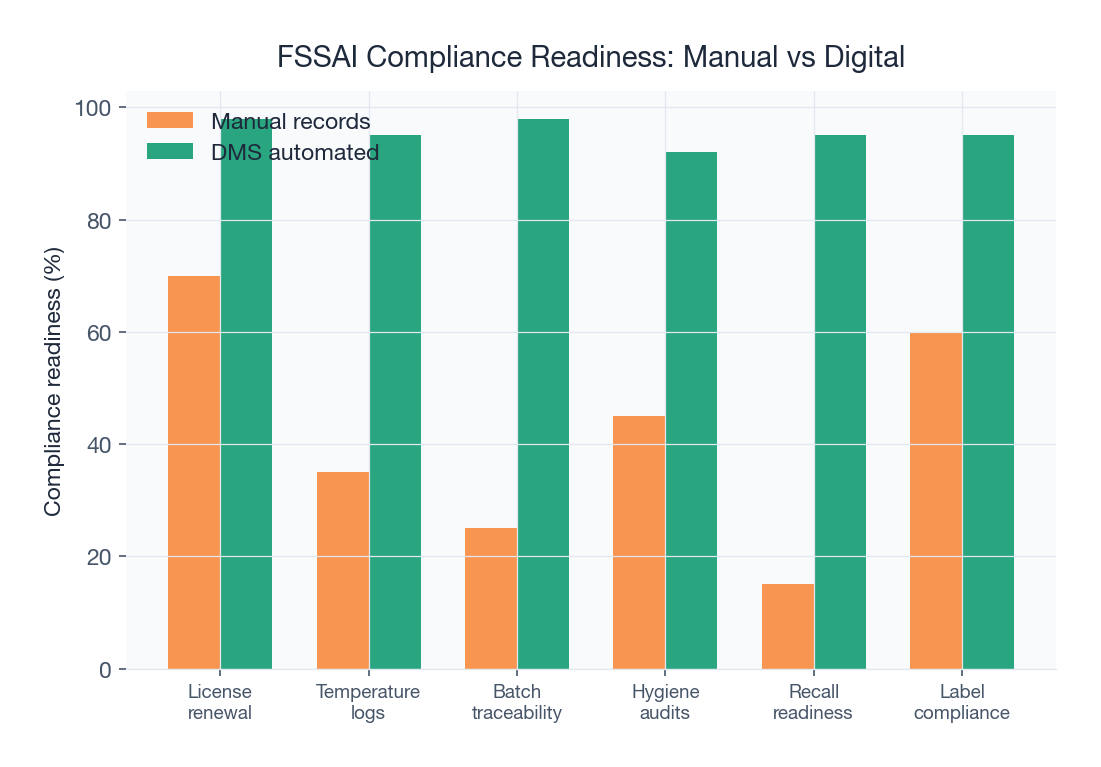
- Temperature maintenance, FSSAI mandates specific temperature ranges for dairy product transport and storage
- Documentation, Transporters must maintain temperature logs for the entire distribution chain
- Vehicle certification, Refrigerated vehicles must meet FSSAI standards for insulation and cooling capability
- Staff training, Personnel handling dairy products must be trained in cold chain procedures
- Traceability, The ability to trace any product back through the distribution chain to its source
- Recall readiness, Documented procedures for product recall within 24 hours of a quality event
Digital distribution platforms that automatically generate temperature logs, delivery records, and traceability reports significantly simplify FSSAI compliance and reduce the time spent preparing for audits.
Cold Chain Best Practices for Indian Dairy
- Pre-cool vehicles, Vehicles should reach target temperature before loading, not after
- Minimize door openings, Each delivery stop should be planned to minimize time with doors open
- Use curtain strips, Plastic curtain strips at vehicle doors reduce cold air loss during deliveries
- FIFO at every level, First-in, first-out stock rotation at warehouses and on vehicles
- Schedule deliveries by temperature sensitivity, Deliver the most temperature-sensitive products first
- Pre-dawn delivery, Schedule deliveries in early morning when ambient temperatures are lowest
- Invest in insulated packaging, For last-mile delivery to retailers without refrigeration, insulated secondary packaging extends product viability
- Crate-level traceability, Link temperature logs to crate IDs so you can pinpoint which batches were exposed
The Cost of Getting It Right vs Wrong
Cold chain investment pays for itself many times over. Brands like Amul, Mother Dairy, and Nandini have industrialised the playbook; emerging D2C players like Country Delight built it in from day one. The economics are stark:
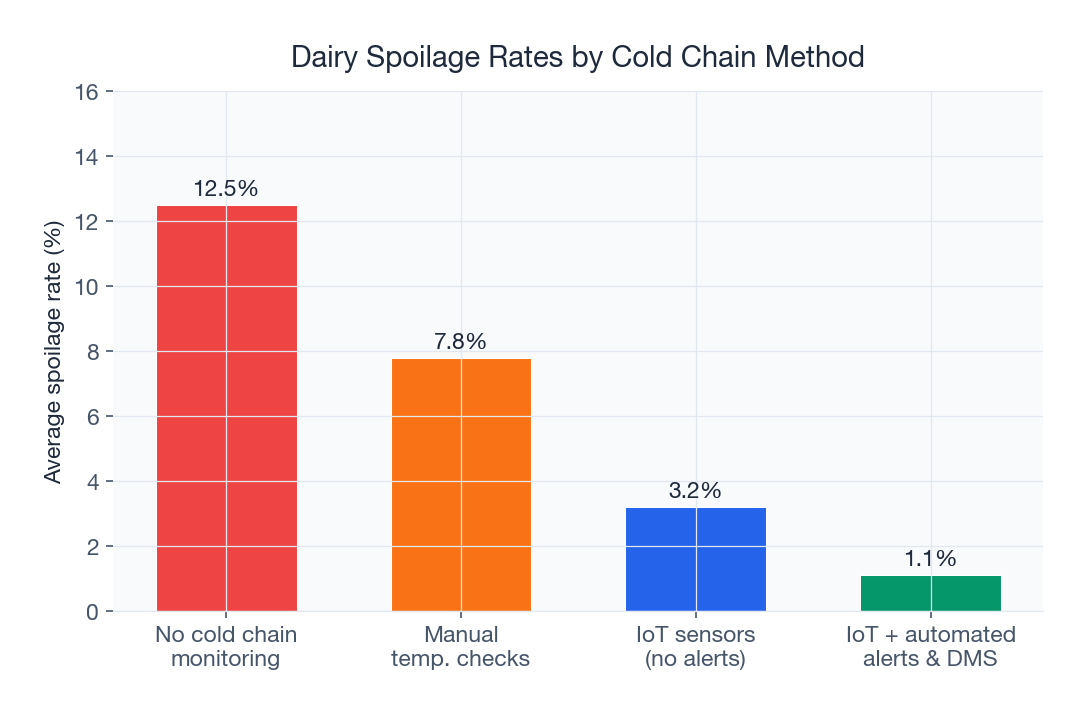
- Without cold chain management: 10-15% product loss from spoilage, regulatory risk, brand damage, consumer health risk
- With cold chain management: Under 2% product loss, full regulatory compliance, brand trust, and premium product capability
For a dairy distributor handling Rs 50 lakh monthly in products, reducing spoilage from 10% to 2% saves Rs 4 lakh per month, far exceeding the cost of temperature monitoring technology and process improvements.
Cold Chain Investment: Indicative Costs
| Investment Item | Typical Cost (INR) | Payback |
|---|---|---|
| Refrigerated delivery vehicle | Rs 12-18 lakh per truck | 12-18 months |
| Cold room (20 sqm) | Rs 6-10 lakh | 12-24 months |
| IoT temp sensors per vehicle | Rs 8,000-15,000 | 3-6 months |
| Distribution software with temp integration | Rs 10,000-30,000/month | Under 90 days |
| Insulated crates (per 100) | Rs 40,000-60,000 | 6-12 months |
| Staff training programme | Rs 25,000-50,000 | Immediate |
Getting Started
Start by auditing your current temperature excursions, most distributors discover 5-15% of shipments already run outside spec without any one noticing. Then install sensors on the highest-risk lanes, plug them into your distribution platform, and build dashboards that alert supervisors in real time. Within 60-90 days, spoilage rates typically drop by 50% and FSSAI audit readiness moves from "panic" to "print". If you want to see a live dairy cold chain dashboard or talk through your network, reach out to SpireStock, review our pricing, or explore more cold chain content in the blog.
Cold Chain Beyond Dairy: Cross-Industry Considerations
Many operators we work with do not run dairy alone. They handle beverages, bakery, confectionery, frozen foods, and occasionally pharma samples through the same fleet. The cold chain playbook needs to flex accordingly:
Beverages
Packaged water, juices, and dairy-based drinks demand cool temperatures but tolerate short excursions. Dedicated chiller trucks are overkill; insulated vehicles with secondary gel packs usually suffice. See our beverage distribution page for category-specific notes.
Bakery and Confectionery
Chocolate, cream cakes, and certain biscuits suffer in temperatures above 22°C. Summer operations in Ahmedabad and Jaipur often need temperature-controlled vehicles even if the products are not strictly "cold chain". Bakery operators also manage shorter shelf life than FMCG staples, so FIFO rotation discipline matters as much as the temperature itself. Explore category examples on our bakery & confectionery page.
Fresh Produce
Fruits and vegetables have different optimal temperatures and different ethylene sensitivities. Mixing them in a single cold room without compartmentalisation can lead to cross-ripening. See fresh produce distribution for the full handling matrix.
Consumer Goods with Temperature-Sensitive Packs
Ambient shampoo may be fine at 35°C, but certain cosmetics, chocolates, and gelcaps degrade above 30°C. If you handle a broad consumer goods portfolio, classify every SKU on a simple three-tier temperature chart and configure vehicle loading accordingly.
Step-by-Step Cold Chain Rollout Plan
Most dairies reach "good" cold chain maturity in 90-120 days by following this sequence:
- Week 1: Baseline audit, Walk the full chain with a portable data logger. Record excursions. Calculate current spoilage rate.
- Week 2: Quick wins, Install curtain strips, pre-cool vehicles, enforce early-morning deliveries, retrain loading staff. These cost almost nothing and eliminate 40-50% of excursions.
- Week 3-4: IoT sensor deployment, Install sensors on top 5 vehicles and top 2 cold rooms. Integrate with distribution tracking.
- Week 5-6: Alert and escalation setup, Define threshold alerts and escalation ladder. Agree who responds at each hour of the day.
- Week 7-8: Extended rollout, Expand sensors to remaining fleet and warehouses.
- Week 9-12: Process hardening, Weekly review meetings, SOP updates, driver coaching based on trend data.
Vehicle and Equipment Checklist
- Refrigerated vehicles pre-cooled to target temperature 30 minutes before loading
- Curtain strips at all vehicle doors
- IoT temperature sensors with 5-minute logging frequency
- GPS trackers tied to the route optimization system
- Backup power for cold rooms (diesel genset or battery)
- Calibrated thermometers at each loading dock, verified weekly
- Insulated delivery bags for last-mile handoff to retailers without refrigeration
- Standard operating procedures visible on dock walls in local language
How Leading Brands Run Their Cold Chain
We studied cold chain operations at Amul, Mother Dairy, Nandini, and Country Delight. A few common practices stand out:
- Every vehicle has IoT sensors linked to a central control room
- Any excursion above 10°C for more than 10 minutes triggers an SMS to the regional manager
- Drivers are trained on what to do in a breakdown, including stopping in shade and calling for a replacement vehicle
- Warehouses have two-factor temperature logging (IoT sensor plus manual log) so that a single failure does not erase the audit trail
- Monthly cold chain dashboards go to the CEO, not just ops, it is a board-level KPI
- Each depot has a clearly posted escalation matrix for cold chain incidents
Cold Chain and Sustainability
Modern cold chain is not just about food safety, it is increasingly about energy and emissions. Refrigerated vehicles and cold rooms consume significant electricity and fuel. Innovations worth tracking in 2026 include solar-assisted cold rooms, eutectic (phase-change) cooling plates that replace diesel refrigeration units, and electric refrigerated trucks being piloted in Delhi and Bangalore. Investments in route optimisation can cut cold chain energy use by 20-30% simply by reducing the number of hours vehicles spend on the road.
Common Cold Chain Myths
- "Our drivers know what they are doing", Drivers are often the weakest link because they have no incentive to keep the cold chain intact if it slows them down. Process and technology must do the work.
- "Temperature excursions are only a summer problem", Winter brings condensation and humidity issues that damage packaging and quality in different ways.
- "IoT sensors are expensive", A decent sensor costs Rs 8,000 and lasts 5+ years. Compared to Rs 5 lakh of avoided spoilage, it is the cheapest insurance in the business.
- "Manual logs are enough for FSSAI", Manual logs are fake 80% of the time. Auditors know this and digital records increasingly carry more weight.
- "Cold chain only matters for premium products", Cold chain failure on mass-market SKUs is just as dangerous, because volumes are larger.
Governance: Making Cold Chain a Board-Level KPI
Cold chain is often treated as an ops problem. Leading dairies treat it as a board-level commitment. Practical steps to elevate cold chain governance:
- Monthly cold chain scorecard reported to the CEO and board
- Cold chain compliance included in every distributor performance review via distributor management dashboards
- Dedicated quality assurance manager with direct reporting line to leadership
- Clear escalation protocols for any temperature incident above 10 minutes duration
- Annual third-party cold chain audit by an accredited laboratory
Cold Chain Across Cities
Cold chain challenges vary dramatically by city climate. Distributors operating in Ahmedabad, Jaipur, and Hyderabad face summer ambient temperatures crossing 45°C, demanding pre-dawn deliveries and insulated vehicles. Mumbai and Chennai add humidity complications that accelerate microbial growth. Delhi has extreme seasonal swings from 2°C winters to 47°C summers. Bangalore and Pune enjoy moderate climates but battle traffic congestion that keeps trucks on roads longer. Each city needs a tailored playbook.
This page covers one angle. For the broader treatment, see our dairy cold chain management guide.
Sources & References
Frequently Asked Questions
Fresh milk and most dairy products should be maintained at 2-8°C throughout the distribution chain. Ice cream requires -18°C or below. Butter and ghee can tolerate slightly higher temperatures (up to 10°C) but benefit from refrigeration.
FSSAI requires temperature maintenance during transport and storage, documented temperature logs throughout the distribution chain, certified refrigerated vehicles, trained personnel, and product traceability. Non-compliance can result in penalties and license cancellation.
Without proper cold chain management, dairy distributors typically lose 10-15% of product value to spoilage. For a distributor handling Rs 50 lakh monthly, this translates to Rs 5-7.5 lakh in monthly losses, plus regulatory risk and brand damage.
Essential technology includes IoT temperature sensors (vehicle and warehouse), GPS tracking for delivery vehicles, distribution management software with temperature data integration, alert systems for temperature deviations, and automated compliance reporting.
Yes. SpireStock integrates with IoT temperature sensors, provides time-optimized route planning that minimizes cold chain exposure, tracks deliveries in real-time, and generates cold chain compliance reports, all within the same platform that manages orders, crates, and billing.
Related SpireStock Features
Related Solutions
GPS fleet tracking, driver management, and route optimization for dairy and FMCG delivery vehicles. Reduce fuel costs by 25%. Try SpireStock.
Manage your entire distributor network digitally. Onboarding, credit limits, outstanding tracking, and performance analytics. Start free trial.
Related Entities
Ready to Streamline Your Distribution?
Start your free 14-day trial and see how SpireStock can transform your dairy, FMCG or consumer-goods distribution operation, from order capture to crate recovery.

SpireStock Team
Distribution Technology Experts
SpireStock Team writes for SpireStock on distribution management, supply-chain optimisation and field operations for Indian dairy and FMCG brands.