Indore: Madhya Pradesh's Dairy Distribution Powerhouse
Indore is the commercial and industrial capital of Madhya Pradesh, with a population exceeding 30 lakh and a metropolitan area approaching 35 lakh. The city is India's cleanest city for multiple consecutive years, boasts a thriving street food culture that consumes enormous quantities of dairy, and sits at the crossroads of national highways connecting Mumbai, Delhi, Ahmedabad and Bhopal. For dairy distributors, Indore represents a uniquely attractive market: dense urban consumption, a rapidly growing middle class, strong cooperative and private brand presence, and proximity to both procurement zones and interstate transit corridors.
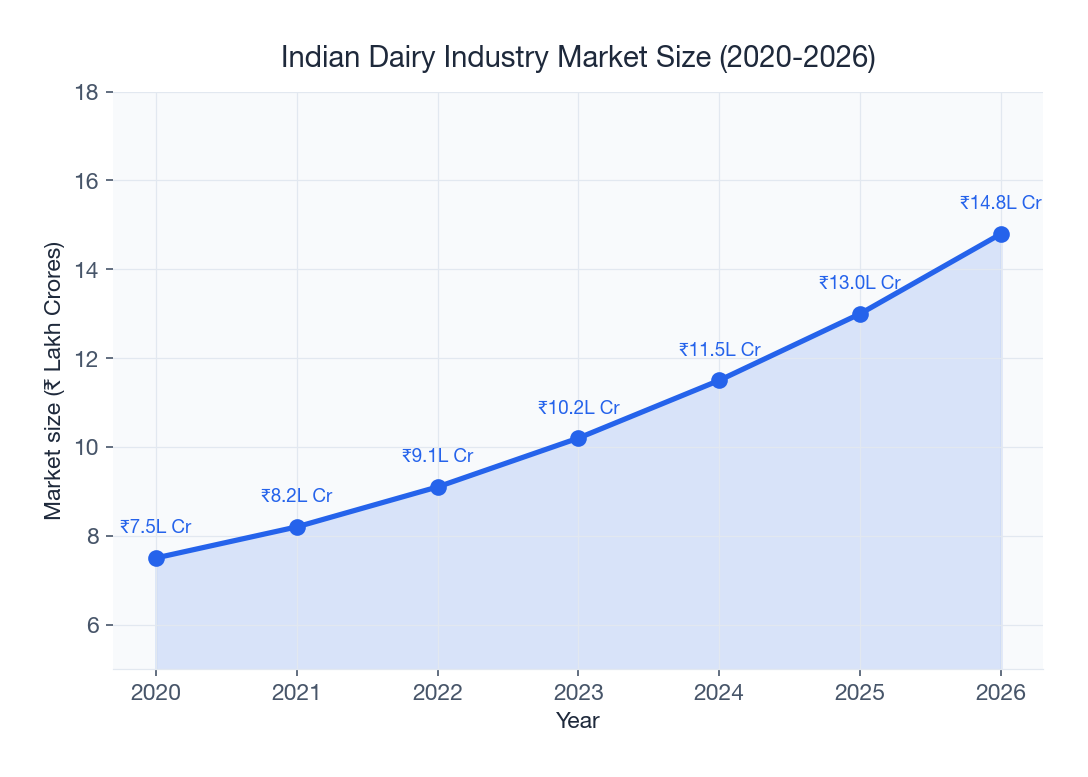
Madhya Pradesh is India's fourth-largest milk-producing state, contributing over 180 lakh tonnes annually. Indore district alone accounts for a significant share of the state's organised dairy consumption, driven by its urban density, HORECA sector and institutional demand from educational institutions and IT parks. The dairy distribution landscape here is evolving rapidly, with cooperative brands like Sanchi competing against national giants like Amul and Mother Dairy, and a growing wave of local D2C dairy startups entering the market.
Indore Dairy Market Snapshot (2026)
| Metric | Indore City | Madhya Pradesh |
|---|---|---|
| Population (2026) | 32 lakh | 8.8 crore |
| Daily milk consumption | 12 lakh litres | 85 lakh litres |
| Organised dairy market share | 55% | 35% |
| Registered dairy distributors | 650+ | 4,800+ |
| Dominant cooperative brand | Sanchi (~40%) | Sanchi (~45%) |
| Summer peak temperature | 43-46 degrees C | 44-48 degrees C |
| Cold storage facilities (organised) | 120+ | 900+ |
| HORECA dairy demand share | 18% | 10% |
Why Indore Is a High-Potential Dairy Distribution Market
1. Dense Urban Consumption Hub
Indore's population density and food culture create concentrated dairy demand. The city's famous street food ecosystem, from poha-jalebi stalls to namkeen manufacturers, relies heavily on fresh milk, curd, paneer, ghee and butter. Unlike rural-heavy dairy markets, Indore offers high-frequency, small-radius distribution beats that are efficient to serve with the right route optimization tools.
2. Strategic Geographic Position
Indore sits on NH-47 (Agra-Mumbai Highway) and NH-52 (connecting Ahmedabad), making it a natural transit hub. Dairy products flowing from Malwa region procurement zones reach Indore within 2-3 hours, and finished goods can be dispatched to Bhopal, Ujjain, Dewas and Ratlam within the same timeframe. This geographic advantage reduces cold chain transit risk compared to more remote distribution centres.
3. Growing Middle Class and Premium Demand
Indore's IT parks (Crystal IT Park, Brilliant Convention Centre area), educational institutions (IIT Indore, IIM Indore, DAVV) and expanding corporate sector have created a large middle-class consumer base willing to pay premium prices for A2 milk, organic ghee, probiotic curd and artisanal cheese. This premium segment is growing at 25-30% annually, far outpacing the 6-8% growth of commodity dairy.
4. Thriving HORECA Sector
Indore was recognised as India's street food capital and its restaurant density per capita rivals metro cities. Hotels, restaurants, catering services and sweet shops collectively consume 18-20% of the city's dairy supply. Serving this segment requires order management systems that handle variable daily orders, urgent top-ups and SKU-level demand tracking.
Major Dairy Brands Operating in Indore
Sanchi (MP State Cooperative Dairy Federation)
Sanchi is the flagship brand of the Madhya Pradesh State Cooperative Dairy Federation (MPCDF). It operates through district milk unions across MP, with Indore being one of its largest consumption markets. Sanchi offers milk (toned, full cream, standardised), curd, buttermilk, paneer, ghee, and flavoured milk. The cooperative collects milk from over 8,000 village-level dairy cooperative societies across MP. Sanchi's pricing is competitive and its distribution network reaches even smaller retail outlets through a network of appointed distributors and sub-distributors.
For distributors, Sanchi offers relatively stable margins (4-8% on liquid milk, 10-15% on value-added products) and consistent supply. The cooperative is investing in modernising its supply chain, creating opportunities for technology-savvy distributors who can demonstrate better coverage and lower spoilage rates.
Amul (Gujarat Cooperative Milk Marketing Federation)
Amul has aggressively expanded in Madhya Pradesh over the past decade. In Indore, Amul competes directly with Sanchi in liquid milk and dominates certain value-added categories like ice cream, cheese and butter. Amul's Indore distribution operates through appointed super-stockists and distributors, with a well-defined beat structure and scheme-driven retail incentives. Amul distributors in Indore typically achieve margins of 3.5-5% on milk and 8-12% on processed dairy products.
Mother Dairy
Mother Dairy's Indore presence has grown steadily, particularly through its booth-based retail model and institutional supply channels. The brand focuses on liquid milk and curd in Indore, with a growing push into flavoured dairy beverages. Mother Dairy's distribution model emphasises cold chain compliance, and appointed distributors are expected to maintain strict temperature protocols.
Regional and Local Players
Indore's dairy market also includes several regional brands and local dairies. Brands like Gwalior Dairy, Bansal Dairy and newer D2C entrants are capturing niche segments. Farm-fresh milk delivery startups have emerged in affluent areas like Vijay Nagar, Palasia and Scheme No. 78, offering subscription-based A2 and organic milk. These players rely on mobile apps for order capture and distribution tracking for delivery execution.
Indore Dairy Distribution Zones and Beat Structure
Zone 1: Central Indore (Rajwada to Palasia)
The old city core with the highest retail density. Narrow lanes, heavy traffic during mornings, and hundreds of kirana stores, sweet shops and street food vendors within a small radius. Distribution here requires small vehicles (tempos, e-rickshaws), early morning delivery windows (4-7 AM) and high-frequency daily beats. A capable route planning system is essential for navigating this dense zone efficiently.
Zone 2: South-West Indore (Vijay Nagar, Scheme No. 54/78)
The affluent residential and commercial belt. Modern trade outlets, premium grocery stores and D2C subscription customers dominate here. SKU mix skews toward premium: full cream milk, organic curd, imported cheese, artisanal butter. Delivery windows are more flexible but service expectations are higher. Digital order management and real-time delivery tracking are expected by retailers in this zone.
Zone 3: Industrial and IT Belt (Pithampur Road, Crystal IT Park)
Institutional demand from IT company cafeterias, canteens, hostels and corporate offices. Orders are bulk, predictable and often on weekly contracts. Margins are thinner but volumes compensate. Automated invoicing with GST compliance is critical for serving corporate clients.
Zone 4: Peri-Urban and Satellite Towns (Dewas Road, Ujjain Road, Mhow)
Expanding suburban areas with growing dairy demand. Distribution distances are longer (15-30 km from central cold stores) but competition is lower. These zones present the best opportunity for new distributors to establish territory. GPS-based attendance tracking ensures delivery staff cover these extended beats reliably.
Zone 5: Institutional and HORECA Belt
Hotels along AB Road, restaurants in Sarwate Bus Stand area, catering services and marriage halls. Demand is variable, peaking during wedding season (November-February) and festivals. Sales analytics with historical demand patterns help distributors pre-position inventory for these spikes.
Cold Chain Infrastructure in Indore
Indore's cold chain infrastructure has improved significantly but remains a critical challenge for dairy distributors. The city has approximately 120 organised cold storage facilities, but many are designed for potato and onion storage rather than dairy-grade temperature control. Dairy-specific cold chain requirements in Indore include:
Procurement-Level Cold Chain
Milk procurement from Malwa region villages (Dhar, Khargone, Barwani districts) requires bulk milk coolers (BMCs) at collection points. The Sanchi cooperative network has deployed BMCs in approximately 2,500 villages across MP, but gaps remain in remote procurement areas. Private operators often invest in their own chilling infrastructure to ensure quality from farm gate to plant.
Processing and Storage
Indore has 3 major dairy processing plants (Sanchi Indore plant, plus private facilities) with combined processing capacity of approximately 8 lakh litres per day. Cold rooms at these plants maintain 2-4 degrees C for liquid milk and 0-2 degrees C for value-added products. Cold chain management best practices require continuous temperature monitoring with automated alerts when deviations occur.
Last-Mile Cold Chain
The biggest cold chain gap in Indore is the last mile, from distributor cold rooms to retail outlets. Many distributors still use insulated boxes on two-wheelers or unrefrigerated tempos for the final delivery leg. In summer months (April-June), when temperatures cross 43-46 degrees C, this gap causes 3-5% spoilage at the retail level. Investing in small refrigerated vehicles and insulated delivery containers can reduce this spoilage to under 1%, significantly improving margins.
Technology-Enabled Cold Chain Monitoring
Forward-thinking distributors in Indore are deploying IoT temperature sensors in delivery vehicles and cold rooms, with data feeding into distribution tracking platforms. Real-time temperature alerts allow supervisors to intervene before spoilage occurs, saving lakhs in product loss annually. Integration with IoT cold chain monitoring systems is becoming a competitive advantage.
Profit Margins and Revenue Potential in Indore Dairy Distribution
Liquid Milk Margins
| Brand/Type | Distributor Margin | Monthly Volume Potential | Monthly Revenue |
|---|---|---|---|
| Sanchi toned milk | 4-6% | 30,000-50,000 litres | Rs 12-20 lakh |
| Amul full cream | 3.5-5% | 20,000-40,000 litres | Rs 12-24 lakh |
| Mother Dairy standardised | 4-5.5% | 15,000-30,000 litres | Rs 8-16 lakh |
| Local/regional brands | 6-10% | 10,000-25,000 litres | Rs 5-15 lakh |
Value-Added Product Margins
| Product | Distributor Margin | Growth Rate (YoY) |
|---|---|---|
| Curd and buttermilk | 8-12% | 15% |
| Paneer | 10-15% | 18% |
| Ghee | 8-12% | 10% |
| Cheese and butter | 10-14% | 22% |
| Flavoured milk and beverages | 12-18% | 25% |
| Ice cream | 15-22% | 20% |
A well-managed Indore dairy distributor handling 40,000-60,000 litres of liquid milk plus value-added products can realistically generate monthly revenues of Rs 25-45 lakh, with net margins of 5-8% after operating costs. Distributors who invest in sales analytics to optimise their SKU mix toward higher-margin value-added products consistently outperform those focused purely on liquid milk volumes.
Starting a Dairy Distribution Business in Indore
Investment Requirements
Setting up a dairy distribution operation in Indore requires an initial investment of Rs 15-40 lakh depending on scale and brand. Key investment components include:
- Cold room/storage: Rs 5-12 lakh (200-500 sq ft with 2-4 degree C capacity)
- Delivery vehicles: Rs 3-8 lakh (2-4 insulated tempos or refrigerated vans)
- Security deposit: Rs 2-5 lakh (brand-dependent)
- Working capital: Rs 3-8 lakh (15-21 day credit cycle)
- Crates and returnable assets: Rs 1-3 lakh
- Technology and software: Rs 0.5-1.5 lakh annually
For a detailed business plan framework, refer to our guide to starting a dairy distribution business and the dairy distribution business plan template.
Licensing and Compliance
Dairy distributors in Indore need FSSAI food business registration (or licence for turnover above Rs 12 lakh), GST registration, Indore Municipal Corporation trade licence, and MPCDF/brand-specific distributor agreements. Automated GST-compliant invoicing with e-way bill integration eliminates compliance headaches for cross-district movements to Ujjain, Dewas and Dhar.
Distribution Challenges Specific to Indore
1. Extreme Summer Heat
Indore's April-June temperatures regularly cross 43-46 degrees C, with occasional spikes above 47 degrees C. This is the single biggest operational challenge for dairy distributors. Spoilage rates during summer can reach 5-8% without proper cold chain discipline. Successful operators deploy pre-dawn delivery schedules (3:30-6:30 AM), invest in insulated and refrigerated vehicles, and use real-time temperature monitoring to catch cold chain breaches before product quality degrades.
2. Intense Brand Competition
Indore is a battleground between Sanchi, Amul, Mother Dairy and regional players. Price wars on liquid milk have compressed margins to 3-5% for many distributors. The winners are those who diversify into value-added products, build strong retailer relationships, and leverage scheme management tools to execute brand promotions efficiently without margin leakage.
3. Traffic and Urban Congestion
Central Indore, particularly around Rajwada, Sarafa Bazaar and the wholesale market areas, experiences severe traffic congestion from 8 AM onwards. Dairy delivery must be completed before this window closes. Late deliveries lead to retailer complaints, product returns and lost accounts. Route optimization that factors in time-window constraints is essential for maintaining delivery discipline.
4. Working Capital Pressure
Retailers in Indore typically demand 7-15 days credit, while brands expect payment within 3-7 days. This credit gap creates significant working capital pressure, especially during festive months when order volumes spike 150-200%. Digital payment collection tools that enable UPI, QR-code and digital ledger-based settlements help distributors tighten their cash conversion cycle.
5. Returnable Asset Losses
Crate and bottle losses are a persistent challenge. In a market where margins on liquid milk are already thin, losing 10-15% of crates annually can wipe out profits. Digital crate management with QR-coded tracking has helped Indore distributors reduce losses by 60-70%, directly improving bottom-line margins.
6. Skilled Workforce Availability
Finding and retaining trained delivery staff and sales representatives is challenging. Indore's growing IT and services sector competes for the same workforce pool. Distributors who provide user-friendly mobile apps with Hindi interfaces and simplified workflows report 30-40% better staff retention compared to those relying on manual processes.
Growth Opportunities for Dairy Distributors in Indore
1. D2C and Subscription-Based Delivery
Affluent neighbourhoods like Vijay Nagar, Scheme No. 78, Bicholi Mardana and South Tukoganj are embracing subscription-based dairy delivery. Consumers want fresh A2 milk, organic ghee and farm-to-door paneer delivered daily. This segment commands 20-40% premium pricing over retail and has lower spoilage due to pre-committed demand. Software supporting subscription management, flexible delivery windows and consumer-facing mobile apps is enabling a new generation of Indore dairy entrepreneurs.
2. Institutional and Corporate Supply
Indore's IT parks, educational campuses (IIT Indore, IIM Indore, Devi Ahilya University), hospitals and corporate cafeterias represent a large, predictable institutional demand segment. Winning institutional contracts requires competitive pricing, reliable daily delivery, and compliance documentation. Distributors with strong billing automation and delivery proof systems have a significant competitive advantage in tendering for these contracts.
3. Value-Added Product Distribution
Indore's consumption is shifting from commodity milk toward paneer, cheese, flavoured beverages, probiotic curd and premium ghee. Value-added products carry 10-22% distributor margins compared to 3-6% on liquid milk. Building a strong value-added portfolio and educating retailers on these products' potential through data-driven sales insights is the fastest path to improved profitability.
4. Satellite Town Expansion
Towns like Dewas (40 km), Ujjain (55 km), Mhow (22 km), Pithampur (30 km) and Dhar (60 km) are within Indore's distribution orbit. Many distributors are expanding their territory into these satellite markets where competition is lower and growth rates are higher. Multi-location distribution software enables managing these extended territories from a single dashboard without losing operational visibility.
5. HORECA Specialisation
Specialising in hotel, restaurant and catering supply is a high-growth niche. Indore's food scene is booming and dairy is a core ingredient for most establishments. HORECA customers value reliability over price and are willing to pay premium margins for guaranteed quality and delivery timing. Building a dedicated HORECA distribution vertical with customised ordering and delivery workflows creates a defensible competitive moat.
6. Export and Interstate Distribution
Indore's location on major highway corridors enables dairy product distribution to neighbouring states. Ghee, paneer, cheese and milk powder produced in MP are increasingly shipped to Gujarat, Rajasthan and Maharashtra through Indore-based distributors. E-way bill integration and interstate GST compliance automation are essential for capturing this opportunity.
Technology Adoption in Indore Dairy Distribution
Indore's dairy distribution sector is at an inflection point. Early adopters of dairy distribution technology are pulling ahead, while operators relying on paper-based systems and manual processes are losing ground. Key technology areas transforming the market include:
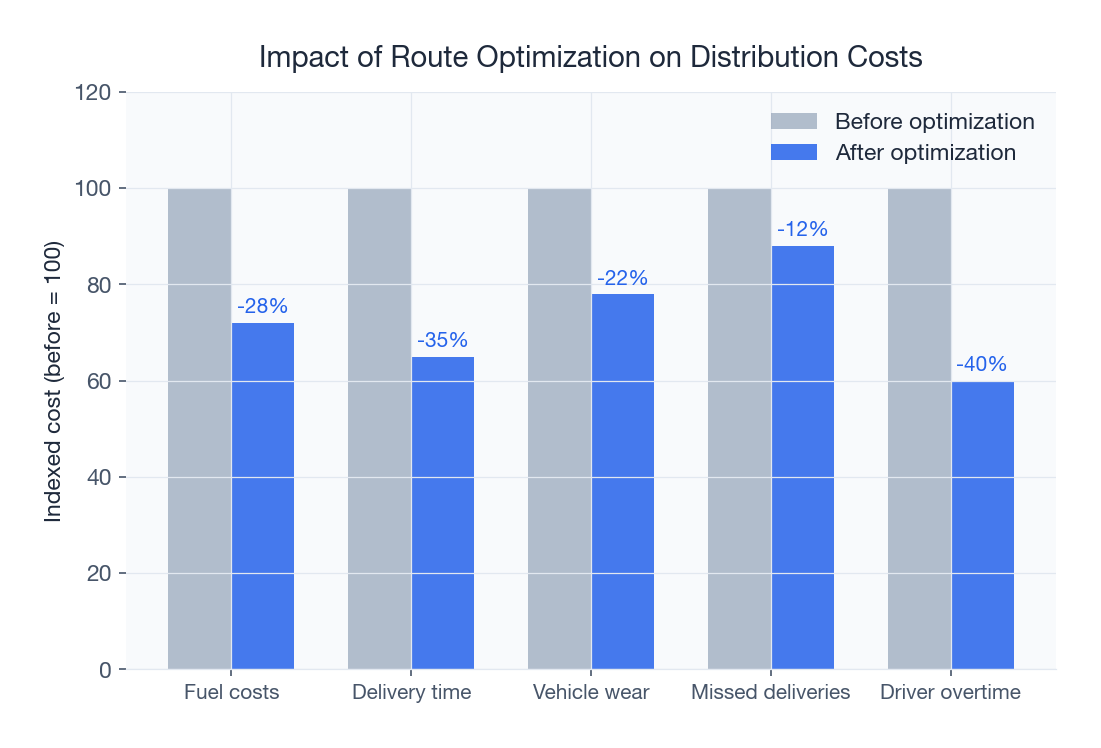
- Route optimization: Reducing fuel costs by 20-28% and improving delivery completion rates to 95%+ through intelligent route planning
- Digital order management: Replacing phone-based ordering with mobile order capture, reducing errors by 80% and enabling real-time demand visibility
- Cold chain monitoring: IoT sensors in vehicles and cold rooms feeding real-time data to distribution dashboards, cutting spoilage by 60-75%
- Automated billing: GST-compliant invoicing with e-way bill generation saving 4-6 hours daily in paperwork
- Sales analytics: Data-driven insights on SKU performance, retailer behaviour and demand patterns enabling better inventory and pricing decisions
- Crate tracking: QR-coded returnable asset management recovering Rs 2-5 lakh annually in previously lost crates
Case Study: An Indore Multi-Brand Distributor's Digital Transformation
A multi-brand dairy distributor in Indore handling Sanchi and two regional brands across 800 retail outlets was struggling with 6% summer spoilage, 12% crate losses, and frequent delivery delays. After deploying an integrated dairy distribution platform with route optimization, cold chain monitoring, crate tracking and digital order management, results within 6 months included:
- Spoilage reduced from 6% to 1.4%
- Crate losses cut from 12% to 3.5%
- Delivery completion rate improved from 82% to 96%
- Fuel costs reduced by 24%
- Retailer order errors dropped by 78%
- Net margin improved from 4.2% to 7.1%
The distributor expanded to 1,100 outlets within the following quarter, adding Dewas and Mhow to their territory without proportional staffing increases, thanks to the operational efficiency gained through technology.
Indore Dairy Distribution Best Practices
- Complete all deliveries before 8 AM in central Indore to avoid traffic congestion
- Invest in refrigerated last-mile vehicles, insulated boxes are not sufficient in Indore's summer heat
- Diversify into value-added products to escape the liquid milk margin squeeze
- Implement digital crate tracking from day one, asset losses compound quickly
- Build HORECA relationships for higher-margin, loyalty-driven revenue
- Use scheme management tools to execute brand promotions without margin leakage
- Deploy Hindi-language mobile apps for field staff to improve adoption and retention
- Map festival and wedding season calendars into demand forecasting models using analytics dashboards
- Integrate digital payment collection to reduce cash handling risk and tighten credit cycles
- Monitor competitor pricing weekly and adjust SKU mix accordingly
Festive and Seasonal Demand Patterns in Indore
Indore's dairy demand follows distinct seasonal and festive patterns that distributors must plan for:
- Navratri (September-October): Massive spike in milk, curd and paneer demand (150-200% increase)
- Diwali (October-November): Ghee, khoya and premium milk surge for sweet-making
- Wedding season (November-February): Sustained high demand for paneer, ghee, curd and ice cream from caterers
- Makar Sankranti (January): Tilgul and sweet preparations drive ghee and milk demand
- Holi (March): Dairy-heavy festive consumption including thandai, malpua and sweets
- Summer (April-June): Buttermilk, lassi and flavoured milk demand peaks while liquid milk consumption dips slightly
- Monsoon (July-September): Street food season drives pakora-chai culture, increasing milk and curd consumption at food stalls
Historical data captured in sales analytics platforms enables forecast accuracy above 85% for these events, preventing both stockouts and excess inventory.
Operational Benchmarks for Indore Dairy Distributors
| KPI | Average Indore Distributor | Top-Quartile Performer |
|---|---|---|
| Delivery completion rate | 82-85% | 96%+ |
| Summer spoilage rate | 4-6% | Under 1.5% |
| Crate loss rate (annual) | 10-15% | Under 3% |
| Order error rate | 5-8% | Under 1% |
| Payment collection cycle | 12-18 days | 5-7 days |
| Fuel cost per litre delivered | Rs 0.45-0.60 | Rs 0.30-0.38 |
| Retailer churn (annual) | 15-20% | Under 5% |
| Net distribution margin | 3-5% | 7-9% |
Indore vs Other MP Dairy Markets
While Indore is MP's largest dairy consumption centre, distributors should understand how it compares to other key markets in the state:
| City | Daily Consumption | Key Characteristics |
|---|---|---|
| Indore | 12 lakh litres | Commercial hub, HORECA-heavy, premium demand, intense competition |
| Bhopal | 8 lakh litres | State capital, institutional demand, government sector driven |
| Jabalpur | 5 lakh litres | Military cantonment demand, educational institutions |
| Gwalior | 4 lakh litres | Traditional market, strong local dairy culture |
| Ujjain | 3 lakh litres | Religious tourism, temple-economy dairy demand |
Indore's unique combination of commercial density, food culture and geographic connectivity makes it the most attractive single-city dairy distribution opportunity in Madhya Pradesh.
Future Outlook for Indore Dairy Distribution
Indore's dairy distribution market is projected to grow at 8-12% annually through 2030, driven by urbanisation, rising incomes, premium product adoption and expanding institutional demand. Key trends to watch:
- Electric refrigerated vehicles: Early pilots in Indore for last-mile dairy delivery, reducing fuel costs and carbon footprint
- D2C dairy brands: Subscription-based farm-to-door models growing at 30%+ annually in affluent areas
- Plant-based alternatives: Oat milk, almond milk and soy products entering premium retail, creating new distribution categories
- Smart cold chain: IoT-enabled temperature monitoring becoming standard for all serious distributors
- Digital-first wholesale: B2B dairy ordering platforms connecting producers directly with large retailers and HORECA clients
- Satellite town expansion: Dewas, Mhow, Pithampur and Ujjain increasingly served from Indore distribution hubs
Distributors who invest in technology now will capture a disproportionate share of this growth. Those remaining on manual systems will find it increasingly difficult to compete on service quality, spoilage rates and operational costs.
Getting Started with Dairy Distribution in Indore
Whether you are an existing Indore dairy distributor looking to modernise, a new entrant planning your first operation, or a brand evaluating Indore as a distribution market, the first step is understanding your operational gaps. Most operators discover 15-25 high-ROI improvements in their first assessment. To explore what a modern distribution platform can do for your Indore operation, review our 2026 dairy distribution software rankings, check SpireStock pricing, or book an Indore-specific consultation with our distribution technology experts.
Sources & References
Frequently Asked Questions
Indore consumes approximately 12 lakh litres of milk daily, making it Madhya Pradesh's largest dairy consumption centre. The city's organised dairy market is valued at over Rs 4,000 crore annually, driven by its 32 lakh population, thriving HORECA sector and growing premium dairy demand.
Sanchi (MP State Cooperative Dairy Federation) is the dominant brand with approximately 40% market share. Amul, Mother Dairy and regional players like Gwalior Dairy compete for the remaining market. Several D2C dairy startups have also emerged in affluent Indore neighbourhoods.
Starting a dairy distribution business in Indore requires Rs 15-40 lakh depending on scale. This includes cold storage (Rs 5-12 lakh), delivery vehicles (Rs 3-8 lakh), brand security deposit (Rs 2-5 lakh), working capital (Rs 3-8 lakh), crates (Rs 1-3 lakh) and technology (Rs 0.5-1.5 lakh annually).
Liquid milk margins range from 3.5-6% depending on brand, while value-added products like paneer, cheese and flavoured milk offer 10-22% margins. A well-managed distributor handling 40,000-60,000 litres monthly plus value-added products can achieve net margins of 5-8% after operating costs.
Indore's April-June temperatures of 43-46 degrees C cause 5-8% spoilage for distributors without proper cold chain. Successful operators use pre-dawn delivery (3:30-6:30 AM), refrigerated vehicles, IoT temperature monitoring and insulated containers to keep spoilage under 1.5%.
You need FSSAI food business registration or licence, GST registration, Indore Municipal Corporation trade licence, and a distributor agreement with your chosen brand. For turnover above Rs 12 lakh, a full FSSAI licence is required rather than basic registration.
Central Indore (Rajwada to Palasia) has the highest retail density. Vijay Nagar and Scheme No. 54/78 drive premium dairy demand. The IT belt and institutional zones provide bulk predictable orders. Peri-urban areas along Dewas Road and Mhow Road are the fastest-growing segments.
Yes. Indore distributors using integrated dairy distribution software report 60-75% reduction in spoilage, 20-28% lower fuel costs, 60-70% fewer crate losses, and net margin improvements from 4% to 7%+. SpireStock offers route optimization, cold chain monitoring, order management and analytics specifically designed for Indian dairy distribution.
Related SpireStock Features
Zone, town, and route-based delivery management with optimization.
Real-time GPS tracking of vehicles and drivers with route optimization for faster deliveries.
End-to-end order lifecycle from placement to delivery with multi-level approval workflows.
Complete returnable crate tracking across plant, transporter, and retail levels.
Related Solutions
Manage distribution across multiple production units and plants. Centralized control with plant-level autonomy for dairy and FMCG brands.
Track distributor and retailer payments. Cash, UPI, cheque collection with reconciliation, ageing reports, and credit limit management.
Track and manage your retail network. Geo-tag outlets, capture secondary sales, manage beats, and monitor retailer performance. Try SpireStock.
Related Entities
Ready to Streamline Your Distribution?
Start your free 30-day trial and see how SpireStock can transform your dairy, FMCG or consumer-goods distribution operation, from order capture to crate recovery.

SpireStock Team
Distribution Technology Experts
SpireStock Team writes for SpireStock on distribution management, supply-chain optimisation and field operations for Indian dairy and FMCG brands.