Why Bakery Distribution Is Uniquely Challenging
Bakery products, bread, buns, cakes, pastries, rusks, cream rolls, have one of the shortest shelf lives in FMCG. Bread sold in a Mumbai kirana on Monday morning may have been baked at 2 AM the same day and must be delivered before 9 AM. Cakes and cream-based products have 7-day shelf life at best. Returns are a daily reality: unsold stock comes back from retailers and must be reconciled, credited, and disposed of. Delivery windows are measured in hours, not days.
This combination of perishability, speed, and returns makes bakery distribution fundamentally different from other FMCG categories. Generic distribution software simply doesn't handle it well. That's why India's leading bakery brands, Britannia, Modern, Harvest Gold, English Oven, use bakery distribution software purpose-built for their industry. If you're a bakery operator in Mumbai, Delhi, or Bangalore, read on to understand what to look for. Ready to see it in action? Book a demo.
The Indian Bakery Market: Size and Scale
India's packaged bakery market is valued at over Rs 45,000 crore and growing at 8-10% annually. Bread alone accounts for Rs 15,000 crore. The market has two distinct segments: industrial bakery (brands like Britannia, Modern, English Oven) and artisan/craft bakery (regional players, cloud kitchens, premium brands). Both segments face the same core distribution challenges, though at different scales.
A typical industrial bread brand distributes through 500-2,000 distributors covering 100,000-500,000 retail outlets daily. That's an enormous operational footprint to manage, especially when every product on a shelf is a race against expiry.
Core Challenges in Bakery Distribution
1. Short Shelf Life and Expiry Management
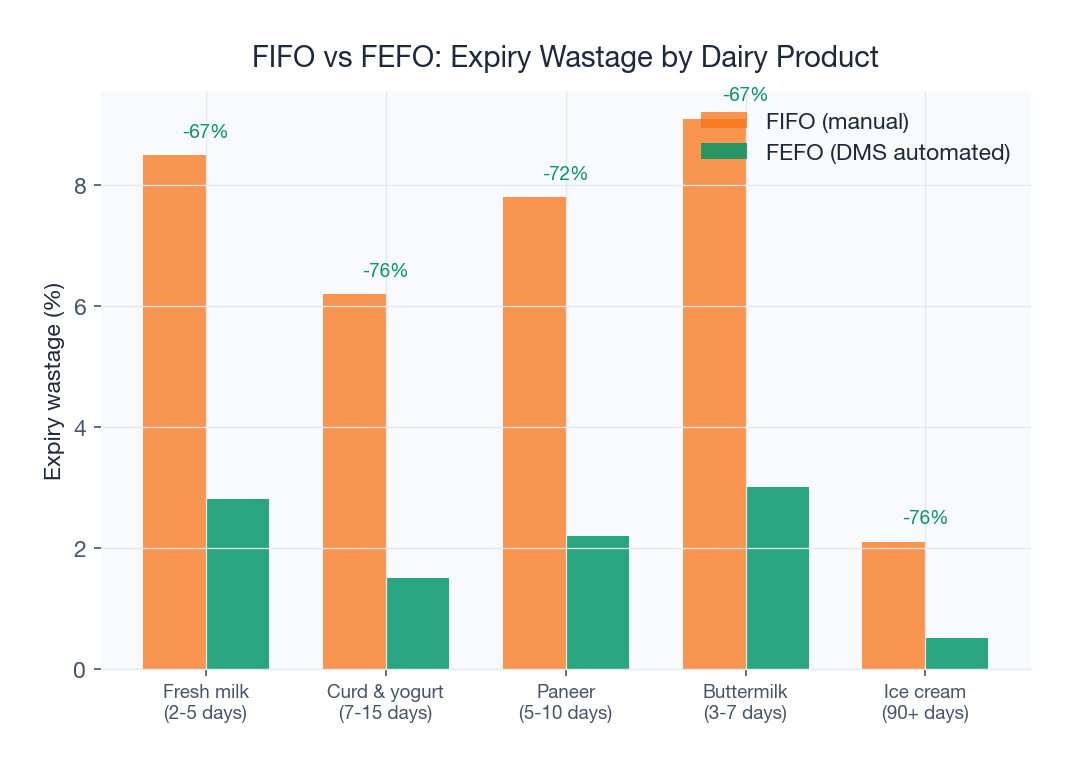
Bread has 3-5 days shelf life. Cream-filled products have 5-7 days. Cakes have 7-15 days. Every delayed delivery, every inaccurate order, every day sitting in a warehouse means shrinkage. Bakery distribution software must track expiry by batch, alert when products approach end-of-life, and prevent shipment of near-expiry stock to distant retailers.
2. Daily Order Cycles and Tight Cutoffs
Most bakery brands run one or two production cycles daily. Orders must be placed before a hard cutoff (often 2 PM or 4 PM the previous day) to be baked that night and delivered the next morning. Miss the cutoff, miss the sale. Digital order management with automated cutoff enforcement is essential.
3. Sales Returns (SR) Management
Unlike most FMCG categories, bakery has daily returns. Retailers return unsold product, which is either credited back or exchanged. Returns can range from 3% to 15% of daily dispatch depending on the retailer type. Software must capture returns at the point of delivery, update credit notes automatically, and track return trends to improve forecasting.
4. Beat-Based Delivery
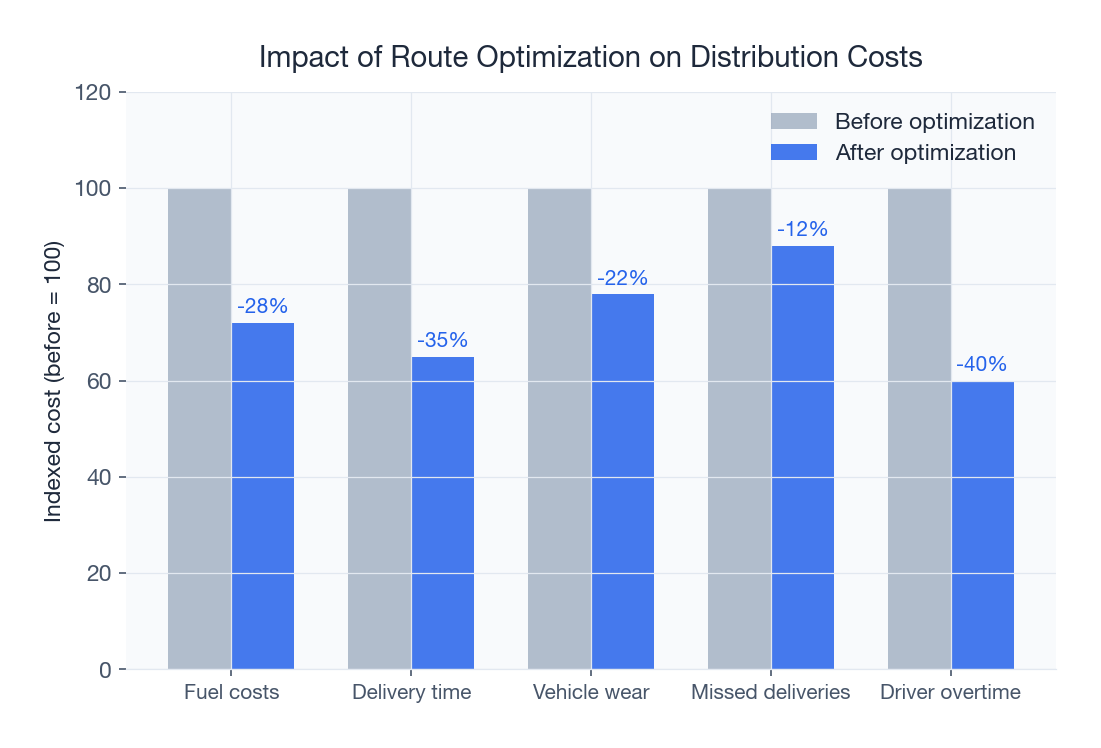
Bakery distribution uses fixed daily beats, routes with pre-assigned retailer sequences. A delivery boy visits 80-150 outlets per day following a set order. Route optimization and beat planning software maximizes outlets per route while respecting delivery time windows. Read more in Beat Planning Software for FMCG in India.
5. Crate and Tray Tracking
Bread crates and pastry trays are expensive returnable assets. A typical bakery loses 15-25% of crates annually without proper tracking. Crate management software tracks every crate from issue to return.
Essential Features of Bakery Distribution Software
1. Short Shelf Life Workflow
Expiry-aware inventory management that prevents allocation of near-expiry stock to far-off retailers. Automatic FIFO (first-in-first-out) enforcement during dispatch.
2. Daily Indent and Production Planning
Distributors submit daily indents (quantity requirements) before the cutoff. Software aggregates demand, feeds it to production planning, and coordinates with the factory floor.
3. Route-Based Dispatch
Orders are grouped by delivery route for efficient loading. Route sheets are generated automatically, and delivery boys follow the optimized sequence.
4. Mobile Delivery App
A mobile app for delivery boys captures POD (proof of delivery), records returns, prints invoices, and collects payments, all at the retailer's counter.
5. Automatic Credit Note for Returns
When returns are captured at delivery, the system auto-generates credit notes and adjusts distributor ledgers immediately. No end-of-day reconciliation nightmares.
6. GST Invoicing
GST-compliant invoicing for bakery products with correct HSN codes and tax rates (5% for bread, 12-18% for premium bakery).
7. Scheme and Promotion Engine
Trade schemes are common in bakery, volume rebates, retailer incentives, and seasonal promotions. A scheme engine applies them automatically.
8. Analytics and Return Rate Tracking
Analytics dashboards track sell-through, return rates by retailer, and beat efficiency, helping operations managers identify problem retailers and optimize production.
Typical Bakery Distribution KPIs
| KPI | Industry Average | With SpireStock | Improvement |
|---|---|---|---|
| Return rate | 8-12% | 4-6% | 40-50% lower |
| Order processing time | 2-3 hours | 20-30 minutes | 80% faster |
| On-time delivery | 82-88% | 95-98% | 10-15 pts higher |
| Crate loss rate | 18-25% | 3-5% | 80% reduction |
| Beat productivity | 80 outlets/day | 110-130 outlets/day | 40% higher |
| Invoice accuracy | 87-92% | 99.5%+ | Near-perfect |
Bakery Distribution Software: ROI Calculation
Consider a mid-size bread brand dispatching 1 lakh packs daily at Rs 30 average. Daily revenue is Rs 30 lakh. A 4-percentage-point reduction in return rate (from 10% to 6%) saves Rs 1.2 lakh daily, or Rs 3.6 crore annually. Software costs are a tiny fraction of this saving. The business case for bakery distribution software is one of the strongest in all of FMCG.
Integration with Production and ERP
Bakery distribution software should integrate tightly with production planning systems. When indents come in, they should flow directly to production schedules. When returns are captured, they should feed back into forecasting. When invoices are generated, they should sync with Tally or SAP for accounting.
Cloud Kitchens and D2C Bakery
The rise of cloud kitchens and D2C bakery brands has created a new segment of demand for distribution software. Brands like Theobroma, The Baker's Dozen, and Subko are building direct-to-consumer and direct-to-corporate channels that require flexible software capable of handling both B2B distribution and B2C fulfillment. Modern platforms with multi-tenant capabilities are perfect for this.
Scale your bakery distribution with SpireStock. From regional artisan brands to national bread giants, we power bakery distribution across India. Book a free demo today.
Implementation Best Practices
Bakery distribution software implementation requires careful planning because the business can't stop for go-live. Best practices:
- Pilot in one city or one production unit first
- Run old and new systems in parallel for 2-4 weeks
- Train delivery staff hands-on, not via slides
- Designate digital champions in each distributor to support less tech-savvy colleagues
- Monitor KPIs daily during the first month post go-live
For related industry insights, read our article on bakery and confectionery distribution solutions.
Conclusion
Bakery is one of the most demanding categories in FMCG distribution. Short shelf life, daily returns, tight windows, and beat-based delivery create operational complexity that only purpose-built software can handle efficiently. If you run a bakery brand in India, investing in bakery distribution software isn't just about efficiency, it's about survival in an increasingly competitive market. Explore SpireStock's distribution tracking and distributor management solutions, or check our pricing.
This guide covers one part of the picture. For the category as a whole — what a DMS does, the modules that matter, how it differs from ERP and SFA, and what it costs in India — see our distributor management system guide.
Sources & References
Frequently Asked Questions
Bakery distribution software is a purpose-built platform that handles the unique challenges of bakery distribution: short shelf life, daily order cycles, high return rates, beat-based delivery, and crate tracking. It covers order management, route planning, POD capture, and return reconciliation.
Bakery has 3-15 day shelf life (vs months for regular FMCG), daily returns of 3-15%, hard production cutoffs, and beat-based delivery with 80-150 outlets per route. These characteristics require specialized software, not generic DMS platforms.
Yes. Good bakery distribution software captures returns at the point of delivery via a mobile app, auto-generates credit notes, updates distributor ledgers, and tracks return rates by retailer to identify problem accounts and optimize forecasting.
A typical mid-size bread brand saves 40-50% in return losses (Rs 3-5 crore annually for a 1 lakh packs/day operation), 80% reduction in crate losses, and 20-30% improvement in beat productivity. ROI is usually achieved within 3-4 months.
Yes, modern bakery distribution software integrates with production planning systems. Distributor indents flow directly to production schedules, and return patterns feed back into forecasting to reduce overproduction.
Absolutely. Modern cloud-based platforms offer affordable starter plans for brands with 5-50 distributors. Even small artisan bakeries benefit from order management, route optimization, and digital invoicing features.
Related SpireStock Features
End-to-end order lifecycle from placement to delivery with multi-level approval workflows.
Complete returnable crate tracking across plant, transporter, and retail levels.
Real-time GPS tracking of vehicles and drivers with route optimization for faster deliveries.
Related Solutions
Manage your entire distributor network digitally. Onboarding, credit limits, outstanding tracking, and performance analytics. Start free trial.
GPS fleet tracking, driver management, and route optimization for dairy and FMCG delivery vehicles. Reduce fuel costs by 25%. Try SpireStock.
Related Entities
Ready to Streamline Your Distribution?
Start your free 14-day trial and see how SpireStock can transform your dairy, FMCG or consumer-goods distribution operation, from order capture to crate recovery.

SpireStock Team
Distribution Technology Experts
SpireStock Team writes for SpireStock on distribution management, supply-chain optimisation and field operations for Indian dairy and FMCG brands.