Bangalore: India's Subscription Dairy Capital
Bangalore has quietly become the subscription-dairy capital of India. With more than 1.3 crore consumers and a tech-savvy population that embraces app-based delivery, Bangalore's milk delivery market looks nothing like the rest of the country. Cash orders are the exception; standing subscriptions for cow milk, A2 milk, buffalo milk, curd, paneer and ghee are the rule. This behavioural shift has transformed how dairy brands plan their routes, onboard customers and collect payments in India's Silicon Valley.
Market leader Nandini, owned by the Karnataka Milk Federation, still dominates with roughly 60% share, but challenger brands like Heritage, Thirumala, Akshayakalpa, Milky Mist and a growing crop of D2C farm-to-door startups have turned the city into a hyper-competitive arena. Operators that treat Bangalore like any other metro lose. Those that build their operations around the city's unique subscription DNA win.
Bangalore Dairy Market Snapshot
| Metric | Bangalore | Karnataka State |
|---|---|---|
| Population (2026 est.) | 1.35 crore | 7.1 crore |
| Daily milk consumption | 28-32 lakh litres | 78 lakh litres |
| Subscription-based households | 42% | 12% |
| Active milk delivery agents | 18,000+ | 55,000 |
| Dominant brand | Nandini (~60%) | Nandini (~70%) |
| D2C dairy startups | 40+ | 60+ |
| Delivery window | 4 AM - 7 AM | 5 AM - 8 AM |
The 42% subscription penetration is almost four times the national average. It is the single biggest reason why Bangalore dairy operators need software fundamentally different from the one their Delhi or Chennai counterparts use. Across the wider Karnataka dairy ecosystem, subscription models are now spreading to Mysuru, Mangaluru and Hubballi as well.
What Makes Bangalore Milk Delivery Unique
1. The Subscription-First Mindset
Bangalore consumers expect milk at their doorstep by 6:30 AM, every single day, without calling anyone. The ordering act happens once, at sign-up. Everything after that is execution. This means dairy operators need strong recurring order management that can handle skip-days, quantity changes, SKU swaps and pause-resume workflows without manual intervention.
2. Gated Communities and Apartment Complexes
Over 55% of Bangalore households live in gated apartment complexes, each with security protocols, delivery windows and sometimes designated drop zones. Route planners must optimise not just geographic density but also entry-time efficiency, a badly timed entry at a 300-flat tower can cost a delivery agent 20 minutes of waiting.
3. Traffic That Defies Geography
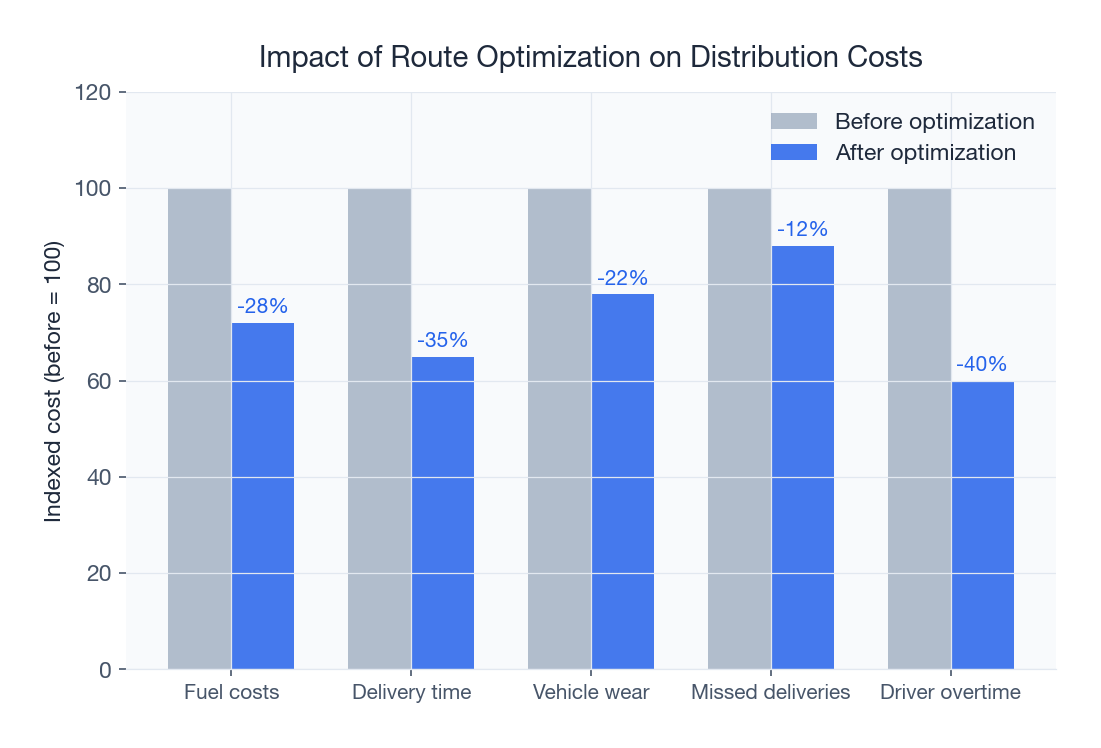
Bangalore's traffic is infamous. A 4 km delivery route may cross three major junctions that gridlock from 5:30 AM onwards. Deliveries must start by 4 AM to finish before the tech commuter rush. Route optimization that sequences drops before the city wakes up is the only way to keep SLAs intact.
4. Digital-Native Customers
Bangalore consumers expect UPI payments, WhatsApp notifications, digital invoices and self-service pauses. A consumer mobile app that handles everything, ordering, pausing, changing SKUs, viewing delivery history, paying bills, is table stakes, not a differentiator.
5. Hyper-Competitive Premium Segment
Unlike most cities where pricing is tight, Bangalore consumers pay premium for A2 milk, organic milk, grass-fed buffalo milk and other niche SKUs. This has spawned dozens of farm-to-door D2C startups that must compete not on price but on trust, traceability and consistency. Distribution tracking with photo-proof delivery becomes a marketing asset, not just an operational tool.
Core Capabilities Bangalore Milk Brands Need
Subscription Engine
Skip-date handling, SKU changes mid-cycle, pause-resume, address updates and flexible billing cycles must all be supported out of the box. Operators running manual spreadsheets eventually drown as they scale past 2,000 subscribers.
Pre-Dawn Route Sequencing
A good system creates delivery sequences that minimise the entry-to-exit time for gated communities. Some advanced platforms cluster drops by society first, then by wing, then by flat number, shaving up to 20 minutes off every route.
Crate and Container Reconciliation
Even in subscription models, crates and glass bottles move daily. Crate management software tracks containers per household, flags missing empties and integrates with crate asset management workflows that have lifted return rates from 70% to 96% for some Bangalore startups.
Payment Automation
Monthly auto-debit, prepaid wallet top-ups, UPI mandates and EMI-style bill splitting are all common. Integrated payment collection with automated retries and reconciliation eliminates the collection executives that used to chase every household on the 5th of each month.
Customer Communications
Bangalore subscribers expect proactive alerts: "Your delivery is skipped tomorrow because tomorrow is Sunday holiday", "Your A2 milk SKU is temporarily unavailable, we are substituting with regular cow milk, confirm?". Automated messaging drops support tickets by 60-70%.
Field Force Discipline
Even in a subscription model, delivery agents must be on the clock and on route. GPS attendance tracking combined with a sales productivity solution ensures every morning's deliveries are accountable and trackable.
ROI Bangalore Dairy Startups Are Reporting
- 3x faster subscriber onboarding, 90 seconds vs 5 minutes manual
- 35% lower operational cost per delivery via dense route sequencing
- 96% crate/bottle return rate with digital reconciliation
- Zero missed deliveries thanks to automated skip-day handling
- 24% increase in customer lifetime value driven by lower churn
Case Study: A Koramangala D2C Dairy Startup
A farm-to-door A2 milk startup serving Koramangala, Indiranagar and HSR Layout grew from 400 to 4,200 subscribers in 10 months after switching from WhatsApp-based ordering to a full-stack dairy distribution platform. Their delivery agents now run 180-220 drops each morning, customer complaints dropped 85%, and they now serve premium office snack counters as a secondary channel, a revenue stream that wouldn't exist without clean data from analytics dashboards.
The Road Ahead for Bangalore Dairy
Electric two-wheelers, drone-assisted tower deliveries, and AI-based churn prediction are the next frontier. Whatever the technology, the core truth for Bangalore remains: execution excellence is a function of software quality. Operators serious about growing in Bangalore should study the top tools in our 2026 dairy distribution software rankings, compare subscription-friendly pricing options, and talk to our Bangalore subscription specialists about a 30-day pilot.
Bangalore Micro-Markets and Delivery Patterns
Whitefield and Sarjapur
Tech-driven neighbourhoods with massive apartment complexes and young dual-income households. Subscription penetration here exceeds 60%. The dominant product mix is A2 milk, Greek yogurt, artisanal paneer and cold-pressed juices. Distribution start times are as early as 3:30 AM to finish before school traffic at 7 AM.
Koramangala, Indiranagar and HSR Layout
Startup-ecosystem heartland with high disposable incomes. Retailers here expect digital invoicing, UPI payments and WhatsApp notifications. A strong mobile app with push notifications and self-service is essential.
Jayanagar and J.P. Nagar
Traditional South Bangalore neighbourhoods with mixed subscription and walk-in retail. Nandini parlours dominate here, and private brands compete on quality and trust rather than price. Distribution tracking with photo-proof delivery is a marketing asset in this trust-driven market.
North Bangalore (Yelahanka, Hebbal)
Growing suburbs with mixed apartment and villa density. Distributors here often run longer routes with 70-90 drops per route. Route optimisation becomes critical to finish within the 4-hour morning window.
Subscription Lifecycle Management
A subscription customer in Bangalore passes through predictable stages: trial (days 1-14), habit formation (days 15-45), expansion (adding more SKUs), loyalty (6+ months) and potential churn triggers. Software that automates churn-risk scoring based on complaint frequency, skip-day patterns and payment failures allows proactive retention before a customer cancels. Operators using subscription-aware analytics have reduced churn by 35-45%.
Technology Stack for Bangalore Dairy Startups
- Subscription engine, Handles recurring orders, skip-days, SKU swaps
- Mobile app for customers, Self-service pause/resume/change
- Payment gateway integration, UPI mandates, auto-debit, wallet top-ups
- Delivery agent app, Offline-capable with photo-proof delivery
- Crate / bottle tracking, Per-customer deposit ledger
- WhatsApp notifications, Skip-day alerts, SKU substitutions, payment reminders
- Analytics dashboard, Churn prediction, route profitability, subscriber LTV
Scaling from 500 to 5,000 Subscribers
The journey from a pilot of 500 to serious scale at 5,000+ subscribers exposes every operational weakness. Key pivots include:
- 500 to 1,500: Move off WhatsApp to a dedicated subscription engine
- 1,500 to 3,000: Deploy offline-capable delivery agent app
- 3,000 to 5,000: Introduce automated route optimisation
- 5,000+: Add churn prediction, demand forecasting and capacity planning
Most Bangalore startups stall at the 2,000-subscriber mark because their operational stack can't keep up. The technology decision made at this stage determines whether the business becomes a Rs 5 crore sustainable operation or a Rs 50 crore challenger brand.
Comparing Bangalore to Other Indian Metros
| Dimension | Bangalore | Mumbai | Delhi NCR |
|---|---|---|---|
| Subscription share | 42% | 18% | 15% |
| Avg delivery window | 4-7 AM | 4-7 AM | 5-9 AM |
| UPI payment share | 78% | 55% | 52% |
| Modern trade dairy share | 22% | 28% | 32% |
| Premium SKU share | 34% | 26% | 24% |
| Churn rate (monthly) | 4-6% | 5-7% | 6-8% |
Regulatory Notes for Karnataka
Karnataka mandates FSSAI licensing for dairy handling, state GST registration, and Bangalore-specific BBMP trade licenses. BMC traffic restrictions on commercial vehicles are less severe than Mumbai, but peak-hour access to core areas like Shivajinagar and Chickpet is still limited. Integrating compliance tracking into your billing and distribution platform prevents inspections from disrupting operations.
What Separates Winners from Losers in Bangalore Dairy
- Obsession with the morning window, Every minute matters in the 3-7 AM delivery race
- Customer-centric communication, Transparency beats silence every time
- Relentless focus on unit economics, Bangalore's premium market rewards quality, not volume
- Technology as first investment, Not as an afterthought
- Data-driven churn prevention, Retention is cheaper than acquisition
Final Thoughts
Bangalore's dairy market will continue to evolve faster than any other Indian city. Operators who commit to technology, customer experience and operational discipline will win. Those who don't will become acquisition targets. To scope your own Bangalore build-out, compare leading platforms in our 2026 software rankings, evaluate SpireStock pricing tiers for subscription-first operators, or book a Bangalore-specific strategy call with our team.
Delivery Agent Economics in Bangalore
A typical Bangalore milk delivery agent earns Rs 18,000-28,000 per month for 180-250 daily drops. Their income depends on drop count, on-time performance and customer complaint rates. Software that tracks these metrics transparently and pays incentives automatically retains agents longer and lifts quality across the board.
Agents typically work 5 AM - 9 AM for deliveries, then 4 PM - 7 PM for collections or evening service visits. Dual-shift routing means one agent can serve both morning and evening runs for the same apartment cluster, reducing total fleet requirements by 30-40%.
Apartment Complex Partnership Strategy
Large apartment complexes (500+ flats) warrant dedicated partnerships with dairy brands. These partnerships typically include:
- Priority entry permissions for delivery agents
- Designated drop-off zones at each wing
- Community WhatsApp groups for order confirmations
- Monthly society-level billing for aggregate volume discounts
- Exclusive SKUs for premium subscribers
Brands that invest in these relationships capture 40-60% share in target complexes, far above city-wide averages.
Technology Adoption Sequence for Bangalore Startups
- Stage 1 (0-500 subscribers): WhatsApp + Google Sheets works, barely
- Stage 2 (500-1500): Dedicated subscription engine becomes necessary
- Stage 3 (1500-5000): Full DMS with mobile app and route optimisation
- Stage 4 (5000+): Analytics, churn prediction, demand forecasting
Customer Retention Strategies
Bangalore dairy customers churn at 4-6% per month without active retention. Successful brands deploy:
- Automated welcome sequences for new subscribers
- Monthly loyalty rewards tied to consistent consumption
- Proactive SKU recommendations based on usage patterns
- Quality complaint resolution within 24 hours
- Referral incentives for existing subscribers
These strategies, managed through customer tracking workflows, reduce monthly churn to 1.5-2%, extending customer lifetime value by 2-3x.
Pricing and Plan Structures for Subscription Dairy
Successful Bangalore subscription dairy brands typically offer 3-4 plan tiers: a basic daily milk plan (500ml-1L), a premium plan bundled with curd and paneer, a family plan with multi-SKU subscriptions and a corporate plan for offices. Each plan has distinct billing cycles, discount structures and cancellation rules. A robust order management system handles all four plan types in a single unified workflow, eliminating the need for spreadsheets or multiple systems.
Consumer expectations in Bangalore lean strongly toward self-service, customers want to pause, resume, change SKUs or update addresses without having to call or WhatsApp. A strong consumer mobile app that handles all these actions in under 30 seconds reduces support tickets by 60-70% and improves customer satisfaction scores significantly.
Payment automation is another critical piece. Monthly auto-debit via UPI mandates, prepaid wallet top-ups and EMI-style weekly billing all compete as popular options. Brands that offer all three and let customers choose their preference see 20-30% higher retention than those that force a single payment method.
Sources & References
Frequently Asked Questions
Bangalore consumes approximately 35 lakh litres of milk daily. The broader dairy products market (including curd, paneer, cheese, butter) in Bangalore is estimated at Rs 8,000-10,000 crore annually, growing at 10-12% year on year.
Nandini (KMF) dominates with 60%+ market share. Other major players include Amul, Heritage Dairy, Dodla Dairy, Milky Mist, and several local brands. The premium segment also sees brands like Akshayakalpa (organic) and Country Delight.
Bangalore's traffic congestion increases delivery times by 50-100% during peak hours. Key bottlenecks at Silk Board, ORR, and Bellary Road make route optimization essential. Most successful distributors complete primary deliveries before 8 AM to avoid peak traffic.
Yes, significant demand. Bangalore's affluent, health-conscious population drives strong growth in organic milk, A2 milk, Greek yogurt, artisan cheese, and probiotic dairy products. Premium dairy commands 30-50% higher margins, making it attractive for distributors.
Absolutely. SpireStock's dynamic route optimization, real-time tracking, crate management, and retailer app are designed for complex urban markets. Multiple Bangalore-based dairy operations use SpireStock to manage distribution across the city's expanding geography.
Related SpireStock Features
Related Solutions
GPS fleet tracking, driver management, and route optimization for dairy and FMCG delivery vehicles. Reduce fuel costs by 25%. Try SpireStock.
Manage your entire distributor network digitally. Onboarding, credit limits, outstanding tracking, and performance analytics. Start free trial.
Related Entities
Ready to Streamline Your Distribution?
Start your free 14-day trial and see how SpireStock can transform your dairy, FMCG or consumer-goods distribution operation, from order capture to crate recovery.

SpireStock Team
Distribution Technology Experts
SpireStock Team writes for SpireStock on distribution management, supply-chain optimisation and field operations for Indian dairy and FMCG brands.